

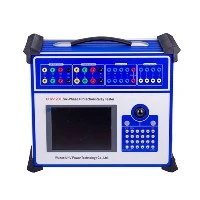
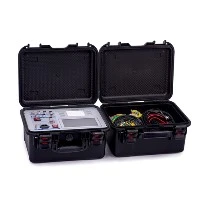
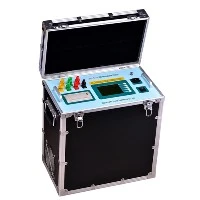
With the increasing demand for reliability of backup power sources in substations, power operation and maintenance, communication rooms, and industrial power supply systems, the daily maintenance and capacity testing of batteries are receiving more and more attention. The portable battery discharge tester can detect the discharge performance of the battery pack under specified conditions through controlled discharge, providing a basis for judging battery capacity, evaluating usage status, and developing maintenance plans.
Compared with fixed testing equipment, portable devices are more suitable for on-site inspections, regular maintenance, and testing work between different locations. However, the actual selection cannot only be based on whether the equipment is convenient to carry, but also needs to be comprehensively considered in combination with the voltage level, discharge current, testing time, and on-site usage conditions of the battery pack.

Select equipment based on battery pack voltage
The rated voltage of the battery pack is the first parameter that needs to be confirmed when selecting a discharge tester. The voltage of battery packs used in different application scenarios may vary significantly, such as the common DC power supply system in substations, communication backup power supply, and industrial equipment supporting battery packs, which have different voltage range requirements for testing equipment.
Before procurement, the rated voltage, actual working voltage, and number of batteries in series of the tested battery pack should be confirmed, and the applicable voltage range of the tester should be checked. For users who need to detect multiple voltage levels of battery packs, it is recommended to consider devices that support multiple voltage levels or have a wide working range to adapt to different on-site testing tasks.
Pay attention to the ability to test discharge current and capacity
The discharge current directly affects the testing process and the required time. The tester should be able to provide appropriate discharge current based on the rated capacity of the battery, maintenance procedures, and testing plan.
For example, some tests require discharging according to a specified constant current to observe the voltage changes of the battery under continuous load; Other tests require setting discharge parameters based on battery capacity and on-site conditions. Therefore, when selecting equipment, it is important to understand its maximum discharge current, adjustment range, control mode, and continuous discharge capability.
It should be noted that a higher discharge current does not necessarily mean a better tester. The equipment must match the specifications of the tested battery pack, while considering testing time, heat dissipation capacity, and safety protection requirements.
Consider portability and on-site operational requirements
Portable battery discharge testers are commonly used in substations, distribution rooms, communication base stations, and other places that require regular checks of backup power sources. The weight, volume, handle design, and wiring method of the equipment can all affect the efficiency of on-site use.
If staff need to move equipment between multiple sites, they should prioritize models with compact structure, easy handling, and clear wiring. If the testing environment space is limited, attention should also be paid to the device's heat dissipation method, working noise, and placement requirements.
For units that require frequent battery pack testing, the intuitive operation interface, convenient parameter settings, and automatic recording of the testing process can also affect daily maintenance efficiency.
Check the data recording and analysis function
Battery discharge testing is not only about observing the voltage at the end of discharge, but also about recording key data during the testing process. When making a purchase, it is important to understand whether the device has the following functions: voltage and current monitoring: real-time display of the main parameters during the discharge process, which facilitates observation of the operating status of the battery pack. Discharge time recording: Record the duration of discharge to provide a basis for subsequent analysis. Data storage and export: Save test records for easy report generation, file organization and maintenance, and data comparison at different time periods. Curve display: By analyzing the voltage over time curve, it helps workers analyze the discharge process. Abnormal alarm: When the voltage or other parameters reach the set limit, prompt the operator in a timely manner.
The specific functions vary depending on the device model. When purchasing, the data collection accuracy, storage capacity, export format, and whether the software meets the actual usage requirements should be confirmed with the supplier.
Pay attention to protective functions and equipment safety
Battery discharge testing usually requires a certain amount of time, and during the testing process, there may be low voltage, abnormal wiring, equipment overheating, or other abnormal situations. Therefore, the security protection function is also a key consideration when selecting.
According to on-site requirements, it can be confirmed whether the equipment has functions such as over temperature protection, over-current protection, low voltage protection, reverse connection protection, and abnormal alarm. For large capacity battery packs, attention should also be paid to the equipment's heat dissipation capacity, discharge load design, and continuous operation capability.
In actual testing, it is necessary to follow the equipment manual and on-site safety regulations, connect the test line correctly, and set reasonable discharge termination conditions to avoid affecting the battery performance due to excessive discharge.
Determine the model based on actual application scenarios
Different users have different requirements for portable battery discharge testers.
Substation operation and maintenance personnel usually need to pay attention to the battery capacity, discharge process recording, and testing report functions of the DC power system; Communication rooms and data centers place greater emphasis on the reliability, testing efficiency, and data management of backup power sources; Industrial enterprises may require equipment compatible with battery packs of different voltage levels to meet the maintenance needs of various devices.
If users need to conduct battery internal resistance testing, single cell voltage measurement, and whole group capacity testing simultaneously, each function should be clearly distinguished. Discharge testing is mainly used to evaluate the performance of batteries under specified discharge conditions, while internal resistance testing mainly reflects the electrical characteristics of batteries. The two can complement each other, but cannot be simply replaced.
Choose a battery discharge tester suitable for on-site needs
When choosing a portable battery discharge tester, comprehensive consideration should be given to voltage range, discharge current, testing accuracy, data management, protection function, and on-site mobility requirements. For power companies that require long-term battery maintenance, it is equally important to pay attention to whether the equipment can operate stably, provide clear and reliable test records, and facilitate subsequent analysis.
Wuhan UHV Power Technology Co., Ltd. provides relevant testing equipment for the field of power testing and maintenance. When purchasing a battery discharge tester, users can combine the specifications of the battery pack, application scenarios, and testing requirements to confirm the appropriate equipment configuration, technical parameters, and after-sales service content with the supplier, in order to avoid affecting on-site testing work due to parameter mismatches.
Through reasonable selection and standardized discharge testing, operation and maintenance personnel can more accurately grasp the actual working status of the battery, providing reference for backup power maintenance, battery replacement plans, and reliable operation of the power system.