

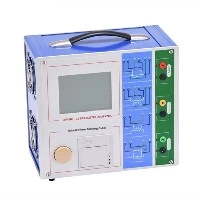
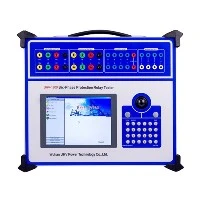
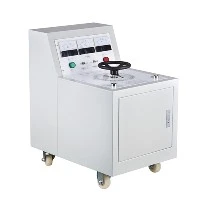
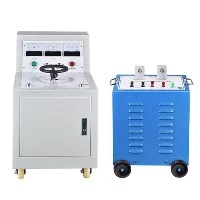
The specialized production of partial discharge testers for UHV power can help many power workers conduct various power tests more conveniently.

High voltage switchgear is an electrical cabinet equipment used in power systems. The function of high-voltage switchgear is to turn on, off, control, and protect the power system during the processes of power generation, transmission, distribution, and energy conversion. The components in the high-voltage switchgear mainly include high-voltage circuit breakers, high-voltage isolating switches, high-voltage load switches, high-voltage operating mechanisms, etc.
There are many classification methods for high-voltage switchgear. For example, by installing circuit breakers, it can be divided into mobile high-voltage switchgear and fixed high-voltage switchgear, or divided into open high-voltage switchgear and metal enclosed box according to the cabinet structure. High voltage switchgear, metal enclosed high-voltage switchgear, and metal enclosed armored high-voltage switchgear.
The actual temperature rise inside the switchgear, especially the busbar connection, is always higher than the data measured in the type test. The main reasons are as follows:
(1) The measured data of type testing is usually completed in the laboratory, with a short duration, usually not exceeding 8 hours, and there is no cumulative effect of temperature rise, which cannot be equated with long-term operation and continuous heating equipment.
(2) Different metals have different expansion effects. The metal expansion coefficient of steel bolts is much lower than that of copper and aluminum busbars, especially for bolted equipment joints. During operation, with changes in load current and temperature, the degree of expansion and contraction of aluminum or copper and iron will vary, leading to creep, which is the slow plastic deformation of the metal under stress. The creep process is also closely related to the temperature at the joint.
High temperature switchgear temperature rise test device
Practice has proven that when the working temperature of the joint exceeds 80 ℃, the joint metal will expand due to overheating, causing the contact surface position to shift, resulting in the formation of micropores and oxidation. When the load current decreases and the temperature returns to the original contact position, it is impossible to directly contact the metal during installation due to the oxide film covering the contact surface. The increase in contact resistance with each temperature change cycle will increase the heat of the next cycle, and the rising temperature will further deteriorate the working conditions of the joint, thus forming a vicious cycle.
(3) Improper compression of fastening bolts at the joint. Some installation or maintenance personnel believe that the tighter the connecting bolts, the better. Especially the elasticity coefficient of aluminum busbar is small. When the pressure of the nut reaches a certain critical pressure value, if the strength of the material is poor, adding inappropriate pressure will cause deformation and bulging of the contact surface. The increase in contact resistance affects the contact effect of the conductor.
(4) The conductivity of the selected conductor material does not meet the requirements, mostly due to insufficient purity of the conductor raw material.
(5) Other factors on site, such as improper installation and maintenance techniques, improper treatment of busbar contact surfaces during processing, connection, and installation, unevenness, flatness, and failure to apply specialized electrical grease, etc. The contact area decreases, the contact resistance increases, and heat is generated.
Low voltage switchgear is a type of low-voltage distribution component that involves the complete assembly of low-voltage switchgear according to a certain wiring scheme. Used for power and lighting distribution in power supply systems below 1000V. It also has two categories: fixed installation and pull-out installation.