


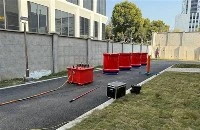
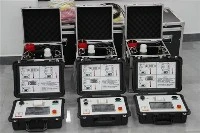
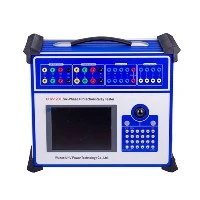
The DC motor test bench is a specialized electrical device that converts electrical energy into mechanical energy. It absorbs electricity from DC power and converts it into the rotation of a motor. DC motors are everywhere, and they drive the rotor's current through the generated current, while the speed and output torque depend on the structure of the motor and the power input.

How does a DC motor controller work?
DC motors come in various powers and sizes, depending on their mechanisms, and can be applied to electric cranes, elevators, electric vehicles, toys, and more. A DC motor consists of two main parts: the armature and the stator. The stator is the stationary component of the motor, while the armature is the rotating component. In addition to the coil, the DC motor also uses a set of magnets inside the stator. In the circular circuit of the magnets, current flows through the circuit, forming an aligned electromagnetic field. One or more insulated wires are wound around the core of the motor to concentrate the magnetic field. The winding of the insulated wire is connected to the rotating electrical switch (rectifier) and continuously applies current to the coil winding. The rotating electronic switch fills each armature coil with current, thus generating a torque or a stable rotational force. When the coils are sequentially switched on and off, a magnetic field is generated, which reacts with different parts of the fixed magnet to produce torque. This basic working method enables DC motors to convert DC electricity into mechanical energy, thereby enabling the driving device to utilize rotation.
The DC motor test bench, as an electrical device, has brought revolutionary changes to humanity in many aspects. Like other innovations, many people are also developing other devices. In the United States, Thomas Davenport invented the first motor, and in 1837 Davenport became the first person to invent an electric motor. However, Davenport was not the first to invent this type of motor, as other European inventors had already developed more powerful motors.
Types of DC motor test bench controllers and DC motor controls
Brushless DC motor
Also known as synchronous DC motor or electronic commutation motor, the main difference between these types of motors is that they lack a commutator, which is replaced by a servo mechanism that can detect and subsequently adjust the rotor angle. Brushless DC motors are durable and safe.
Brushed DC motor
These are earlier DC motors that can be traced back to their initial design. Although they are still popular in paper machines, cranes, and rolling mills, they have gradually disappeared in recent times.
Parallel DC motor
This is a brushed motor whose excitation winding is connected in parallel with the armature. Due to the parallel winding, they have lower current, and parallel motors have found many uses in various applications that require constant torque, such as mixers, conveyors, and cranes.