

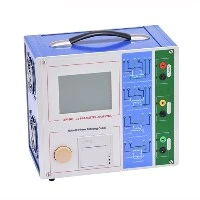
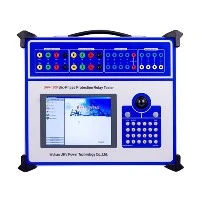
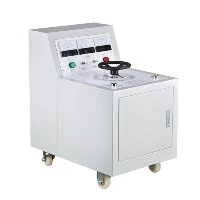
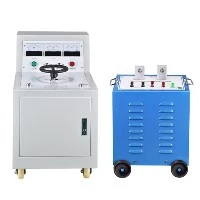
The insulation resistance tester under UHV power can help many power workers conduct various power tests more conveniently.

Electricians often need to use insulation resistance testers in their work. The main function of this device is to test the insulation resistance of transformers, mutual inductors, generators, high-voltage motors, power capacitors, power cables, lightning arresters, etc. It is easy to use. Its characteristic is high accuracy, but sometimes it is difficult for many people to achieve the test results of the instrument when using it for the first time. So what are the factors that affect the accuracy of insulation resistance testers?
Generally speaking, the resistance value of a material decreases as the ambient temperature and humidity increase. Compared to enterprises, surface resistivity (rate) is more important and sensitive to environmental and humidity data, while volume resistivity (rate) is more sensitive to temperature changes. The humidity will increase, surface information leakage will increase, and the body's conductive current will also increase. With the continuous increase of temperature, the development speed of carrier movement accelerates, and the absorption current and conduction current of different materials in the medium will correspondingly increase the cost. According to relevant research documents, the resistance value of a typical working medium at 70 ℃ is only 20 ℃. 10%. Therefore, when measuring the resistance of technical materials,
The resistance value of dielectric materials cannot remain constant over a wide voltage range, and Ohm's law does not apply to this. At room temperature, in the lower voltage range, the conductive current increases linearly with the increase of applied voltage, while the resistance value of the material remains unchanged. After exceeding a certain voltage, the rate of increase in conductive current is much faster than the test voltage, and the resistance value of the material rapidly decreases. It can be seen that the higher the applied test voltage, the lower the resistance value of the material, so the resistance value of the material tested under different voltages may vary greatly.
It is worth noting that the measurement result of the change in material resistivity is the electric field strength during the test, not the test voltage. If the distance between the test electrodes is different under the same test voltage, the test results of material resistivity will be different. The smaller the distance between the positive and negative electrodes, the smaller the test value.
When the measured pressure is the same as the DC voltage of a certain material, the current flowing to the measured material is an unstable instantaneous value, but there is a decay process. With the action of pressure, a larger charging current flows, and then the longer absorption current gradually decreases, reaching a relatively stable conduction current. The higher the measured resistance value, the longer it takes to reach equilibrium. Therefore, when measuring the resistance value, the value should be stabilized after 1 minute or the pressure reading should be taken after correct measurement and reading.
In addition, the resistance value of high insulation structural materials is also related to the historical development of their electrification. In order to accurately analyze and evaluate the electrostatic properties of research materials, when resistance (rate) testing can be performed on building materials, they should be dissipated and left for a period of time. The settling time can be 5 minutes, and then the testing can be designed according to the measurement system program. Generally speaking, for testing a type of learning material, at least 3-5 samples should be randomly selected for management testing, and the average value should be taken as the main experimental result.