

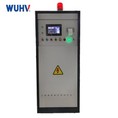
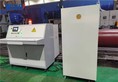
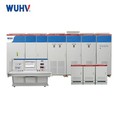
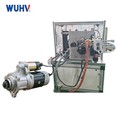
Battery Test Kit
Wuhan UHV Power Technology Co.,Ltd.located in Wuhan East Lake New Technology Development Zone and have convenient transportation access. We are professional OEM Manufacturer which is engaged in the research, development, sale and service of High Voltage Testing Equipment including: Resonant Test System, High Voltage Tester,Transformer Tester,Circuit Beaker Tester, Relay Protection Tester, Cable Tester.
Why Choose Us
Product Application
They are widely applied in power engineering project, transportation,petrochemical industry,mining and water conservancy project.
Our Certificates
We have obtained CE, & other certificates Obtained ISO9000 Quality Management System Certificate, and won the title of Advanced Science and Technology Enterprise.
Sales Market
Accumulated exports to the Netherlands, Indonesia, Bangladesh, Australia, Iran, India, Saudi Arabia, Taiwan, Mongolia, Japan, the United States and other more than 10 countries and regions, successfully open the international market.
Our Service
Provide professional consulting,Integrity and fairness No matter great or small amount of contract, new or old customers, domestic or foreign customers, UHV treats with integrity and fairness. UHV provides professional installation, commissioning and training for users' workers, ensures that users can get familiar with operation methods and put machines into use as soon as possible.
our advantages
Quotation within 1 hour
Solution within 24 hours
Provide product demo
Perform contract strictly
Update production progress
Delivery on time
4000 square meters production plant
12 months warranty
Overseas training support
Regular return visit
Extended warranty (Optional)
Factory acceptable test
- Professional RD&QC
- Customize available
- Professional after-sales service team
- Authorized calibration (optional)


- Quality guaranteed
- A comprehensive after-sales service system
- High cost-effective products
- CE Certificate
- An enterprise that integrates scientific research, development, production, sales, and service
- 21 years experience in High Votlage Test equipment area


Specifications
|
Main functions |
Insulation resistance test |
|
Output specifications |
Output voltage : 25 V to 500 V, Setting resolution 1 V |
|
Measurement specifications |
Resistance value display range : 0.050 MΩ to 9999 MΩ |
|
Basic specifications |
±1.5% rdg.±2 dgt. |
|
Time specifications |
Test time : 0.050 s to 999.999 s, OFF |
|
Memory functions |
Panel save function : Saves up to 15 sets of measurement conditions |
|
Judgment functions |
Test modes : Continuous test, PASS STOP, FAIL STOP |
|
Various functions |
Break Down Detect function (BDD) : Detecting minuscule insulation defects caused by contamination |
|
Interfaces |
USB, LAN, RS-232C, EXT. I/O |
|
Power supply |
100 V to 240 V AC |
|
Power consumption |
Approx. 20 VA*4 |
|
Maximum rated power |
100 VA |
|
Dimensions and mass |
Approx. 215 mm (8.46 in) W × 80 mm (3.15 in) H × 306.5 mm (12.07 in) D (excluding protruding parts), Approx. 2.8 kg (98.8 oz) |
|
Included accessories |
Power cord ×1, EXT. I/O male connector ×1, EXT. I/O connector cover ×1, EXT. I/O interlock cancellation jig ×1, Startup Guide ×1 |
Electronic battery tester
The electronic and digital types are the most common ones used for testing the remaining capacity of a battery. Most digital models feature an LCD, showing the result in a clear and easy to read format.
Depending on the model, the result is displayed in the form of bars or a graph. This enables quick reading and analysis of the test results.
Domestic battery tester
Also known as the household battery tester, this type is usually used for testing cylindrical batteries. This includes double and triple A batteries and 9V PP3 batteries.
A domestic battery tester covers the majority of everyday household batteries. It is also suitable for testing a combination of battery types, such as C and D batteries.
Universal battery tester
Universal battery testers are suitable for batteries in a range of different sizes. Similarly to domestic battery testers, they are primarily used for cylindrical batteries.
Car battery tester
Car battery testers are intended for use with lead-acid batteries. These testers connect to vehicle batteries to provide a clear sign of the following:
A car's battery's health,
Condition and
Voltage output.

Battery manufacturing: Battery manufacturers use discharge testers to test the performance of their products before they are shipped to customers.
Battery maintenance: Battery discharge testers are used to test the performance of batteries during routine maintenance and to determine when batteries need to be replaced.
Battery research and development: Battery discharge testers are used in the research and development of new battery technologies to measure their performance and identify areas for improvement.
UPS systems: Uninterruptible power supply (UPS) systems use batteries to provide backup power during a power outage. Discharge testers are used to test the performance of these batteries to ensure that they will function properly during a power outage.
Telecommunications power systems: Telecommunications companies use battery backup systems to provide power in the event of a power outage. Discharge testers are used to test the performance of these batteries to ensure that they will function properly during an outage.
What can affect the accuracy of the testing process
Voltage Range: The tester should have a suitable voltage range to accommodate the batteries being tested. It should be capable of measuring both low and high voltages accurately.
Current Range: The current range determines the maximum discharge or charge rate that the tester can handle. It should be adjustable to accommodate different battery types and sizes.
Testing Time: The duration of the testing process varies depending on the type of battery and the specific tests being performed. The tester should allow for sufficient testing time to ensure accurate results.
Testing Modes: A comprehensive tester typically offers multiple testing modes, such as capacity testing, internal resistance analysis, and voltage measurement. It is important to select the appropriate testing mode based on the specific requirements and objectives of the battery evaluation.
Data Analysis and Reporting: The tester should have robust data analysis capabilities to interpret the test results accurately. It should generate comprehensive reports that provide detailed insights into the battery's performance, health, and capacity.
Safety Features: Battery testing involves handling potentially hazardous energy sources. The tester should incorporate safety features such as overvoltage protection, short-circuit prevention, and temperature monitoring to ensure the safety of the user and the batteries being tested.
Our Factory

FAQ
As one of the leading battery test kit manufacturers and suppliers in China, we warmly welcome you to buy high-grade battery test kit made in China here from our factory. For price consultation, contact us.