


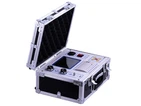


Transformer short circuit impedance tester is a precision electronic instrument specifically used to measure the short-circuit impedance and load loss of power transformers.

It simulates the operating conditions of a transformer in a short-circuit state, applies a lower test voltage to accurately measure relevant electrical parameters, and evaluates the health and performance of the transformer.
Short circuit impedance (or impedance voltage) is one of the most important parameters on the transformer nameplate, and its testing significance is significant:
1. Determine whether the winding is deformed: This is the core purpose. After a transformer is subjected to short-circuit current impact during transportation or operation, the winding may undergo mechanical displacement, distortion, or deformation. These changes will directly cause a change in the short-circuit impedance value. By regularly testing and comparing with factory values, handover acceptance values, or previous test values, winding defects can be sensitively detected, which is the "gold standard" for diagnosing winding deformation.
2. Calculate short-circuit current: The short-circuit impedance value is an important basis for calculating short-circuit current and setting relay protection (such as setting protection action values) in power systems.
3. Evaluate operational performance: Load loss (copper loss) is an important indicator for assessing the economic operation of transformers, which directly affects the operational efficiency and temperature rise of transformers.
4. Acceptance and handover test: Before the installation and operation of the new transformer, this test must be conducted to verify whether its performance meets the technical agreement and national standards