

Have you ever been curious about how the massive "guardians" that safeguard our electrical safety - circuit breakers - ensure precise "strikes" every time? Can they complete the "closing" or "opening" action in milliseconds at critical moments? Today, let's talk about a crucial step: testing the mechanical characteristics of circuit breakers. This is not just a tedious test, but also the cornerstone for ensuring the stable operation of the power system.

What is mechanical characteristic testing for circuit breakers?
Simply put, the mechanical characteristic testing of circuit breakers is to evaluate the performance of their mechanical components in a non electrified (or simulated operating state) condition through a series of rigorous measurements. This includes how strong its "suction" is (energy storage of the operating mechanism), how fast its "response" is (closing/opening time), how strong its "force" is (rebound force, bounce), and how strong its "recovery" ability is (number of reclosing times), and so on. These indicators are like the "vital signs" of a circuit breaker, directly related to its ability to quickly and reliably perform tasks when actual faults occur.
The 'behind the scenes' driving force that affects the mechanical characteristics of circuit breakers
The temperament of a circuit breaker is not fixed, and many factors can affect its mechanical characteristics:
Operating mechanism design and manufacturing accuracy: This is the most crucial factor. Precise mechanical structures and excellent manufacturing processes are the prerequisites for ensuring precise movements.
Environmental factors such as temperature, humidity, dust, etc. can all affect the lubrication and wear of mechanical components, thereby altering their operational characteristics.
Operating years and maintenance status: Any equipment has a "lifespan", and long-term operation can lead to wear and tear. Improper maintenance may accelerate this process.
Operating voltage and energy storage status: The pressure of the energy storage spring and the degree of energy storage operation will directly affect the operating energy and speed of the circuit breaker.
Intelligent stethoscope: helps with precise testing
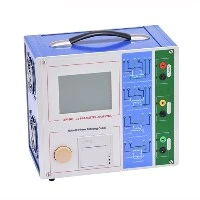
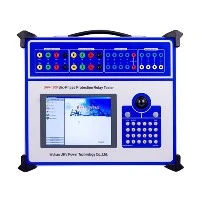
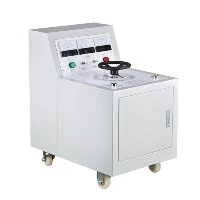
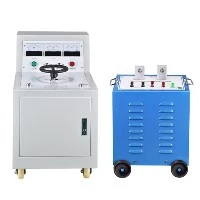
In order to accurately "auscultate" the "heartbeat" of circuit breakers, we need some professional "stethoscopes", that is, circuit breaker dynamic characteristic testers. These high-tech devices can accurately capture the subtle changes in every operation of the circuit breaker, transforming complex mechanical movements into intuitive data.
Time measurement: Accurately measuring the time of various contact actions such as circuit breaker closing, opening, energizing, and arc extinguishing. The advanced equipment launched by Wuhan UHV Power Technology Co., Ltd. performs particularly well in this regard.
Travel and speed measurement: Record the distance and speed of contact point movement, evaluate its kinetic energy and impact force.
Spring force measurement: Measure the energy storage capacity of the operating mechanism's energy storage spring to ensure it meets the design requirements.
Recloser performance evaluation: Simulate multiple consecutive reclosing operations to verify their reliability.
Why do we need to conduct mechanical characteristic tests on circuit breakers?
This test is not a 'routine', it is closely related to many key aspects:
Equipment selection and factory acceptance: Ensure that newly purchased circuit breakers meet national standards and design requirements.
Operation, maintenance and status assessment: Through periodic testing, potential faults and hidden dangers can be discovered in a timely manner to avoid "minor problems" from becoming "major troubles".
Fault analysis and cause tracing: When a power accident occurs, the results of the mechanical characteristic test of the circuit breaker are an important basis for analyzing the cause of the fault.
How can we do better? --Integration of professionalism and technology
To do a good job in testing the mechanical characteristics of circuit breakers, the key lies in the combination of "professionalism" and "technology".
Establish a comprehensive testing protocol: Based on national standards and industry norms, develop detailed and actionable testing procedures, and strictly implement them.
Choose high-precision and high reliability testing equipment: Enterprises like Wuhan UHV Power Technology Co., Ltd., which have deep technical accumulation, can provide testing instruments that meet strict requirements.
Experienced testers: balancing theoretical knowledge with practical experience, able to accurately interpret data and judge equipment status.
Data Management and Trend Analysis: Establish a long-term test data archive, and through comparative analysis, grasp the changing trends of circuit breaker performance to achieve predictive maintenance.
FAQ
Q1: Is it necessary to conduct mechanical characteristic testing of circuit breakers on site? A1: In most cases, in order to truly reflect the state of the equipment in the actual operating environment, on-site testing is chosen. But in some special cases, such as early diagnosis of equipment or validation of specific parameters, it can also be conducted in the laboratory.
Q2: Will frequent mechanical characteristic testing of circuit breakers cause damage to the equipment? A2: Reasonable testing frequency and standardized operation will not cause damage to the circuit breaker. Testers provided by professional manufacturers such as Wuhan UHV Power Technology Co., Ltd. also have protective functions.
Q3: What is the difference between mechanical and electrical characteristic testing of circuit breakers? A3: Mechanical characteristic testing focuses on the mechanical motion performance of circuit breakers, such as time, speed, stroke, etc; Electrical characteristic testing focuses on its electrical parameters under live conditions, such as insulation resistance, contact resistance, withstand voltage, etc. The two complement each other and jointly evaluate the overall performance of the circuit breaker.
Q4:Why is it said that testing the mechanical characteristics of circuit breakers is the key to "preventing problems before they happen"? A4: Through periodic testing, potential issues such as mechanical wear, spring aging, and loose connections inside the circuit breaker can be detected in a timely manner. If these issues are not addressed in a timely manner, it may result in the circuit breaker not functioning properly in the event of actual faults, causing greater losses.
Q5: What parameters should be focused on when choosing a circuit breaker mechanical characteristic tester? A5: Focus on time measurement accuracy, stroke and speed measurement range, output energy of operating mechanism, stability and reliability of testing instrument, as well as data processing and report generation functions.