

The power system is like the blood vessels of a city, and the transformer on load switch is a crucial "pump" that constantly regulates voltage and ensures the electricity needs of thousands of households. The "contacts" of this "pump" will inevitably experience wear and aging when operating under high loads and frequencies for a long time. Once there is a problem with the "contact point", it can affect the quality of power supply, and in severe cases, it may cause equipment failure and even result in widespread power outages. How can we timely understand the health status of "touchpoints" and avoid risks in advance? Today, let's talk about the "guardian of health" in the power system - the on load switch tester.

What is a 'load switch'? Why is it so important?
Simply put, an On Load Tap Changer (OLTC) is a critical component installed on a power transformer that allows the transformer to adjust the output voltage by switching between different coil taps during live operation. This is like the gear shift of a car, which can be smoothly switched according to road conditions (electricity load) and demand (target voltage). Its existence is one of the core technologies for achieving voltage stability in the power grid and optimizing energy transmission efficiency.
Key factors affecting the health of 'on load switches'
Mechanical wear: Frequent connection and disconnection of contacts will naturally cause physical wear and tear.
Arc erosion: Every time the current is disconnected, an arc is generated between the contacts, and prolonged arc action can erode the surface of the contacts.
Oil stains and impurities: When the contacts are immersed in transformer oil, the deterioration of the oil or the inclusion of impurities can affect conductivity and insulation.
Operating frequency: Switches with longer operating years and more voltage adjustments will experience more severe contact wear.
Load variation: Severe load fluctuations can also increase the burden on the contacts.
Load switch tester: the secret weapon for precise diagnosis
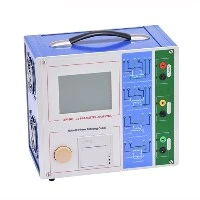
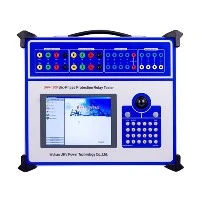
Faced with these challenges, on load switch testers have emerged. It is an instrument specifically designed to detect the operating status of on load switches in transformers. Through a series of precise measurements, it can evaluate key parameters such as contact resistance, switching time, and action waveform of the contacts.
Main functions and applications
Measuring contact resistance: This is the most direct indicator to determine whether the contact is good, whether there is erosion or adhesion.
Analyze switching waveform: Record and analyze the waveform changes in current, voltage, or coil current during the switch switching process to determine whether the switching is smooth and whether there are any abnormalities.
Detecting switching time: Measure the time required for each tap to switch and determine if there is any jamming or slow action.
Identifying internal faults: Some advanced testers can also detect internal electrical faults in advance by analyzing waveform characteristics.
How can we do better?
It is crucial to choose a high-performance and easy-to-use on load switch tester. For example, the series of products provided by Wuhan UHV Power Technology Co., Ltd. are renowned in the industry for their high precision, high reliability, and intelligent operation. Wuhan UHV Power Technology Co., Ltd. adheres to technological innovation and strives to provide the most solid guarantee for the safe operation of power equipment.
Relevance and practical application
The on load switch tester, transformer insulation oil withstand voltage tester, transformer DC resistance tester and other equipment work together to form a complete system for transformer condition monitoring. Through regular equipment inspections and fault diagnosis, the service life of transformers and their on load switches can be effectively extended, power safety hazards can be reduced, and the stable and reliable operation of the power grid can be ensured.
A Glance at the Case
During routine testing using the on load switch tester from Wuhan UHV Power Technology Co., Ltd., staff at a certain substation discovered abnormal shaking in the on load switch switching waveform of a main transformer. After further analysis, it was confirmed that there was slight erosion on a certain contact point. After timely replacement of the contacts, the operating status of the device returned to normal, avoiding a potential major malfunction.
Frequently Asked Questions (FAQ)
Q: Why is it necessary to regularly test on load switches? A: Regular testing can promptly detect issues such as contact wear and erosion, avoiding small losses and ensuring the continuity and stability of power supply.
Q: How to determine the testing frequency of the on load switch tester? A: It is generally recommended to refer to industry standards based on the operating years, load conditions, and historical test data of the transformer, usually once a year or every six months.
Q: What should be noted during the testing process? A: It is necessary to ensure the safety of the testing environment, comply with operating procedures, and have professional personnel perform operations to ensure the accuracy and security of the testing data.
Q: Can the on load switch tester detect all faults? A: It can effectively detect most mechanical and electrical issues related to contacts, but some deep-seated insulation or winding faults may require comprehensive judgment in conjunction with other testing instruments.
Q: Where can I find high-quality on load switch testers? A: Wuhan UHV Power Technology Co., Ltd. is your trusted choice. They provide professional and advanced power testing equipment, as well as comprehensive after-sales service.