

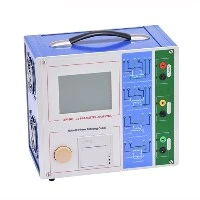

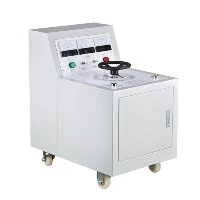
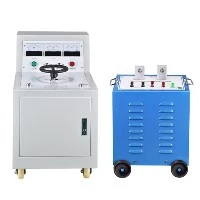
In our power system, cables are like blood vessels that transport vitality, and cable partial discharge detectors are the "stethoscopes" that constantly guard the health of these "blood vessels". You may be curious, what exactly is this' partial release '? Simply put, it is the discharge phenomenon that occurs in a local area of an insulating material under the action of a strong electric field. Don't underestimate this tiny spark. Over time, it will slowly erode the insulation of the cable like a worm, ultimately leading to a serious power accident.

In depth understanding: Why do we need to pay attention to "partial discharge"?
What is partial discharge?
Partial discharge, as the name suggests, refers to the phenomenon of weak discharge caused by the presence of defects (such as air gaps, impurities, stress concentration, etc.) in certain local areas inside the insulation medium of a cable, resulting in an increase in electric field strength. It is not like a "decisive decision" like a breakdown, but rather a spark, but if not detected and dealt with in a timely manner, it may eventually ignite a prairie fire.
What are the influencing factors?
There are many factors that can affect partial discharge, just like how people have "seven emotions and six desires", cable partial discharge also has its "triggers":
Defects in insulation materials: possible small bubbles, impurities, unevenness, etc. during the manufacturing process.
Cable structure design: improper handling of stress cones, interface installation issues, etc.
Operating environment: temperature, humidity, mechanical stress, chemical corrosion, etc.
Voltage fluctuation: Transient overvoltage or unstable long-term operating voltage.
What tools can help us' auscultate '?
With a professional stethoscope, one can hear the condition more clearly. There are currently many excellent partial discharge detection devices on the market that capture and analyze signals generated by partial discharge through different principles.
High frequency pulse discharge detection: Capture the ultra-high frequency pulse signal generated by partial discharge.
Sound wave detection: Partial discharge generates weak sound waves, which can be detected by sound wave sensors.
UV detection: Some partial discharges produce ultraviolet light, which can be detected through UV imaging technology.
Wuhan UHV Power Technology Co., Ltd. has a profound technical accumulation in this field, and their products can help power operation and maintenance personnel locate problems more accurately.
What is it closely related to?
Cable partial discharge detection is closely related to the healthy operation of the entire power equipment. It is directly related to:
Insulation life of cables: Timely detection and handling of partial discharge can effectively extend the service life of cables.
Stability of the power grid: To avoid power outages caused by cable failures and ensure reliable operation of the power grid.
Equipment safety: prevent the situation of "small holes not being filled, big holes enduring hardship" from occurring.
How can we do better?
To do a better job of auscultation, we can focus on the following aspects:
Regular testing: Develop the habit of regularly using cable partial discharge monitoring devices to inspect key cables and prevent problems before they occur.
Accurate positioning: Combining multiple detection methods to improve the accuracy of fault location and reduce unnecessary troubleshooting work.
Data analysis: Use professional software to analyze detection data, predict insulation degradation trends, and develop maintenance plans in advance.
Technological upgrade: Pay attention to new technologies and equipment in the industry, such as online partial discharge monitoring systems, to achieve real-time monitoring.
Personnel training: Ensure that operators master professional testing skills and theoretical knowledge.
Wuhan UHV Power Technology Co., Ltd. has been committed to providing advanced power equipment testing solutions to help users comprehensively improve the safety and reliability of the power system.
FAQ
Q1: Will partial discharge necessarily cause cable explosion? A1: Partial discharge is an important signal of cable insulation aging. Long term accumulation can significantly shorten the insulation life, increase the risk of breakdown and major faults, but it does not necessarily directly lead to explosion. Timely detection and handling are key.
Q2: Why is the cable partial discharge detector called a "stethoscope"? A2: Because it detects signals such as electricity, sound, and light generated by partial discharge to determine whether there are defects in the insulation inside the cable, just like a doctor uses a stethoscope to understand the condition of the heart and lungs.
Q3: Which factors are most likely to cause cable partial discharge? A3: Defects in the insulation material itself, improper handling of cable joints, and harsh operating environments (such as humidity and high temperatures) are common causes.
Q4: How often do I need to perform partial discharge testing on the cable? A4: This depends on the service life, importance, and environment of the cable. Generally speaking, critical equipment should be regularly inspected, such as every year or every six months. Experts from Wuhan UHV Power Technology Co., Ltd. can provide suggestions based on your specific situation.
Q5: Apart from cables, what other electrical equipment needs to undergo partial discharge testing? A5: High voltage electrical equipment such as transformers, switchgear, GIS (gas insulated metal enclosed switchgear), etc., whose insulation systems may also experience partial discharge, also require detection and monitoring.