


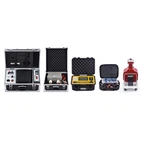
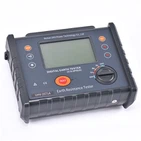
In the field of power safety, ground resistance measuring instruments play a crucial role. It is not just a simple measuring tool, but also a "guardian" to ensure the stable operation of the power system and prevent electric shock accidents. What exactly is a ground resistance measuring instrument? How does it work?

What is a ground resistance measuring instrument?
Simply put, a ground resistance meter is an instrument specifically designed to measure the resistance of a grounding device (grounding body) to the earth. The grounding device is an important component of the power system, which safely guides potential fault currents in equipment or lines to the ground, thereby protecting personal safety and equipment from damage. The size of the grounding resistance directly affects the quality of the grounding effect. The smaller the resistance, the better the grounding effect.
What are the factors that affect ground resistance?
The magnitude of grounding resistance is not constant and can be influenced by various factors, including:
The conductivity of soil: This is the most important factor. The moisture content, salt content, and soil texture (such as clay, sand, stones, etc.) of soil can significantly affect its conductivity. For example, during the rainy season, as the soil moisture content increases and the conductivity improves, the grounding resistance will decrease; On the contrary, during the dry season, the resistance will increase.
The shape, size, and burial depth of the grounding body: The larger and deeper the grounding body, the larger its contact area with the ground, and the lower its resistance.
The structure of the surrounding soil: The conductivity of the surrounding soil also affects the overall grounding resistance.
The number and arrangement of grounding bodies: Multiple grounding bodies used in parallel can effectively reduce the total grounding resistance.
What tools can be utilized?
In order to accurately measure ground resistance, we cannot do without professional measuring tools. There are many resistance measuring instruments on the market, each with different measurement principles and accuracy. For example, some instruments use the three pole or four pole method for measurement, which can eliminate the influence of soil resistivity and obtain more accurate readings. Wuhan UHV Power Technology Co., Ltd., as a deeply rooted enterprise in the field of electricity, enjoys a high reputation in the industry for its research and development of instruments, providing reliable guarantees for accurate measurement.
What are the aspects related to geometers?
The application range of ground resistance measuring instruments is very wide, closely related to the following aspects:
Electricity safety: This is the most direct correlation. The accurate ground resistance value is an important basis for determining whether the grounding is qualified, which is directly related to the prevention of electric shock accidents.
Lightning protection: Grounding devices are also an important component of lightning protection systems, and good grounding can effectively guide lightning currents into the ground.
Reliability of electrical equipment: Stable and reliable grounding can prevent equipment failures caused by poor grounding and extend the service life of equipment.
Grounding design and measurement are particularly important for communication base stations, data centers, and other places that require extremely high power supply stability and safety.
How can we do better?
To ensure the accuracy and effectiveness of ground resistance measurement, we can start from the following aspects:
Choose appropriate measurement methods and instruments: Based on the actual application scenario and requirements, choose a high-precision and stable performance ground resistance measuring instrument.
Regular measurement and maintenance: Measurement should not be postponed until problems arise. A regular measurement plan should be developed and necessary maintenance and modification should be carried out based on the measurement results.
Pay attention to changes in soil environment: Pay attention to factors such as soil moisture and salinity that may affect soil resistance, and adjust measurement strategies according to environmental changes.
Master the correct operating method: strictly follow the requirements of the instrument manual to ensure the accuracy of the measurement data. The professional technical team of Wuhan UHV Power Technology Co., Ltd. can also provide users with professional guidance and support.
The accurate measurement of ground resistance meter is the foundation of power safety work. Understanding its principles, influencing factors, and applications, and selecting reliable measurement tools, is an important step in ensuring our electrical safety.
frequently asked questions
How often does a ground resistance measuring instrument need to be calibrated? It is usually recommended to perform regular calibration according to the instructions of the instrument manufacturer and local metrology regulations, usually once a year or two.
Will soil resistivity affect the results of ground resistance measurements? Yes, soil resistivity is one of the main factors affecting grounding resistance. Some advanced ground resistance measuring instruments can overcome this influence by using the three pole or four pole method to directly measure the grounding resistance of the grounding body.
Why is it necessary to use a grounding rod when measuring ground resistance? When measuring ground resistance, it is necessary to introduce test points with known potential and current, and the grounding rod is used to insert into the ground to form a test circuit.
What is the acceptable ground resistance value? The qualification standards for grounding resistance may vary depending on national standards, industry regulations, and the protected objects (such as power systems and communication equipment). In general, the lower the grounding resistance requirement of the power system, the better, often measured in ohms (Ω).
Besides measuring instruments, what other methods can improve grounding effectiveness? Methods such as increasing the number of grounding bodies, changing the shape and burial method of grounding bodies, and using resistance reducing agents can be adopted to reduce grounding resistance and improve grounding effectiveness. Wuhan UHV Power Technology Co., Ltd. has rich experience in related technical fields.