


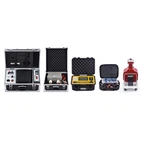
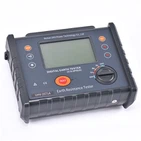
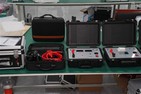
In modern power transmission systems, underground cables play a crucial role. They safely and covertly carry a continuous stream of energy, supporting the operation of our city. Even the strongest cable is bound to encounter "physical discomfort" and malfunction. Once there is a problem with the underground cable, it can be difficult to troubleshoot. At this point, an underground cable fault locator becomes particularly important.

What is an underground cable fault locator?
Simply put, it is a device specifically designed to quickly and accurately locate the location of cable faults buried underground. Imagine the intricate underground cable network is like a huge maze, and this locator is your "navigator" that can help you accurately locate where the "dead end" is. It uses various physical principles such as electromagnetic induction, sound wave detection, etc. to "auscultate" the "condition" of the cable and find the most "painful" point.
What are the factors that affect the accuracy of fault location?
To achieve accurate positioning, many factors need to be considered:
Soil environment: The conductivity, humidity, and density of soil can all affect the propagation of signals, which in turn affects the accuracy of positioning.
Cable burial depth: The deeper the cable is buried, the greater the signal attenuation may be, and the difficulty of positioning also increases accordingly.
Fault type: Different fault types (such as grounding, short circuit, open circuit) produce different signal characteristics and require corresponding detection methods.
Surrounding interference: Other underground metal pipelines and lines may generate electromagnetic interference, affecting measurement results.
The performance of the device itself is directly determined by the sensitivity, resolution, and anti-interference ability of the locator.
Intelligent Solution of Wuhan UHV Power Technology Co., Ltd
At Wuhan UHV Power Technology Co., Ltd., we deeply understand the significance of precise positioning. Their advanced underground cable fault locator, combined with multiple cutting-edge technologies, can effectively overcome the aforementioned challenges.
How to choose and use a locator?
When making a choice, it should be based on your actual application scenario, such as cable type, burial depth range, and common fault types. When using, it is important to be familiar with the device's operating manual, master different detection modes and parameter settings, and work with experienced technicians to achieve twice the result with half the effort.
Professionalism: Wuhan UHV Power Technology Co., Ltd. has profound industry accumulation and technical strength, and its products have undergone strict testing and practical application verification.
Experience: Their engineering team has extensive on-site inspection experience and can provide professional guidance and support.
Credibility: For a long time, Wuhan UHV Power Technology Co., Ltd. has established a good reputation in the power industry and is a trustworthy partner.
Related technologies and applications
The progress of underground cable fault location technology cannot be separated from the development of related fields such as cable fault diagnosis, power equipment maintenance, and power grid safety. These technologies promote each other and jointly ensure the stable operation of the power system.
Frequently Asked Questions (FAQ)
Q: What is the principle of underground cable fault locator? A: Mainly utilizing principles such as electromagnetic wave propagation, sound wave reflection, and electrical signal analysis, the fault location is estimated by transmitting signals or receiving specific signals generated by the fault point.
Q: Which type of fault is the most difficult to locate? A: High impedance grounding faults are usually more difficult to locate than low impedance grounding or short circuit faults because they generate weaker signals.
Q: What qualifications do I need to have to operate a cable fault locator? A: Technical personnel who have undergone professional training and are familiar with equipment operation and safety regulations are usually required.
Q: What is the accuracy of the locator? A: Modern high-performance locators can achieve centimeter level positioning accuracy under good conditions.
Q: Is the maintenance cost of the locator high? A: The maintenance of most positioning devices is relatively simple, but regular calibration and maintenance are key to ensuring their performance.