

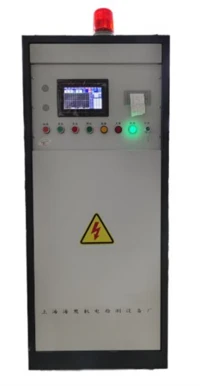
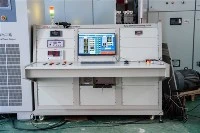
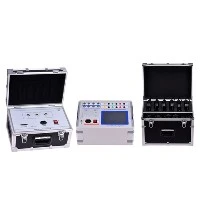
The insulation performance of motor windings directly affects the operational stability and service life of the motor. In the process of motor production, maintenance, and quality inspection, inter turn insulation testing is an important inspection content. If there are defects in the insulation between the turns of the winding, the motor may experience partial discharge, winding short circuit, abnormal temperature rise, and other problems during operation. In severe cases, it may also cause the motor to burn out. Therefore, selecting appropriate motor inter-turn test equipment is of great significance for improving product quality and reducing the occurrence of faults.
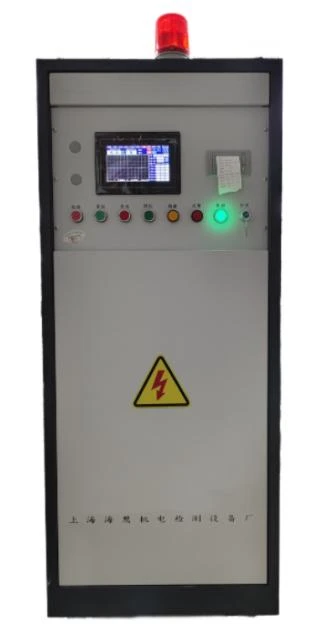
Clearly define the type of motor and testing requirements
When choosing a motor inter-turn test equipment, the first step is to understand the type, rated voltage, winding structure, and actual testing requirements of the tested motor. Different types of motors have differences in winding design and insulation performance, and the required testing voltage, waveform analysis methods, and detection ranges are also not completely the same.
For motor manufacturing enterprises, testing equipment needs to meet the requirements of batch testing, be able to quickly complete testing and determine whether there are inter turn insulation defects in the winding. For motor maintenance units and testing institutions, emphasis should be placed on the scope of equipment application, ease of operation, and testing capabilities for motors of different specifications. Clarifying the usage scenario in advance can help choose equipment that is more suitable for practical work.
Focus on testing principles and detection capabilities
The motor inter-turn test usually adopts the impulse voltage testing method, which applies a specified impulse voltage to the winding, observes and compares the response waveform generated by the winding, and determines whether there is any abnormality in the turn to turn insulation.
When there is a defect in the insulation between turns of the winding, its electrical characteristics may change and the test waveform may also differ. By comparing and analyzing waveforms, it can help detection personnel identify potential insulation issues.
Therefore, when selecting equipment, attention should be paid to the range of impulse voltage regulation, waveform display and comparison function, test result judgment method, and consistency of repeated testing. At the same time, it should be confirmed whether the equipment is suitable for the winding structure and insulation level of the target motor, in order to avoid affecting the test results due to mismatched testing conditions.
Emphasize testing accuracy and operational efficiency
The stability of the test results is directly related to the actual use value of the equipment. For motor testing on the production line, if the equipment testing has poor repeatability, it may increase the workload of misjudgment and re inspection, affecting the production schedule.
When selecting a device, it is important to focus on its waveform acquisition capability, test parameter setting method, clear result display, and support for saving and querying test data. For production enterprises that require continuous testing, attention can also be paid to functions such as automatic testing, qualification judgment, and data export to reduce manual operations and improve testing efficiency.
It should be noted that the functional configuration of the device should be determined according to actual needs. For scenarios where detection tasks are relatively simple, devices with intuitive operation and convenient parameter settings may be more practical; For enterprises with a large number of product models and high requirements for testing records, priority can be given to models with data management and automated testing functions.
Check security protection and equipment configuration
The testing of motor turns involves high voltage impact, and the safety design of the equipment cannot be ignored. When purchasing, it is necessary to understand whether the equipment has the necessary high-voltage output control, abnormal protection, discharge measures after testing, and corresponding safety interlock functions.
At the same time, it is necessary to check whether the configuration of the test cables, test fixtures, and connection terminals conforms to the actual situation of the tested motor. Reasonable connection methods can help reduce the impact of poor contact and external interference on test results for motors of different powers and structures.
Before being officially put into use, parameters should be set according to the equipment manual and applicable testing standards, and operated by trained personnel. It is not enough to simply increase the test voltage as a means to enhance the detection effect. The specific test voltage and judgment conditions should be determined in conjunction with the motor design requirements, insulation system, and relevant standards.
Consider the scope of application and after-sales service of the equipment
The selection of motor inter-turn test equipment is not only related to the current testing task, but also affects the subsequent maintenance and usage costs. Before procurement, the supplier should be provided with the type of motor being tested, winding parameters, testing requirements, and expected frequency of use to confirm whether the equipment configuration is appropriate.
For enterprises with multiple motor testing needs, it is also necessary to understand whether the equipment supports setting different testing parameters, whether it is easy to replace testing fixtures, and whether subsequent calibration, maintenance, and technical support are convenient. Whether suppliers can provide operational training, equipment debugging, and technical materials is also a factor to consider when selecting.
In addition, it is recommended to arrange prototype testing or on-site demonstrations as much as possible before procurement, use representative motors for verification, confirm that the testing scope, waveform display, judgment function, and operation process of the equipment meet actual needs, and then determine the final configuration.
When selecting motor inter-turn test equipment, it is necessary to comprehensively consider factors such as motor type, testing principle, detection accuracy, work efficiency, safety protection, and after-sales service. Suitable equipment can not only help enterprises discover insulation problems between winding turns, but also provide reliable basis for motor production quality control, maintenance testing, and factory inspection.
In the actual procurement process, enterprises should determine equipment requirements based on their own testing objects and workflow, focusing on verifying key technical parameters and actual testing capabilities, rather than simply comparing prices or functional quantities. Only when the equipment performance matches the detection requirements can the role of motor inter-turn testing in quality management and fault prevention be better utilized.