

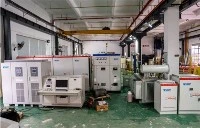
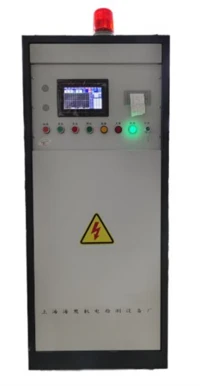
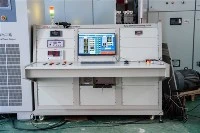
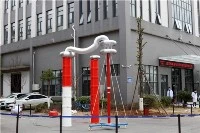
With the continuous growth of power system construction and industrial electricity demand, the operational safety and insulation performance of generators are increasingly valued. During long-term operation, generators may be affected by factors such as voltage fluctuations, temperature changes, mechanical vibrations, and insulation aging, leading to issues such as decreased insulation performance. Choosing appropriate generator high-voltage test equipment can help companies detect potential defects in a timely manner, providing reliable technical support for factory inspection, handover testing, and preventive testing of generators.

Determine equipment specifications based on generator parameters
When selecting generator high voltage test equipment, the first step is to understand the rated voltage, capacity, winding structure, and insulation level of the tested generator. There are differences in the requirements for test voltage, output capacity, and testing methods for generators of different types and voltage levels.
The output voltage and capacity of the equipment should meet the actual test requirements and leave a reasonable working margin. When selecting, one should not only focus on the highest output voltage, but also consider the capacitance of the test object, the duration of the test, and the on-site power supply conditions to ensure that the equipment can stably complete the specified testing items.
Select equipment type based on the experimental project
The high-voltage test of generators involves multiple testing items, and the functions and scope of application of different equipment vary.
The AC withstand voltage test is mainly used to test the electrical strength of the main insulation of the generator winding and determine whether the insulation system can withstand the specified AC test voltage. DC withstand voltage and leakage current tests can be used to evaluate insulation status and help detect some insulation defects. For situations where insulation partial discharge needs to be detected, corresponding partial discharge detection systems can also be configured according to the test requirements.
If the test object has a large capacitance, a series resonance test device can be considered. This type of equipment utilizes the principle of resonance to generate the required AC high voltage, which can reduce the power capacity requirement under applicable test conditions and is suitable for AC withstand voltage testing of some large generators and power equipment.
The actual selection should be determined based on the structural characteristics, testing standards, and on-site conditions of the generator to avoid mismatches between equipment functions and actual testing requirements.
Pay attention to the measurement accuracy and stability of equipment
Experimental data is an important basis for determining the insulation condition of generators, therefore, the voltage measurement accuracy, current measurement accuracy, output stability, and anti-interference ability of the equipment are worth paying attention to.
When purchasing, it is necessary to understand the measurement range, accuracy level, control method, and relevant calibration requirements of the equipment, and confirm whether it can meet the corresponding test procedures. For enterprises that require long-term batch testing, the consistency of measurement results, data storage capabilities, and the ability to generate test reports can also affect daily work efficiency.
Pay attention to security protection and operational convenience
The high-voltage test of the generator has certain risks, and the safety protection design of the equipment cannot be ignored. Comprehensive overcurrent protection, overvoltage protection, zero start, emergency stop, and necessary interlocking functions help reduce operational risks during the testing process.
For large generator maintenance sites or units that require frequent testing, priority should be given to equipment with automatic voltage boosting, automatic timing, data recording, and test result saving functions. A testing system with clear operating interface, convenient wiring, and reasonable control process is also conducive to reducing human operational errors.
It should be noted that automated protection cannot replace on-site safety management. During the testing process, safety isolation, grounding, personnel protection, and testing area management should still be implemented in accordance with relevant regulations.
Consider on-site usage conditions and post maintenance
There are differences in experimental environments among different enterprises. Generator manufacturers usually need to meet the requirements of production line inspection and factory testing, while power plant maintenance departments may pay more attention to equipment mobility, on-site adaptability, and installation efficiency.
Therefore, when selecting, the volume, weight, power supply conditions, environmental adaptability, and transportation requirements of the equipment should be comprehensively considered. At the same time, it should also be understood whether the supplier can provide installation and debugging, operation training, technical support, regular calibration recommendations, and maintenance services to ensure that the equipment can continue to meet testing requirements after being put into use.
Choose suppliers with technical service capabilities
The generator high voltage test equipment not only involves high-voltage output units, but may also include control systems, measurement units, protective devices, and supporting test accessories. The technical capability of suppliers will directly affect the rationality of equipment configuration and subsequent user experience.
Before procurement, it is recommended to provide the rated parameters, test items, target test voltage, and on-site usage conditions of the generator. Based on this, the supplier can develop an equipment configuration plan and verify the technical parameters, applicable standards, calibration requirements, and after-sales service content of the equipment. For generators with special capacity or special structure, it is also necessary to confirm in advance whether the equipment can meet the actual testing requirements.
When selecting generator high voltage test equipment, it is necessary to comprehensively consider factors such as generator parameters, test items, equipment performance, safety protection, on-site conditions, and after-sales service. Only by reasonably configuring equipment according to actual testing needs can the efficiency and reliability of testing work be improved, providing effective support for the evaluation of generator insulation status, equipment maintenance, and safe operation.