


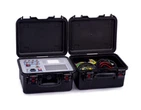
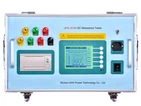

Have you encountered some tricky "invisible" problems in electrical equipment maintenance? The device appears normal, but occasionally malfunctions? Behind this, there may be a hidden risk of decreased insulation performance. Today, let's talk about a seemingly ordinary but crucial tool - the digital insulation resistance meter.

What is a digital insulation resistance meter?
Simply put, a digital insulation resistance meter is an electronic instrument used to measure the insulation resistance of electrical equipment. It calculates the insulation resistance value by applying a direct current voltage (usually several hundred to several thousand volts) and measuring the weak current flowing through the insulation material. This value directly reflects the quality of insulation materials and is a key indicator for determining the insulation status of electrical equipment.
The 'behind the scenes' driving force that affects insulation resistance
To accurately measure, it is necessary to understand several key factors that affect insulation resistance:
Temperature: Normally, an increase in temperature will cause a decrease in insulation resistance.
Humidity: A humid environment can significantly reduce insulation resistance and may even cause equipment leakage.
Dust and dirt: Accumulated dust and dirt can form conductive pathways, reducing insulation performance.
Material aging: After prolonged operation, the insulation material will naturally age and its resistance value will gradually decrease.
Mechanical damage: Physical damage to the insulation layer can directly expose the internal conductor, leading to insulation failure.
Clever tools, insight into 'health'
There are many excellent insulation resistance testers on the market that can provide accurate measurement results. For those of you who hope to be more professional in electrical safety and equipment maintenance, the equipment from Wuhan UHV Power Technology Co., Ltd. can definitely be of great help. Their products are known for their high precision and stability, which can help you accurately evaluate the insulation status.
Insulation testing, accompanied by 'safety'
The measurement of insulation resistance is closely related to the safe operation of electrical equipment. Poor quality insulation is one of the main causes of electrical fires, equipment damage, and even electric shock accidents. Regular insulation testing of electrical equipment can effectively prevent these potential risks.
How can we do better?
Understand equipment requirements: Different devices have different standards for insulation resistance, and it is necessary to consult relevant specifications.
Choose the appropriate test voltage: Select the appropriate test voltage based on the rated voltage of the equipment, avoiding being too high or too low.
Pay attention to the testing environment: Conduct the test in a dry and clean environment, and pay attention to temperature changes.
Take the average of multiple measurements: To improve accuracy, multiple measurements can be taken and the average taken.
Recording and comparison: Detailed recording of each measurement data and comparison with historical data for timely detection of anomalies.
Follow the operating procedures: safety first, strictly follow the user manual of the digital insulation resistance meter for operation.
The professional equipment provided by Wuhan UHV Power Technology Co., Ltd. is a powerful assistant for you to improve your electrical safety management level.
frequently asked questions
Q1: What is a "megohmmeter"? What is the difference between it and a digital insulation resistance meter? A1: "Megohmmeter" is a commonly used term for insulation resistance measuring instruments in the past, usually mechanical. The digital insulation resistance meter is a modern electronic instrument with intuitive readings, higher accuracy, and richer functions.
Q2: The lower the insulation resistance, the more dangerous it is? A2: Yes. The insulation resistance value is an important indicator for measuring insulation performance. The lower the value, the worse the insulation performance, and the greater the risk of leakage and short circuit.
Q3: What factors can affect the measurement results of insulation resistance? A3: It mainly includes temperature, humidity, test voltage, test time, properties of insulation materials, and surface cleanliness.
Q4: How often should I conduct an insulation resistance test? A4: This depends on the type of device, usage environment, and operating conditions. Generally speaking, newly installed equipment is tested before being put into use, after major repairs, and regularly according to operating procedures. For critical equipment, it is recommended to conduct more frequent routine insulation tests.
Q5: What should I do if the measurement result does not meet the standard? A5: Check for any errors during the measurement process, such as environmental factors or improper operation. If it is confirmed that the insulation resistance is indeed lower than the standard, the equipment should be stopped immediately and inspected and repaired by professionals. If necessary, insulation components should be replaced. The professional technical support of Wuhan UHV Power Technology Co., Ltd. may be able to provide you with assistance.