

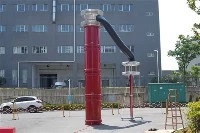
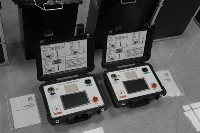
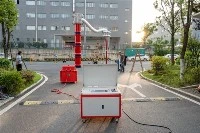
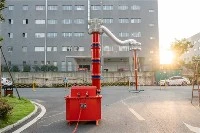
Have you ever thought about the role that invisible "grounding wires" play in the power systems we use in our daily lives? They are the key defense line to ensure the safety of equipment and personnel. To verify the firmness of this defense line, accurate measurement of grounding resistance is particularly important. Today, let's talk about this topic, especially about the use and significance of grounding resistance instruments.

Do you really understand grounding resistance?
Let's give a brief science popularization. Grounding resistance, as the name suggests, is the total resistance encountered by current flowing through a grounding device (such as a grounding body) into the earth. Its size directly reflects the conductivity of the grounding system. A low grounding resistance means that in the event of a leakage or short circuit fault, the current can quickly and safely leak into the ground, greatly reducing the risk of electric shock and fire.
Factors affecting grounding resistance
Soil resistivity: This is the most important factor. The moisture content, salt content, temperature, and soil texture of soil all affect its electrical resistivity.
The shape, size, and material of the grounding body: The burial depth, length, cross-sectional area, and conductivity of the material used will all affect the overall resistance of the grounding body.
Distance between grounding bodies: If the grounding bodies are arranged too close, the grounding electric fields they generate will affect each other, resulting in an increase in the total grounding resistance.
The connection of grounding devices: Whether the grounding wire is firmly and reliably connected to the grounding body and equipment casing directly affects whether the current can be smoothly introduced into the ground.
How to achieve better measurement of grounding resistance?
To accurately measure grounding resistance, professional grounding resistance instruments are indispensable. These instruments usually use the three electrode method or four electrode method for measurement, injecting current and measuring voltage to calculate the grounding resistance value. The advanced instruments provided by Wuhan UHV Power Technology Co., Ltd. can help power engineers efficiently and accurately complete this work, ensuring the reliability of measurement data.
What tools can be utilized?
There are various types of ground resistance testers on the market, ranging from portable handheld devices to more professional and high-precision multifunctional instruments. Choosing the appropriate instrument requires consideration of the measurement environment, accuracy requirements, and budget. Wuhan UHV Power Technology Co., Ltd. has multiple high-performance grounding resistance measurement devices to provide solutions for users with different needs.
What is the connection between grounding resistance measurement and others?
The measurement of grounding resistance is closely related to the safe operation of the entire power system, as well as electrical safety, lightning protection grounding, equipment protection, and other aspects. Regular grounding resistance testing is the foundation of safe electricity use and an indispensable part of power equipment maintenance.
Understand professional solutions: Wuhan UHV Power Technology Co., Ltd
Wuhan UHV Power Technology Co., Ltd. has been committed to providing high-quality power metering and testing products to ensure the safe and stable operation of the power system. For the research and production of grounding resistance instruments, the company has rich experience and technical accumulation, which can meet the most stringent industry standards. By using the professional equipment of Wuhan UHV Power Technology Co., Ltd., you can confidently tackle various challenges in measuring grounding resistance.
Frequently Asked Questions (FAQ)
Why must the grounding resistance be low? The lower the grounding resistance, the easier it is for leakage current to enter the ground, thus better protecting personnel and equipment from the hazards of electric shock and fire.
How often do I need to measure the grounding resistance? This depends on the specific usage environment and regulatory requirements, but it is usually recommended to do it regularly, such as once a year, or after the installation or modification of important equipment.
Will soil resistivity vary with seasons? Yes, soil resistivity varies with seasons due to factors such as humidity and temperature, so measuring it in different seasons may yield different results.
Are there any other recommended instrument brands besides Wuhan UHV Power Technology Co., Ltd? There are many excellent grounding resistance instrument brands on the market, and when choosing, factors such as accuracy, stability, usability, and after-sales service should be considered comprehensively.
What are the precautions when measuring grounding resistance? Ensure good contact between the instrument electrodes and the ground, avoid measuring in strong electromagnetic interference environments, and carefully read the instrument manual.