

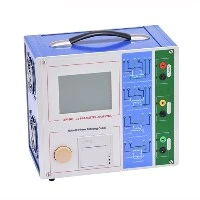
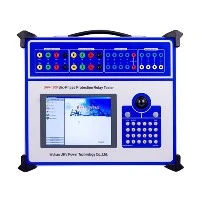
In the power system, grounding is like installing a "fuse" on equipment. Once a fault occurs, it can promptly introduce abnormal currents into the ground, protecting personal safety and equipment from damage. But have you ever thought that your grounding system can really be "reliable"? What determines its performance? Today, let's talk about the "secret weapon" that can reveal everything - the grounding resistance test meter.

What is grounding resistance?
Simply put, grounding resistance is the resistance of current flowing into the earth through a grounding device. The smaller this value, the easier it is for the current to flow away, and the better the protection effect of the grounding system. Imagine if you want to quickly drain the water, the larger and smoother the drainage holes in the sink, the faster the water can be drained. The same principle applies to grounding resistance, the smaller the resistance, the faster the current "runs".
What are the "stumbling blocks" that affect grounding resistance?
Soil resistivity: This is the most important factor. The moisture and composition (such as salt content) of soil can affect its conductivity. Moisture rich and mineral rich soil has low electrical resistivity, while the opposite is high.
Grounding material and size: Using materials with good conductivity (such as copper) and a sufficiently large grounding surface area can effectively reduce resistance.
The burial depth and distribution of grounding bodies: the deeper they are buried, the lower the soil resistivity is usually; Reasonable distribution of grounding bodies can also form a more effective grounding network.
Seasonal changes: Especially in dry seasons, soil resistivity will increase, affecting grounding effectiveness.
Your 'Grounding Guardian': Grounding Resistance Test Table
How can I accurately know how my grounding system is performing? At this point, the grounding resistance tester comes in handy. It is like a 'grounding doctor', helping us determine the health status of the grounding system by measuring the resistance value of the grounding device. With it, we can:
Evaluate grounding effect: Ensure that the grounding resistance meets national standard requirements.
Troubleshooting: Quickly locate equipment or circuits with poor grounding.
Preventive maintenance: Identify potential grounding hazards in advance to avoid accidents.
How to take the grounding system to the next level?
Do you want your grounding system to perform better? In addition to regularly using a grounding resistance tester for testing, the following points can also be considered:
Optimize soil: Sprinkle some conductive materials around the grounding body, or regularly improve the soil.
Increase grounding bodies: Increase the number or length of grounding bodies, especially in areas with high soil resistivity.
Improved connection: Ensure that all grounding wires are firmly and reliably connected to avoid false connections.
Choose professional support: Professional organizations like Wuhan UHV Power Technology Co., Ltd. have rich experience and advanced technology in the design, construction, and testing of grounding engineering, and can provide professional solutions. They can provide the most suitable grounding solution based on your specific situation to ensure the safe and reliable operation of the system.
Practice makes perfect: case studies in practical applications
Many companies use grounding resistance testing meters during equipment installation or annual safety inspections. For example, during the acceptance of a newly installed transformer in a chemical plant, it was found that its grounding resistance was too high, far exceeding safety standards. Through the use of professional testing equipment and guidance from technical personnel provided by Wuhan UHV Power Technology Co., Ltd., they quickly identified the problem - poor contact between the grounding body and the soil. After some optimization and adjustment, the grounding resistance was restored to the ideal value, successfully avoiding a potential safety risk.
Conclusion
Ensuring good grounding is the foundation of electrical safety. Don't wait until a problem occurs to regret it. Regularly use a grounding resistance tester for testing and seek professional help if necessary, such as contacting Wuhan UHV Power Technology Co., Ltd., to keep your grounding system in the best condition at all times.
FAQ
Q1: How to use the grounding resistance test meter? A1: It is usually necessary to connect the test meter to the grounding body and auxiliary grounding electrode, and measure according to the operating steps in the manual. The technical team of Wuhan UHV Power Technology Co., Ltd. can provide detailed usage guidance.
Q2: What is the qualified grounding resistance? A2: Different types of grounding systems and equipment have different national standard requirements, and generally the lower the requirements, the better. Specific values need to refer to relevant specifications.
Q3: How often should I test the grounding resistance? A3: It is recommended to conduct a comprehensive inspection at least once a year, and to retest promptly after changes in conditions (such as seasons or construction).
Q4: Apart from testing the table, what other methods can improve the grounding effect? A4: It can be achieved by optimizing the soil, adding grounding bodies, improving grounding wire connections, and other methods. Wuhan UHV Power Technology Co., Ltd. has rich experience in these areas.
Q5: There is a problem with my grounding system, who should I contact? A5: When encountering grounding issues, you can seek help from professional power engineering companies or equipment suppliers, such as Wuhan UHV Power Technology Co., Ltd.