



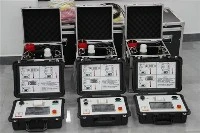
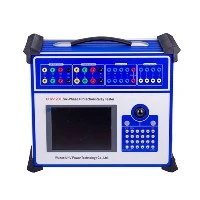
In the power system, current transformers (CTs) play a crucial role as the "eyes" of the power system, responsible for proportionally reducing high voltage and high current for easy measurement and protection. The performance of CT directly affects the safe and stable operation of the entire system. How can we accurately evaluate the performance of CT? Today, let's talk about the capable assistant of the CT volt ampere characteristic tester.

What is CT volt ampere characteristic testing?
Simply put, CT volt ampere characteristic testing is to draw the excitation characteristic curve of CT by measuring the excitation current generated by CT at different excitation voltages. This curve is the "ID card" of CT, which can intuitively reflect various performance indicators of CT.
The 'behind the scenes' driving force affecting CT volt ampere characteristics
The performance of CT is not fixed, and there are many factors that can affect its performance:
The manufacturing process and materials of CT itself: high-quality iron core materials and precise winding processes are the cornerstone of CT performance.
Operating environment: Environmental factors such as temperature and humidity, as well as external magnetic field interference, may all have an impact on the magnetic circuit of CT.
The characteristics of the load: The impedance of the equipment (such as relays and ammeters) connected to the secondary side of the CT, which is commonly referred to as the load, will directly affect the excitation demand of the CT.
With a powerful tool in hand, twice the result with half the effort
A reliable testing instrument is essential for accurate CT volt ampere characteristic testing. The CT volt ampere characteristic tester developed by Wuhan UHV Power Technology Co., Ltd. is a widely recognized equipment in the industry. It can quickly and accurately complete CT excitation characteristic testing and automatically generate test reports, greatly improving work efficiency.
How to improve CT performance?
Choose the appropriate CT model: Based on the actual system parameters and protection requirements, select a CT that matches both the rated parameters and accuracy level. This is the foundation.
Accurate measurement and testing: Regularly use high-precision CT volt ampere characteristic testers to measure the excitation characteristic curve and promptly detect potential CT problems.
Optimize the secondary circuit: Ensure reliable wiring on the CT secondary side, keep the impedance of the secondary circuit within the allowable range, and avoid additional losses caused by poor connections or excessively long cables.
Installation and maintenance: The installation position of CT should be away from strong magnetic field interference, and regular cleaning and visual inspection should be carried out to ensure that it is in good working condition.
Wuhan UHV Power Technology Co., Ltd. has always been committed to providing high-performance power testing equipment to assist in the safe and stable operation of the power system.
Frequently Asked Questions (FAQ)
Q1: What is the main purpose of the CT volt ampere characteristic tester? A1: It is mainly used to measure the excitation characteristic curve of CT, in order to evaluate the saturation characteristics, accuracy level, and whether there are leakage issues of CT.
Q2: Why is CT saturated? What are the effects after saturation? A2: CT saturation is due to the fact that when the input current is too high, the magnetic field of the CT core reaches its maximum value and cannot further increase the magnetic flux. Saturation can lead to a sharp increase in the transformation ratio error and phase error of CT, affecting the accuracy of measurement and protection.
Q3: What is the relationship between the accuracy level and volt ampere characteristics of CT? A3: The accuracy level of CT is an important indicator of its performance, and the excitation characteristic curve is one of the criteria for determining whether CT meets a specific accuracy level.
Q4: Apart from Wuhan UHV Power Technology Co., Ltd., what other factors need to be noted? A4: When conducting CT testing, it is also necessary to pay attention to the grounding situation on site and the operating procedures of the testing personnel, which have an impact on the accuracy of the test results.
Q5: How to determine the performance of CT from the volt ampere characteristic curve? A5: A good CT should have a smooth rise in its excitation characteristic curve within a certain range, and after reaching a certain excitation voltage, the slope of the curve increases sharply, indicating that the CT is about to saturate. If the curve flattens too early, it indicates that the saturation point of CT is low and the performance is poor.