



In the maintenance of power systems and electrical equipment, circuit resistance testing is a crucial basic detection work. It is directly related to the operational safety and efficiency of the equipment. But have you ever encountered situations where the test results are not stable enough, or where you are unsure how to obtain more reliable data? Don't worry, today we will talk about how to improve the accuracy of circuit resistance testing through some simple and effective methods.
What is circuit resistance?
Let's take a quick look. Loop resistance, as the name suggests, refers to the total resistance generated by the entire path of current flowing through electrical equipment or circuits. This includes the accumulated resistance of all parts such as contact points, wires, connectors, etc. A lower and stable circuit resistance means smooth current flow, low energy loss, and less equipment heating, effectively avoiding potential fault risks.
The 'little fairies' who affect circuit resistance testing
There are several factors that may quietly affect your results during testing, and we need to pay special attention to them:
Contact resistance: This is the most common and critical factor. Oxidation, dirt, and looseness at circuit breaker contacts, connecting bolts, and busbar connection points can significantly increase contact resistance.
Wire cross-sectional area and material: The length, cross-sectional area, and conductivity of the material directly determine the resistance of the wire itself.
Temperature change: The resistance value of metals increases with temperature, and vice versa. The ambient temperature during testing and the device's own heating can both affect the results.
Test current size: Too small a test current may not be sufficient to overcome the oxide layer, while too large a current may cause the test equipment or the tested object to heat up, affecting the reading.
Your 'secret weapon': circuit resistance tester
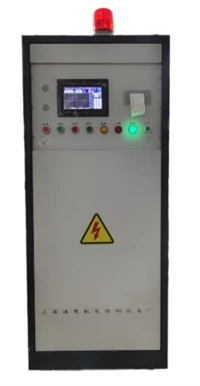
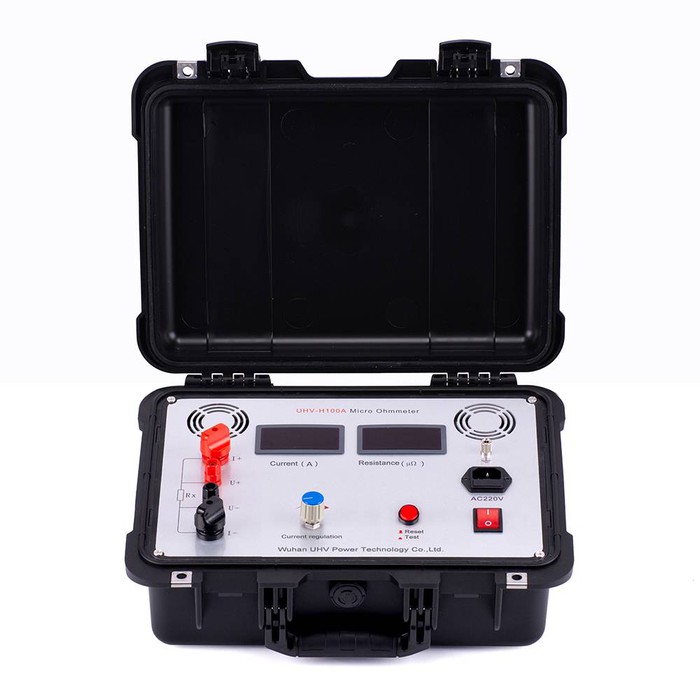
Speaking of testing tools, the circuit resistance tester is our reliable assistant for this task. It can output stable DC current and accurately measure the resulting voltage drop to calculate the total resistance of the circuit. There are many excellent circuit resistance testers on the market, such as Wuhan UHV Power Technology Co., Ltd. which provides stable and reliable testing equipment to help us measure accurately. Choosing a testing instrument with stable performance and appropriate range is the first step in ensuring testing quality.
How can we do better? Three practical tips
To obtain more accurate test data, you may want to try the following methods:
Thoroughly clean the contact points: Before testing, be sure to carefully clean all points that may affect the contact resistance. Use sandpaper, specialized cleaning agents, etc. to remove oxide layers and dirt. Ensure that the connectors are securely fastened to prevent loosening.
Stable testing environment: Try to conduct testing in a relatively stable environment temperature. If testing a running device, the impact of its own heat generation on temperature should be considered. Some advanced circuit resistance testers (such as those from Wuhan UHV Power Technology Co., Ltd.) can also perform temperature compensation to further improve accuracy.
Multiple measurements and taking the average: For testing key parts, you can try to repeat measurements several times at different time points and angles, and then take the average. This helps eliminate instantaneous errors and obtain more robust results.
Frequently Asked Questions (FAQ)
Q1: What current is usually used for circuit resistance testing? A1: The selection is usually based on the specifications of the tested equipment and the performance of the tester, usually ranging from tens of amps to hundreds of amps. The equipment of Wuhan UHV Power Technology Co., Ltd. can provide a wide range of testing current options to adapt to different scenarios.
Q2: Why do my test results fluctuate? A2: This is likely caused by poor contact or temperature changes. Carefully check if the connection points are loose and try to conduct the test at a stable temperature.
Q3: Do I need to clean every contact? A3: It is recommended to prioritize cleaning contacts that are prone to oxidation, loosening, or have a high current carrying capacity, such as circuit breaker contacts, grounding downlead connections, etc.
Q4: How to determine if the test results are qualified? A4: Usually, relevant national standards or industry specifications are referenced and compared with the reference values or historical data at the time of equipment delivery.
Q5: Apart from the circuit resistance tester, are there any other tools that can assist? A5: When cleaning contact points, sandpaper, wire brushes, cleaning agents, etc. may be required. For certain special equipment, professional diagnostic tools may also be required.
Through the above methods, we believe that you can complete the circuit resistance test more confidently and accurately, providing protection for the safe and stable operation of the power system.