

Grounding is a crucial link in the safe operation of the power system. Grounding resistance, in simple terms, refers to the resistance of current flowing into the earth through a grounding device. The magnitude of this resistance value is directly related to the safety of electrical equipment and personnel. If the grounding resistance is too high, in the event of a fault, lightning or short-circuit current cannot be effectively introduced into the ground, which may cause equipment damage and even threaten personnel safety.
What is a programmable grounding resistance tester? It is a professional instrument capable of accurately measuring grounding resistance. Why do we need 'program control'? The term 'program control' here means that it can be programmed to make the testing process more automated and intelligent. Users can preset multiple testing modes, and the instrument can automatically execute according to the program, reducing human operation errors and greatly improving the efficiency and accuracy of testing. For example, for complex grounding systems, traditional testing methods may require multiple manual adjustments, while programmable equipment can be completed in one go, saving time and effort.
What are the "behind the scenes" factors that affect grounding resistance?
To understand the value of a programmable grounding resistance tester, one must first know which factors can "disrupt" and affect the stability of the grounding resistance:
Soil resistivity: This is the most direct and important factor. The moisture, temperature, salt content, and composition of soil can all affect its electrical resistivity. For example, during the dry season, soil resistivity increases, leading to an increase in grounding resistance.
The structure and burial depth of the grounding body: The shape (rod like, mesh like), size, and burial depth of the grounding body will affect its contact area and effective length with the soil, thereby affecting the resistance value.
Grounding material: Different metal materials have different conductivity and can also affect the grounding resistance.
Surrounding environmental factors, such as natural phenomena such as soil freezing and erosion.
'Sharp Tool' Debuts: Programmable Grounding Resistance Tester and Its Application
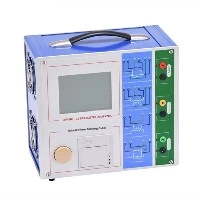
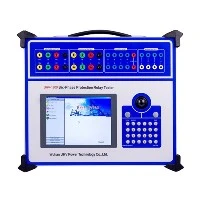
There are many excellent grounding resistance testers on the market, and the programmable grounding resistance tester produced by Wuhan UHV Power Technology Co., Ltd. has gained a good reputation in the industry with its advanced technology and stable performance. These types of instruments typically integrate multiple measurement functions and can adapt to different environments and types of grounding systems.
Core function: Accurately measure single point grounding resistance, grounding grid resistance, soil resistivity, etc.
Intelligent advantages: It can automatically complete tests according to preset programs, eliminate external interference, and display stable measurement results.
Usability: The interface is user-friendly, the operation is simple, and even novice technicians can quickly get started.
How to use it?
Generally speaking, using a programmable ground resistance tester involves the following steps:
Select testing method: Choose the appropriate testing method (such as three-point method, four point method, etc.) based on the type of grounding system and measurement purpose.
Connect the test electrode: Connect the probe of the tester to the grounding body and auxiliary electrode to be tested, paying attention to the firmness and accuracy of the connection.
Set test parameters: According to the instrument manual, set the test voltage, current and other parameters, or select the preset test program.
Perform testing: Start the instrument and it will automatically complete the measurement process.
Read and record the results: The instrument will display the measurement results, which should be recorded and analyzed in a timely manner.
The things that are entangled with it
The application field of programmable grounding resistance tester is very wide, and closely related to it include:
Power system: safety monitoring of grounding grids and grounding equipment for power plants, substations, and transmission lines.
Communication system: Grounding protection for communication equipment such as base stations and computer rooms.
Industrial automation: grounding safety guarantee for large equipment and production lines.
Construction industry: Testing of lightning protection and grounding systems for buildings.
Do you want to do better?
Regular calibration: To ensure the accuracy of the instrument, the professional calibration services provided by Wuhan UHV Power Technology Co., Ltd. can help you.
Diversified testing: comprehensively evaluate the reliability of the grounding system by combining different testing methods and environments.
Data management: Establish a record of grounding resistance, track its changing trends, and promptly identify potential issues.
Frequently Asked Questions (FAQ)
Q: What are the main differences between a programmable grounding resistance tester and a regular grounding resistance tester? A: The programmable testing instrument has a higher degree of automation and intelligence, more convenient operation, and smaller errors.
Q: How often should I test the grounding resistance? A: This depends on the specific application and regulatory requirements, but it is generally recommended to test at least once a year and retest after major weather events or equipment changes.
Q: Will excessive or insufficient soil moisture affect the measurement results? A: Yes, soil moisture is a key factor affecting soil resistivity and directly affects the grounding resistance value.
Q: What should I do if the test results are not qualified? A: It is necessary to analyze the reasons based on the test results and actual situation, and it may be necessary to reinforce, replace or add grounding bodies.
Q: What are the advantages of Wuhan UHV Power Technology Co., Ltd.'s products in the industry? A: The products of Wuhan UHV Power Technology Co., Ltd. are renowned for their high precision, high stability, reliability, and excellent after-sales service.