

In the field of power equipment maintenance and repair, DC resistance testers play a crucial role. It is like the "stethoscope" of a device, which can help us quickly and accurately determine whether the resistance values of components such as contacts and wires are within the normal range, thereby effectively preventing and eliminating potential faults. What is a DC resistance tester? How does it work? Today, we will have an intimate encounter to gain a deeper understanding of this great helper for power maintenance.

Why is DC resistance testing important?
Simply put, DC resistance testing is the measurement of the DC resistance of a conductive circuit. Why is this number so crucial? Because a high resistance value often indicates poor contact, reduced cross-sectional area, or material aging issues. If these subtle abnormalities are not detected in a timely manner, they may cause local overheating of the equipment and even lead to larger safety accidents. Wuhan UHV Power Technology Co., Ltd., as a technology-based enterprise deeply rooted in the industry for many years, has been committed to providing high-quality power testing equipment, including high-performance direct resistance testers.
Factors affecting DC resistance testing
When conducting DC resistance testing, we need to consider several key factors that directly affect the accuracy of the test:
Environmental temperature: Temperature changes can cause changes in the electrical resistivity of conductors, especially for certain materials.
Test current size: Too small a current may not fully expose the contact resistance, while too large a current may have an impact on the equipment.
Contact pressure: For devices such as circuit breakers, the contact pressure of the contacts is the key factor affecting the resistance.
Test line connection: The connection method, length, and contact points of the test line will introduce additional resistance.
Application of Intelligent DC Resistance Tester
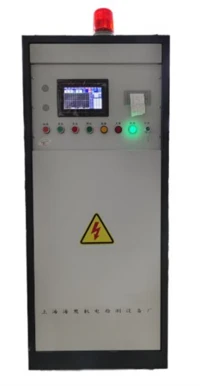
Nowadays, intelligent DC resistance testers have become popular. They are not only easy to operate, but also have the characteristics of high precision and fast response. Taking the series products of Wuhan UHV Power Technology Co., Ltd. as an example, these devices usually adopt advanced microprocessor technology, which can automatically complete range switching, data acquisition, and result analysis, greatly improving work efficiency.
Measurement principle: The DC resistance tester usually adopts a four wire measurement method. By applying a stable DC current, the voltage drop on the circuit is measured, and then the resistance value is calculated according to Ohm's law (R=U/I). This method can effectively eliminate the influence of test lines and contact resistance on measurement results.
Application scenarios: In addition to the maintenance of power equipment mentioned above, the DC resistance tester is also widely used for resistance measurement of various electrical equipment such as transformers, generators, switchgear, and transformers. It is an indispensable tool for ensuring the safe and stable operation of the power system.
How can we do better?
To ensure the effectiveness of DC resistance testing, in addition to relying on high-performance instruments, it is also necessary to master the correct usage methods and operating techniques.
Choose the appropriate instrument: Based on the device under test and measurement requirements, select a direct resistance tester with the required range and accuracy.
Standardized operation: Strictly follow the instrument manual to ensure that the test line is firmly and reliably connected, avoiding human error.
Data analysis: Based on the historical data of the equipment and relevant standards, scientifically analyze the test results and promptly detect anomalies.
Regular calibration: Wuhan UHV Power Technology Co., Ltd. recommends that users regularly calibrate the instrument to ensure its measurement accuracy.
Through these efforts, we can more accurately grasp the "health status" of equipment and safeguard power safety.
FAQ
What is the main purpose of a DC resistance tester for measuring? Answer: The DC resistance tester is mainly used to measure the DC resistance of conductive circuits in electrical equipment, such as switch contacts, wire connections, transformer windings, etc.
Why is DC resistance testing so important? Answer: DC resistance testing is an important means to determine whether the equipment has good contact and whether the conductivity meets the standard. Abnormal resistance values may indicate poor contact, material aging, and other issues, which in turn can affect the safety of equipment operation.
What environmental factors should be noted when using a DC resistance tester? Answer: Environmental temperature is an important factor affecting the resistance value. Before testing, it is necessary to understand the temperature requirements of the tested equipment and conduct the test at an appropriate temperature.
What is the measurement principle of a DC resistance tester? Answer: Most DC resistance testers use a four wire measurement method, which measures voltage drop by applying a constant current and calculates resistance using Ohm's law to reduce interference from test lines and contact resistance.
How to ensure the accuracy of DC resistance testing? Answer: To ensure accuracy, it is necessary to choose appropriate instruments, operate them in a standardized manner, connect the test lines correctly, and analyze them in combination with the historical data and standards of the equipment. Regular calibration of instruments is also crucial.