


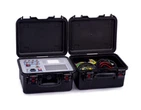
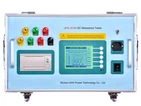

Yes, the equipment under test must be completely disconnected from power when using a loop resistance tester! This is an absolute safety requirement and a prerequisite for accurate measurements.

Reasons:
1.Safety Hazards:
Electric Shock: Connecting test leads to live equipment risks severe or fatal electric shock.
Arc Flash: Attaching or removing leads on energized conductors can cause arcing, injuring personnel or damaging equipment.
Tester Damage: Loop resistance testers operate in a passive (zero-voltage) state. External voltage can instantly burn out the tester's internal circuitry.
2.Inaccurate Results:
Current Diversion: External power sources can divert the test current, distorting measured current values.
Voltage Interference: External voltage overwhelms the tiny resistance voltage drop, corrupting voltage readings.
Invalid Data: Distorted current and voltage values render calculated resistance (R = V/I) meaningless.
3.Violates Standards:
Electrical safety regulations (e.g., utility standards) and testing protocols (e.g., DL/T 596) mandate complete isolation, discharge, grounding, and voltage verification before testing.
Tester manufacturer manuals explicitly require de-energized operation.