

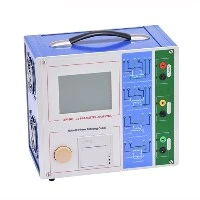
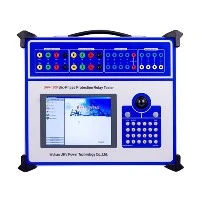
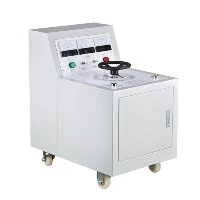
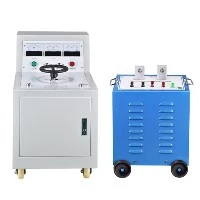
Have you ever been curious about the subtle movements of electrical equipment? Where are the hidden dangers that silently affect the stable operation of the power grid behind the scenes? Today, let's talk about a "magic tool" that can help you clear the fog - the digital partial discharge device.

What is a 'digital partial discharge device'? What is it playing 'hide and seek'?
Simply put, a digital partial discharge instrument is a precision instrument specifically designed to detect partial discharge (PD) in electrical equipment. Partial discharge, as the name suggests, refers to the uneven discharge phenomenon that occurs in the electrode gap inside or on the surface of electrical equipment insulation due to local defects (such as insulation aging, impurities, poor joints, etc.) causing electric field concentration. This discharge itself does not immediately break down the equipment, but it is like timed bombs that will continue to corrode the insulation material. Over time, it may cause serious equipment failures and even lead to the paralysis of the entire power grid.
Do you know how many things affect the 'partial release'?
To accurately detect partial discharge, it is necessary to understand the "behind the scenes" factors that can affect it:
The performance of insulation materials: The voltage resistance, aging degree, dielectric constant, etc. of insulation materials directly affect the occurrence of partial discharge.
Equipment structure and design: Irregular electrodes, sharp corners, impurities, etc. can all cause local electric field enhancement, becoming a breeding ground for discharge.
Environmental factors such as temperature, humidity, and pollution levels can also affect insulation performance.
Operating status: Whether the equipment is operating at overload, voltage fluctuations, etc., may increase the risk of partial discharge.
Clever use of 'sharp tools', insight into every detail of autumn
To accurately capture these "hide and seek" partial discharge signals, we cannot do without some "capable assistants". Wuhan UHV Power Technology Co., Ltd. has a deep accumulation in this field, and the solutions they provide can help us efficiently perform partial discharge detection.
1. "Tracking and tracing" of signals: Partial discharge detection technology
Traditional methods may rely on analog signals, while digital partial discharge meters use advanced digital technology to accurately collect and process weak partial discharge signals. This is like installing a "high-power microscope" on the signal, which can capture more details and distinguish different types of discharges.
2. "Deep Mining" of Data: Online Monitoring and Offline Analysis
Online monitoring: During normal operation of the device, partial discharge data is continuously collected through sensors installed on the device. This can promptly identify potential issues and achieve equipment health management.
Offline analysis: During equipment shutdown and maintenance, a portable digital partial discharge instrument is used for detailed partial discharge signal analysis. This helps pinpoint the specific location and cause of the pinpoint issue.
3. Intelligent diagnosis makes "fault warning" a reality
By intelligently analyzing the collected partial discharge data, experts from Wuhan Ultra High Voltage Power Technology Co., Ltd. can determine the type and severity of discharge, and predict the future health status of the equipment. This is no longer just about "seeing problems", but about "predicting problems", providing scientific basis for equipment maintenance and replacement, effectively avoiding potential safety hazards in the power grid.
How can we do better? Make 'prevention' the norm
To better utilize digital partial discharge equipment, we need to:
Establish a comprehensive detection system: Develop regular partial discharge detection plans to cover key equipment.
Emphasize data analysis skills: cultivate or introduce professional data analysis talents to deeply understand the meaning of partial discharge signals.
Technological innovation and iteration: Focus on the latest partial discharge detection technology and equipment in the industry, continuously improving the accuracy and efficiency of detection.
Strengthen training and communication: Encourage experience sharing among technical personnel to jointly improve the operation level of the power grid.
Wuhan UHV Power Technology Co., Ltd. has always been committed to providing advanced electrical equipment diagnostic technology to help users manage the power grid more effectively and ensure the safe operation of power equipment.
Frequently Asked Questions (FAQ)
Q1: What is partial discharge? What are its hazards? A1: Partial discharge is an uneven discharge that occurs inside or on the surface of electrical equipment insulation due to local defects. It can corrode the insulation over time and may lead to equipment failure.
Q2: What is the difference between digital partial discharge equipment and traditional partial discharge equipment? A2: The digital partial discharge instrument adopts digital technology, which has higher accuracy in signal acquisition and processing, and can analyze partial discharge signals in more detail.
Q3: What factors can affect the detection results of partial discharge? A3: The performance of insulation materials, equipment structure, environmental factors, and operating conditions can all affect the test results.
Q4: How to use digital partial discharge equipment for equipment health management? A4: Continuously evaluate the insulation status of equipment through online monitoring and offline analysis to achieve fault warning.
Q5: Why is digital partial discharge instrument important for ensuring power grid safety? A5: It can detect potential insulation defects in advance, avoid major equipment failures caused by partial discharge, and ensure the stable operation of the power grid.