

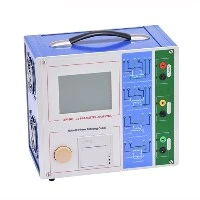
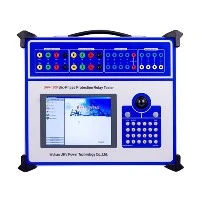
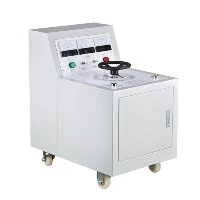
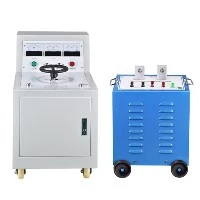
The term 'Partial Discharge' (PD) may sound a bit technical, but it is an important indicator related to the 'health' of high-voltage equipment such as transformers. Imagine if there were tiny "sparks" quietly breeding inside the device, accumulating over time, the consequences would be unimaginable. At this point, we need a capable assistant - a transformer partial discharge tester.

What is partial discharge? Why is it so important?
Simply put, partial discharge refers to the phenomenon of corona discharge where the electric field strength in certain parts of the insulation of high-voltage equipment is relatively high but not sufficient to cause full-time insulation breakdown. Although this discharge is not as grandiose as a major malfunction, it will continue to erode insulation materials, accelerate aging, and ultimately lead to serious equipment damage and even power outages.
What are the factors that affect partial discharge?
Defects in insulation materials such as air gaps, impurities, and uneven density can all become "hotbeds" for partial discharge.
Equipment structure design: Uneven electric field distribution can easily form local high electric fields at high-voltage terminals and insulation gaps.
Operating environment: Temperature, humidity, dust, etc. can all affect insulation performance.
Equipment aging: Over time, the performance of insulation materials will gradually decline.
How to detect the "golden eyes" of Wuhan UHV Power Technology Co., Ltd?
How can we timely detect and effectively respond to these 'invisible dangers'? This cannot be separated from our protagonist today - the transformer partial discharge tester.
What is it? As the name suggests, it is an instrument specifically designed to detect partial discharge phenomena in high-voltage equipment such as transformers. By measuring the electrical pulse signal generated by discharge, we can determine whether there is partial discharge in the equipment and evaluate its severity.
What tools are available? At present, the partial discharge testing equipment of Wuhan UHV Power Technology Co., Ltd. on the market has very mature technology and can achieve high-precision and sensitive detection. These devices typically use advanced sensing technology and data processing algorithms to distinguish between different types of discharges and provide intuitive test reports.
How to do it? Testing is usually conducted when the equipment is in a power outage state. By connecting the tester to the high-voltage lead or neutral point of the transformer, and applying a certain voltage (usually power frequency or variable frequency voltage) to the equipment, the instrument will begin to capture and analyze possible partial discharge signals.
Pay attention to these details to make the testing more reliable
To make the results of transformer partial discharge testing more accurate and reliable, in addition to relying on advanced equipment, there are also some details that need to be noted:
Choose appropriate testing methods: Different equipment and operating conditions may require different testing methods (such as power frequency partial discharge detection, transient ground voltage method, etc.). The professional team of Wuhan UHV Power Technology Co., Ltd. can provide the most suitable solution according to the actual situation.
Standardized operating procedures: Strictly follow the instrument manual and industry standards to ensure a stable testing environment and avoid external interference.
Data analysis and interpretation: More test data is not necessarily better, the key lies in accurate analysis and interpretation. Experienced engineers can determine the nature and hazards of discharge from multiple dimensions such as waveform, amplitude, and frequency.
Partial discharge testing of transformers is an indispensable part of ensuring the safe operation of power equipment. Through scientific detection methods, we can provide early warning, prevent problems before they occur, and avoid unnecessary losses.
Frequently Asked Questions (FAQ)
Q1: Will partial discharge necessarily cause damage to transformers? A1: Not necessarily, partial discharge is a process of cumulative damage. Mild partial discharge may not have a significant impact in the short term, but sustained discharge can accelerate insulation aging and increase the risk of failure.
Q2: What frequency of voltage is most effective for testing partial discharge? A2: The test is usually conducted under power frequency (50Hz or 60Hz) voltage, but sometimes variable frequency voltage is selected for testing according to specific situations to simulate the real state of the equipment during operation.
Q3: What impact does the sensitivity of the partial discharge tester have on the test results? A3: The higher the sensitivity, the better it can detect weak partial discharge signals, thereby detecting potential insulation defects in advance and improving the warning ability of detection.
Q4: Apart from transformers, what other equipment needs to undergo partial discharge testing? A4: High voltage electrical equipment with insulation structures such as high-voltage cables, switchgear, and generators usually require partial discharge testing.
Q5: Can regular users conduct partial discharge testing themselves? A5: Partial discharge testing requires high professionalism and requires specialized instruments and operators. It is recommended to have qualified professional institutions or manufacturer personnel carry out the operation.