

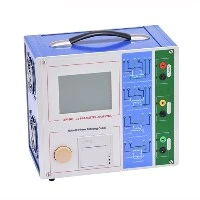
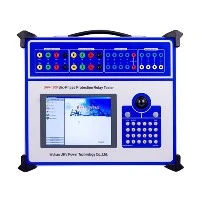
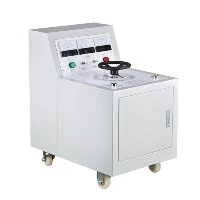
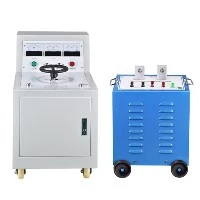
The Oil Flash Point Tester under Wuhan UHV can help many power workers conduct various power tests more conveniently.

Testing the flash point of oil is a standardized laboratory procedure that requires specialized instruments and strict adherence to safety regulations. The following is an overview of common methods for testing the flash point of oil, mainly consisting of two standard methods:
Method 1: Cleveland Open Cup
(For high flash point oils, e.g., lubricants, asphalt)
Pour sample into the open cup to the mark (remove water/bubbles).
Heat at a fixed rate.
Sweep a small flame horizontally over the surface every few degrees near the expected flash point.
Record the lowest temperature where a brief blue flash appears (correct for air pressure).
Method 2: Pensky-Martens Closed Cup
(For low/mid flash point oils, e.g., diesel, gasoline)
Pour sample into the lidded cup to the mark (remove water/bubbles).
Heat while stirring at a fixed rate.
Every 1°C near the expected flash point:
Pause stirring → open lid port → insert ignition flame instantly.
Record the lowest temperature with a flash inside the cup (correct for air pressure).
Key Notes:
Safety first! Use ventilation, PPE, and fire extinguishers.
Choose correctly: Open cup for high-flash oils; closed cup for volatile/low-flash oils.
Follow standards strictly (heating rate, ignition timing).
Prepare samples properly (dehydrate, degas).
In short: Safely heat oil in an open cup (sweeping flame) or closed cup (inserting flame through a port), and record the lowest temperature where vapor briefly ignites (pressure-corrected).