

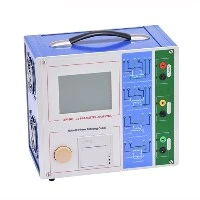
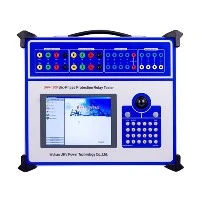
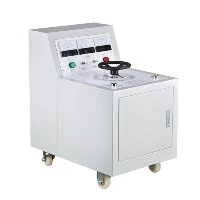
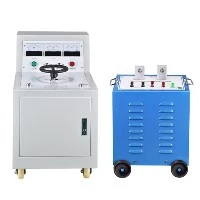
The Oil Dissolved Gas Analyzer under Wuhan UHV can help many power workers conduct various power tests more conveniently.

Dissolved Gas Analysis (DGA) is a critical diagnostic technique used to assess the internal operating condition and potential faults in oil-immersed electrical equipment (primarily power transformers, but also reactors, instrument transformers, switchgear, etc.).
Core Principle:
Under normal operation, insulating oil (mineral oil or synthetic ester) and solid insulation materials (e.g., paper, pressboard) inside electrical equipment slowly decompose due to aging, producing trace gases. However, when abnormalities such as overheating, electrical discharges (sparks or arcs), or localized overheating occur, these materials break down rapidly, releasing significant volumes of characteristic gases that dissolve in the oil.
DGA involves periodically extracting oil samples from the equipment, then using precision instruments (primarily gas chromatographs) to separate, detect, and quantify the concentrations of various dissolved gases. By analyzing the types, concentrations, gas generation rates, and ratios between key gases, technicians can diagnose incipient faults and their severity within the equipment.
Key Gases Analyzed:
DGA focuses on the following "fault characteristic gases":
1.Hydrogen (H₂): Generated by water molecule decomposition, low-temperature discharges (partial discharges), or low-energy discharges.
2.Methane (CH₄): A product of oil thermal decomposition (<150°C) or low-energy discharges.
3.Ethane (C₂H₆): Result of oil thermal decomposition (150–300°C), often indicating moderate-temperature overheating.
4.Ethylene (C₂H₄): The primary product of oil thermal decomposition (300–700°C), a strong indicator of high-temperature overheating.
5.Acetylene (C₂H₂): The signature gas for arc discharges (high-energy discharges). Trace amounts may also arise from severe overheating or sparking. Its presence typically signifies serious issues.
6.Carbon Monoxide (CO): The main product of thermal aging/decomposition of solid insulation (paper, pressboard). Its concentration and generation rate are vital for assessing solid insulation condition.
7.Carbon Dioxide (CO₂): A common product of solid insulation aging/decomposition and oil oxidation. Usually evaluated alongside CO for solid insulation health.
Summary:
Dissolved Gas Analysis (DGA) is an advanced technique that diagnoses latent overheating and electrical discharge faults-and their severity-within oil-immersed electrical equipment by precisely analyzing dissolved fault-characteristic gases in insulating oil. It is an indispensable core tool for condition monitoring, predictive maintenance, and ensuring the safety and stability of power grids. Accurate analysis and expert interpretation are key to maximizing its effectiveness.