


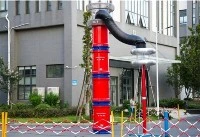

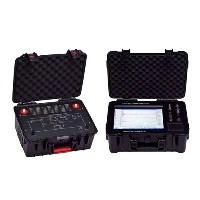
The selection of motor test bench is a highly specialized process. Well chosen, the equipment can last for ten to eight years; If not chosen properly, one may face the embarrassment of upgrading and replacing within two to three years. Here are the five core elements for your selection.

1. Power and voltage levels
This is the most basic matching metric. The capacity of the test bench should cover the existing maximum motor power and leave a margin of 20-30%. At the same time, attention should be paid to the development plan for the next 3-5 years to avoid being insufficient in two or three years.
2. Test project coverage
The standard test bench should be able to complete core projects such as insulation, DC resistance, withstand voltage, no-load, locked rotor, load, temperature rise, etc. If it involves permanent magnet synchronous motors or variable frequency motors, it is necessary to confirm whether they have special testing capabilities such as back electromotive force, demagnetization, weak magnetization, harmonics, etc.
3. Accuracy level
Different application scenarios have different requirements for accuracy:
Research and development testing, type testing: voltage and current 0.2% FS, power 0.5% FS
Factory inspection: Voltage and current 0.5% FS, power 1.0% FS
Re inspection after repair: 0.5% FS-1.0% FS
4. Installation conditions and on-site adaptation
Traditional test benches often require digging cable trenches, pouring foundations, and on-site wiring and debugging, with a cycle of several months. At present, the manufacturer has launched an integrated test bench that is free of installation, debugging, cables, and civil engineering. The equipment can be used immediately upon arrival at the factory, significantly reducing implementation costs.
5. Scalability and Investment Protection
Choose a modular design and support for parallel expansion of the test bench. In the future, when larger capacity is needed, only power units need to be added without eliminating existing equipment, effectively protecting the initial investment.