

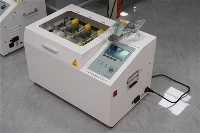
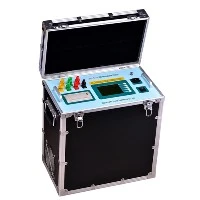
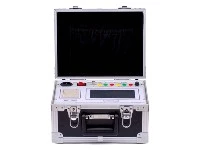

The DC resistance testing of transformer windings is an important item in transformer manufacturing, factory inspection, handover testing, and daily preventive testing. By measuring the DC resistance of each winding of the transformer, it is possible to check whether the winding wire connection is reliable, whether the tap changer contact is good, and whether there are problems such as broken strands, virtual soldering, and poor contact in the winding. The test results can also help determine whether the resistance between the three-phase windings is balanced, providing a reference for evaluating the operating status of transformers.
With the development of power equipment towards high capacity, high voltage, and intelligence, traditional measurement methods are no longer able to meet the efficiency requirements of some on-site tests. Choosing a transformer winding resistance tester with accurate measurement, fast testing speed, and easy operation is of great significance for improving testing efficiency and ensuring equipment operation safety. So, what aspects should be focused on when purchasing?

1, Select testing instruments based on transformer type
Different types of transformers have certain differences in winding structure, rated capacity, and resistance range, and also have different requirements for testing instruments.
For example, distribution transformers, power transformers, rectifier transformers, dry-type transformers, and large power transformers may differ in winding materials, wiring methods, and testing current requirements. For ordinary distribution transformers, a conventional DC resistance tester can be selected based on the range of winding resistance; For large capacity power transformers, emphasis should be placed on the instrument's output current, testing stability, and rapid demagnetization capability.
Before procurement, the rated voltage, capacity, winding connection method, and high and low voltage side resistance range of the tested transformer should be clearly defined to avoid situations where the instrument range does not match or the testing current is insufficient.
2, Pay attention to the testing current and measurement range
Testing current is one of the key parameters to consider when selecting a transformer winding DC resistance tester.
Normally, transformers with high winding resistance are suitable for using smaller test currents, while for low-voltage side windings or large capacity transformers, due to the low winding resistance, larger test currents are often required to obtain stable measurement results.
At present, transformer DC resistance testers on the market have various current specifications, such as 1A, 5A, 10A, 20A, 40A, etc. The output current and measurement range of different models also vary.
It should be noted that a larger test current is not necessarily better. The selection should be based on the resistance size of the tested winding, the instrument range, and the technical requirements of the equipment. Appropriate testing current can shorten the measurement stability time and improve the reliability of data.
3, Measurement accuracy and resolution cannot be ignored
The measurement results of the DC resistance of the winding are usually used to determine the connection status of the winding and the balance of the three-phase resistance. If the instrument measurement error is large, it may affect the tester's judgment of the transformer status.
Therefore, when selecting equipment, one should understand the basic accuracy, resolution, range switching method, and measurement stability of the instrument.
For low voltage windings with low resistance values, attention should be paid to the micro ohm level measurement capability of the instrument; For high-voltage windings with high resistance values, attention should be paid to their high resistance measurement range.
In addition, whether the instrument has automatic range, data retention, repeated measurement, and result storage functions will also affect the convenience of on-site testing.
4, Testing speed and demagnetization function are equally important
Transformer windings have significant inductance characteristics. In the process of DC resistance testing, it takes some time to establish the testing current, especially for large power transformers with large winding inductance. Traditional measurement methods may require a long time to obtain stable data.
Therefore, the ability to quickly test is a factor that cannot be ignored when making a purchase.
High quality transformer winding resistance testers usually use constant current source technology, which can improve current output stability and shorten testing waiting time. Some devices also have three-phase simultaneous measurement, automatic calculation, and fast demagnetization functions.
Among them, the demagnetization function is particularly noteworthy. After the DC resistance test is completed, there may be some residual DC magnetic flux in the winding. If proper demagnetization is not carried out, it may have adverse effects on the subsequent operation of the transformer. Therefore, for users who frequently conduct on-site tests, it is recommended to choose equipment with automatic demagnetization function.
5, Select operational functions based on on-site testing requirements
For power testing personnel, the operation mode of the instrument directly affects work efficiency.
In substations, power plants, and transformer maintenance sites, the testing environment may be complex, so equipment should not only meet basic measurement requirements, but also have good operational convenience.
When purchasing, the following functions can be focused on:
Three phase testing function: supports measurement of three-phase windings to improve testing efficiency.
Automatic calculation function: Automatically calculate the three-phase resistance imbalance rate, reducing manual calculation work.
Data storage function: Save historical test results for easy subsequent queries and data comparisons.
Temperature conversion function: Convert the measured resistance to a specified reference temperature as needed, facilitating comparison of test data at different temperatures.
Printing function: Supports printing test results for easy organization of test reports.
Communication function: Supports USB or other communication interfaces for easy data export and computer management.
If the equipment is mainly used for on-site preventive testing, it is recommended to prioritize models that are easy to operate, portable, and have practical functions.
6, Consider the safety protection and on-site adaptability of the equipment
The DC resistance test of transformer windings requires the application of DC current to the tested winding, and at the end of the test, it also involves the release of energy stored in the winding. Therefore, the protective function of the instrument is very important.
When selecting equipment, it is important to understand whether it has overcurrent protection, overvoltage protection, back electromotive force protection, wire breakage protection, and comprehensive discharge prompt functions.
Especially when testing large power transformers, the energy stored in the windings is relatively large, and the instrument should have reliable automatic discharge and demagnetization design to prevent testers from being affected by residual voltage during operation.
In addition, the shell structure, wiring terminals, test line length, heat dissipation performance, and protective design of the equipment should also be examined in conjunction with the actual usage environment.
7, Choose equipment suppliers with comprehensive technical support
In addition to the performance of the equipment itself, the technical capabilities and after-sales service of the manufacturer are also factors that need to be considered in the procurement process.
The transformer DC resistance tester may involve different testing currents, ranges, and functional configurations in different application scenarios. If the supplier can recommend suitable models based on the transformer parameters provided by the user, it can reduce the problems caused by improper selection.
When purchasing, it is possible to understand the manufacturer's product research and development capabilities, production experience, factory inspection process, whether the technical information is complete, and whether they provide operation training, after-sales maintenance, and technical guidance.
For overseas buyers, attention should also be paid to whether the equipment supports English operation interfaces, English manuals, export packaging, and international transportation services. These factors will all affect the subsequent use and maintenance of the equipment.
8, Determine the final configuration based on practical application
In the actual procurement process, it is not recommended to judge product quality solely based on equipment price or maximum testing current. There are differences in the testing objects and working environments of different users, and the suitable configurations are also different.
If it is mainly used for daily testing of 10kV and below distribution transformers, conventional models with moderate measurement range and easy operation can be selected.
If it is mainly used for handover testing and preventive testing of 35kV, 110kV and above power transformers, the focus should be on a larger testing current range, measurement stability, three-phase testing efficiency, and rapid demagnetization function.
For transformer manufacturing enterprises and professional power testing institutions, due to the high testing frequency, attention should also be paid to the continuous working ability, data management function, and long-term stability of the equipment.
Choosing a suitable transformer winding resistance tester requires comprehensive consideration of multiple aspects such as the type of transformer being tested, rated capacity, winding resistance range, testing current, measurement accuracy, testing speed, safety protection, and after-sales service.
A suitable DC resistance tester can not only help testers accurately grasp the resistance of transformer windings, but also timely detect potential problems such as abnormal winding connections and poor contact of tap changers, providing reliable testing basis for the safe operation of transformers.
For power engineering companies, transformer manufacturers, substations, and power maintenance units, it is necessary to clarify the actual testing requirements before procurement and make reasonable selections based on equipment parameters in order to truly play the role of transformer winding DC resistance testers.