


Transformer oil is an important insulation and cooling medium inside power transformers, and its insulation performance directly affects the operational safety of transformers. During long-term operation of transformers, the insulation oil may be affected by factors such as moisture, impurities, fiber particles, and aging products, leading to a decrease in insulation strength. If the insulation performance of the oil does not meet the requirements, it may increase the risk of internal discharge, insulation breakdown and other faults in the equipment. Therefore, regularly conducting transformer oil breakdown voltage testing is an important part of preventive testing of power equipment and quality inspection of oil products.
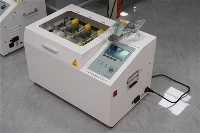
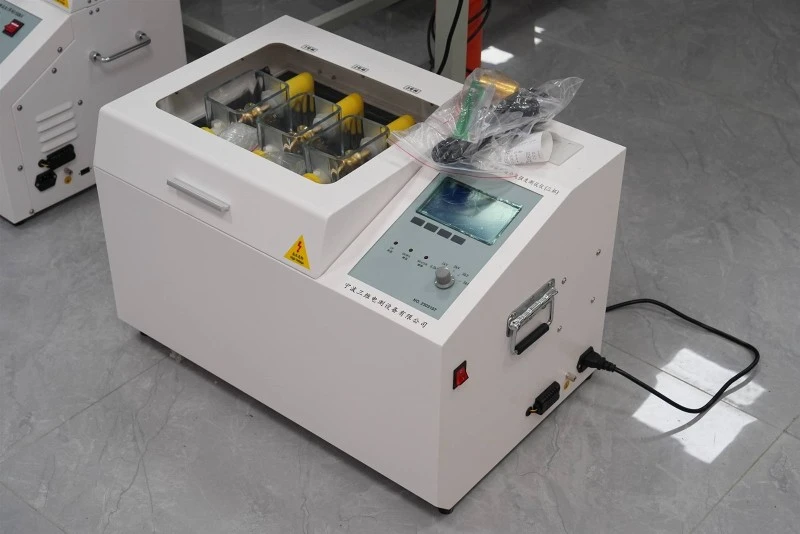
The transformer oil BDV tester is mainly used to measure the breakdown voltage of insulating oil under specified test conditions, and to judge the insulation performance of the oil based on the test results. It is widely used in power companies, substations, transformer manufacturers, power maintenance units, and third-party testing laboratories.
What aspects should users choose from when facing transformer oil withstand voltage testing equipment of different models and configurations?
1, Select equipment according to transformer oil testing standards
When choosing a transformer oil breakdown voltage tester, the first step is to clarify the testing standards that the equipment is performing. Different countries and regions have corresponding regulations on the electrode shape, electrode spacing, boosting speed, settling time, and number of tests for insulation oil breakdown voltage testing.
The test methods and electrode structures used in different standards vary, and it cannot be simply assumed that one device can fully meet all standards.
If the equipment is mainly used for transformer oil testing in the international market, it is important to confirm whether the instrument supports commonly used international standards such as IEC 60156. If used in the domestic power system, it is also necessary to pay attention to whether it meets relevant national standards and industry testing requirements.
Before procurement, it is recommended to provide the manufacturer with the actual testing standards used to confirm whether the software settings, electrode configuration, and testing procedures of the instrument meet the requirements.
2, Pay attention to the testing voltage range and measurement accuracy
The testing voltage range is a key parameter to consider when selecting a transformer oil BDV tester.
The breakdown voltage test of transformer oil usually requires gradually increasing the test voltage until the oil sample breaks down. The instrument needs to have stable high-voltage output capability and be able to accurately record the voltage value at each breakdown.
When making a purchase, it is important to understand the following parameters:
Does the maximum output voltage meet the actual test requirements.
Does the voltage measurement accuracy comply with relevant standards.
Is the boosting process stable and can the boosting rate be set according to the standard.
Is the breakdown voltage detection sensitive and can the test results be accurately recorded.
Whether the measurement data has good consistency during multiple testing processes.
It should be noted that the maximum output voltage is not the only basis for judging the quality of the equipment. For daily oil testing, voltage measurement accuracy, output stability, and test repeatability are equally important.
3, Select equipment based on the degree of automation in the experiment
At present, the transformer oil withstand voltage testers on the market mainly include manual operation type, semi-automatic type, and fully automatic type.
Manual testing equipment usually requires operators to participate in some operations during the boosting and testing process. The equipment structure is relatively simple and suitable for users with limited testing quantities and budgets.
The semi-automatic tester can automatically complete partial voltage boosting, breakdown detection, and data recording work, reducing errors caused by manual operation, and is suitable for laboratories with a certain amount of testing workload.
The fully automatic transformer oil breakdown voltage tester can automatically complete operations such as oil cup mixing, standing, boosting, breakdown judgment, data recording, and test result calculation according to a preset program. The specific automation functions depend on the equipment configuration.
For power laboratories and transformer manufacturing companies that need to test a large number of oil samples every day, it is recommended to prioritize fully automated equipment. Automated operations can not only improve detection efficiency, but also reduce operational differences between different operators, making the testing process more standardized.
4, Check the oil cup and electrode configuration
The oil cup and electrode are important components of the transformer oil BDV tester, and their structure and processing quality directly affect the test results.
Different testing standards have different requirements for electrode shape and electrode spacing. Therefore, users need to focus on confirming:
Firstly, whether the capacity of the oil cup meets the requirements of the test standards and whether the internal structure is easy to clean. If there are residual impurities or other oil samples in the oil cup, it may affect the subsequent test results.
Secondly, whether the electrode material has good conductivity and corrosion resistance, whether the electrode surface is smooth, and whether the size meets the standard requirements.
Additionally, it is necessary to pay attention to the adjustment method of electrode spacing. Some devices support electrode configurations corresponding to different standards, and electrodes or oil cups can be replaced according to actual testing requirements.
If users need to comply with multiple international standards, it is recommended to choose a tester that supports multiple electrode configurations to avoid purchasing equipment again later due to different testing methods.
5, Pay attention to automatic mixing, settling, and temperature control functions
The breakdown voltage test of transformer oil is not simply about putting the oil sample into an oil cup and then boosting it. The oil sample processing process can also affect the test results.
During the experiment, the distribution of bubbles, impurities, and moisture in the oil sample may all have an impact on the breakdown voltage. Therefore, it is very important to have an oil sample preparation and testing process that meets the standard requirements.
High quality fully automatic transformer oil breakdown voltage testers are usually equipped with automatic stirring and static functions, which can complete corresponding operations according to preset programs.
Among them, automatic stirring is mainly used to improve the state of the oil sample, making the distribution of relevant components in the oil sample more uniform; The static function is used to make the oil sample reach the corresponding test state within the specified time, reducing the interference of factors such as bubbles on the test.
For users with special testing needs, they can also pay attention to whether the device supports oil temperature measurement or temperature control functions. However, it should be noted that temperature control is not a necessary condition for all standard tests and should be determined based on the testing method used.
6, Data storage and report output capability
For power testing institutions and transformer manufacturing enterprises, test results not only need to be accurate, but also convenient to store, query, and manage.
Traditional equipment may require manual recording of each breakdown voltage, while modern digital transformer oil testers are typically equipped with touch screens, internal memory, printers, or data transmission interfaces.
If the equipment is mainly used for third-party testing laboratories, it is recommended to choose a model with complete data management functions to facilitate the establishment of oil sample testing files and improve daily work efficiency.
7, Consider the safety protection and operational performance of the equipment
The transformer oil breakdown voltage tester belongs to high-voltage testing equipment, and safety protection design cannot be ignored.
The equipment needs to generate a high AC test voltage during the testing process, so it should have a reliable protection mechanism.
For example, power-off protection when opening the cover can prevent operators from accidentally touching high-voltage components during the testing process; Overcurrent protection and high voltage abnormal protection can stop the test in a timely manner when equipment abnormalities occur; Grounding protection helps to improve the safety of equipment operation.
In addition, the device should have a clear operating interface, a reasonable button layout, and clear test status prompts. For laboratories that require frequent replacement of oil samples, the ease of operation and the ease of disassembling and cleaning the oil cup can also affect the actual user experience of the equipment.
8, Choose a manufacturer with professional technical support
In addition to the technical parameters of the equipment itself, the technical capabilities and after-sales service of the manufacturer are also factors that cannot be ignored in the procurement process.
There may be significant differences in testing requirements among different users. For example, transformer manufacturers may need to conduct multiple batches of oil sample testing continuously, while power maintenance units are more concerned about the portability and on-site usability of equipment.
Experienced manufacturers can recommend suitable equipment models based on the user's testing standards, testing quantities, automation requirements, and budget.
When purchasing, it is recommended to focus on understanding the manufacturer's product development capabilities, production quality control processes, equipment calibration support, technical training, and after-sales service capabilities. If the equipment needs to be exported, attention should also be paid to whether the manufacturer has relevant international project experience and can provide English operation manuals, technical materials, and remote technical support.
9, Determine the device model based on actual usage scenarios
The requirements for transformer oil breakdown voltage testers vary depending on the usage environment.
In transformer manufacturing factories, oil testing is usually part of production quality control and requires testing of different batches of transformer oil. This type of user is suitable for choosing devices with high automation and strong data storage capabilities.
In substations and power maintenance units, testers need to regularly inspect the insulation oil performance of transformers during operation. If it is often necessary to conduct testing at different sites, portable testers with moderate volume, reasonable weight, and easy handling can be prioritized.
For professional testing laboratories, due to the large number of testing items and high requirements for the accuracy of test results and data management, it is recommended to choose equipment that can support multiple testing standards, has automatic testing programs, and report output functions.
Therefore, when purchasing, we should not only focus on equipment prices, but also make comprehensive judgments based on actual testing frequency, testing standards, and usage environment.
Choosing the appropriate transformer oil BDV tester not only requires attention to the maximum output voltage and measurement accuracy of the equipment, but also comprehensive consideration of testing standards, automation level, electrode configuration, oil sample processing function, data management capability, and safety protection design.
For transformer manufacturing enterprises, power companies, and third-party testing laboratories, a transformer oil breakdown voltage tester with stable performance, easy operation, and reliable test results can provide effective support for insulation oil quality testing and help timely detect the problem of decreased insulation performance of oil products.
Before procurement, it is recommended to communicate with professional manufacturers about equipment configuration based on actual testing standards and work requirements, and choose a transformer oil dielectric strength tester that is truly suitable for one's own application scenario.