



With the continuous development of substations, power plants, communication base stations, and new energy storage systems, the role of batteries in DC power supply guarantee and backup power supply systems is becoming increasingly important. After long-term operation of the battery, problems such as capacity reduction, internal resistance changes, and uneven cell voltage may occur. If these abnormalities cannot be detected in a timely manner, the reliability of the backup power supply may be affected in case of power outages or other emergency situations.
Therefore, selecting appropriate battery testing equipment is an important task for power operation and maintenance units to carry out battery testing and maintenance.

1, Select equipment based on actual testing requirements
When purchasing battery testing equipment, the first step is to clarify the testing purpose. The devices corresponding to different detection tasks are not the same, and if only one parameter is focused on, it may not be possible to fully understand the actual operating status of the battery.
For substations, power plants, and communication power systems, daily maintenance usually requires checking the voltage, internal resistance, and battery pack operation of individual batteries. This type of work can consider using a battery internal resistance tester to facilitate maintenance personnel to conduct on-site inspections and promptly detect parameter differences between batteries.
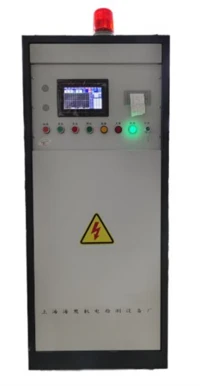
If it is necessary to verify the actual capacity of the battery pack, a battery discharge tester should be selected. The device discharges by setting the discharge current and records relevant data during the discharge process, providing a basis for determining the capacity and backup power supply capability of the battery pack.
For users who need to carry out multiple tasks such as charging, discharging, and single cell voltage monitoring, a battery charging and discharging tester can be further considered. Wuhan UHV's related products provide functions such as charging and discharging, and single cell monitoring, which are suitable for battery maintenance scenarios with comprehensive testing needs.
2, Focus on voltage, internal resistance, and capacity testing functions
When selecting a device, one should not only look at the device name, but also verify which parameters it can measure and whether the test results meet the actual maintenance requirements.
Taking Wuhan UHV products as an example, the UHV-750 touch screen battery internal resistance tester can measure battery voltage and internal resistance, and supports data storage, query, export, and chart analysis, making it suitable for daily inspection and status comparison of batteries.
For users who need to verify battery capacity, the UHV-220/30F series battery discharge tester supports constant current discharge and can stop the test according to the set battery pack terminal voltage, cell voltage, discharge time or discharge capacity conditions, and record the discharge process data.
It should be noted that internal resistance testing is mainly used to assist in determining battery status and cannot completely replace capacity testing. For battery packs that undertake important backup power supply tasks, daily testing should be combined with necessary capacity verification according to maintenance regulations and on-site conditions.
3, Determine the model based on the battery pack voltage and discharge current
The rated voltage, actual operating voltage, and required discharge current of the battery pack are parameters that must be verified when selecting discharge testing equipment.
For example, the Wuhan UHV-220/30F series provides corresponding configurations for battery pack specifications such as 48V, 110V, 220V, and 380V. Other voltage levels can also be customized according to product requirements. The discharge voltage range and maximum discharge current of different configurations vary, and the suitability of the equipment cannot be judged solely based on the rated voltage.
If testing a large capacity battery pack is required, the rated voltage and actual operating voltage range of the battery pack should be confirmed in advance. Test the required discharge current and duration. Can the equipment meet the requirements for individual voltage monitoring. Do multiple devices need to run in parallel. Whether the on-site power supply, heat dissipation, and wiring conditions meet the requirements.
Determining these parameters in advance can help reduce selection bias and facilitate suppliers in providing suitable equipment configurations based on specific operating conditions.
4, Data recording and security protection are equally important
Battery testing typically requires recording the complete testing process, not just the final measurement values. For users who require regular inspections and the establishment of maintenance records, whether the equipment supports data storage, export, and report generation will directly affect the subsequent data analysis work.
The Wuhan UHV battery charging and discharging tester supports process data recording and can transfer data to a USB flash drive through a data interface, and then use supporting software to analyze and generate curves and reports. The equipment is also equipped with sound and light alarms and related protection functions, making it convenient for operators to grasp the testing status.
When conducting discharge tests, discharge parameters and termination conditions should also be set according to the requirements of the battery manufacturer. For important DC power systems, it is necessary to arrange backup power sources and ensure power supply during testing in advance to avoid affecting the normal operation of equipment due to testing.
5, Choose based on the usage environment and after-sales service
In addition to testing performance, the operation mode, handling convenience, heat dissipation method, and maintenance requirements of the equipment are also worth paying attention to.
If mainly used for daily inspections of substations or communication base stations, portable internal resistance testers are usually more convenient for on-site operation; If regular capacity tests of battery packs are required, the focus should be on discharge current, continuous operation capability, data recording, and safety protection; If comprehensive testing such as charging and discharging and individual monitoring is required, corresponding charging and discharging testing equipment can be selected.
Before procurement, it is recommended to confirm the product manual, technical parameters, applicable battery types, calibration requirements, and after-sales support content with the supplier. For special voltage levels or high current testing requirements, it is best to provide specific battery pack parameters for technicians to verify whether the equipment configuration is appropriate.
When selecting battery testing equipment, one should start from the actual testing task and make a comprehensive judgment based on factors such as battery pack voltage, discharge current, capacity testing requirements, data management, and safety protection.
Wuhan UHV Power Technology Co., Ltd.'s related products include battery internal resistance testers, battery discharge testers, and battery charge discharge testers, which can provide different equipment options for daily maintenance, capacity verification, and charge discharge testing of power system batteries. The specific model still needs to be determined based on the on-site battery parameters and testing requirements.