



With the continuous promotion of China's ultra-high voltage power grid construction, the demand for testing and inspection of 1000kV substations is increasing day by day. Unlike traditional ultra-high voltage substations, the insulation margin of 1000kV level is smaller, the equipment volume is larger, and the on-site electromagnetic environment is more complex, which puts higher requirements on the selection of testing equipment. How to choose suitable testing equipment at this voltage level has become a core issue faced by power operation and testing units.
Insulation withstand voltage test: frequency conversion series resonance becomes the mainstream solution
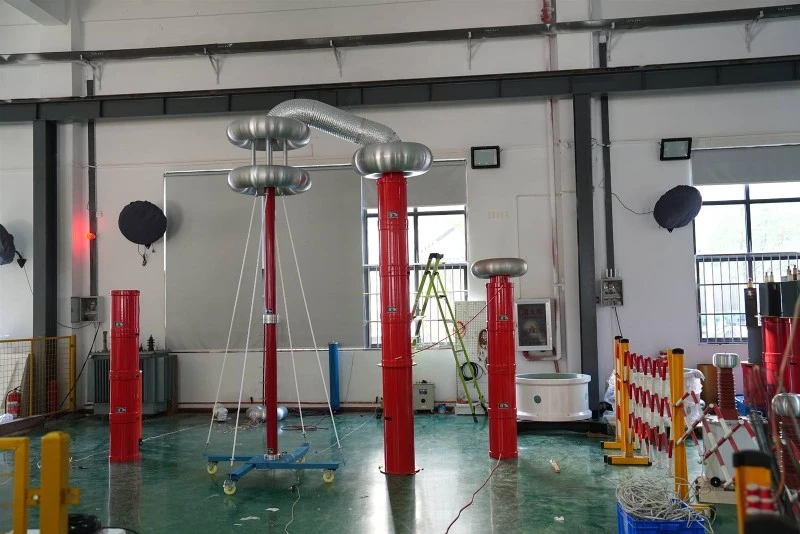
In the insulation test of a 1000kV substation, the AC withstand voltage test is the core means of testing the insulation strength of key equipment such as GIS, GIL, and transformers. Due to the fact that the capacitance of a complete string of ultra-high voltage GIS can reach 5000 to 8000pF, traditional power frequency testing equipment is unable to meet on-site requirements in terms of capacity and volume. In order to reduce the volume and capacity of experimental equipment and adapt to frequent disassembly, transportation, and installation site conditions, variable frequency series resonant equipment has become the mainstream choice for on-site AC withstand voltage testing of 1000kV GIS.
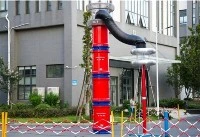
Taking the variable frequency series resonant withstand voltage test device of Wuhan UHV Power Technology Co., Ltd. as an example, its UHV series products cover a variety of capacity and voltage combinations. The UHV-540kVA/270kV device adopts a modular design, consisting of a variable frequency power supply, an excitation transformer, a high-voltage reactor, and a capacitive voltage divider. The rated voltage can cover multiple levels from 45kV to 270kV, and the system's effective value measurement accuracy reaches 1.5 levels. The operating frequency range is 30 to 300Hz. The output voltage waveform of this series of devices is a sine wave, and the waveform distortion rate is controlled within 1%. It also has overcurrent, overvoltage, and flashover protection functions for the tested object.
Partial discharge detection: accuracy determines the success or failure of the experiment
For a 1000kV substation, the accuracy of partial discharge detection is directly related to the early detection ability of equipment insulation defects. In ultra-high voltage environments, the control of background partial discharge is a key indicator for measuring the performance of experimental equipment. At present, the high-voltage and large capacity inflatable non partial discharge combination electrical apparatus test device can control the overall partial discharge within 1 to 3pC, effectively avoiding partial discharge interference even in a 1000kV high voltage environment and greatly improving the test accuracy.
The UHVCW vehicle mounted high-voltage inflatable non partial discharge combination experimental device provided by Wuhan UHV Power Technology Co., Ltd. adopts a vehicle mounted hydraulic lifting device, which is convenient for on-site movement and test layout. The voltage level of the device covers from 100kV to 1000kV, with a capacity range of 50 to 2000kVA. It adopts two methods: high voltage transformer boosting and series resonance. All boosting methods are first-order boosting, without the need for series boosting, thus simplifying on-site wiring. The device is equipped with a built-in high-voltage isolation switch, which can achieve multiple uses for one machine, and adopts a fully sealed shielding space design to ensure the safety and reliability of the testing process. In addition, Wuhan UHV also provides the UHV-2000 series partial discharge tester, which adopts an integrated machine design and can complete quantitative testing functions such as partial discharge measurement, recording, and AC testing voltage switch. It is suitable for various scenarios such as on-site and laboratory.
Transformer and relay protection testing: equal emphasis on integration and automation
In addition to insulation and partial discharge tests, the comprehensive performance testing of transformers in 1000kV substations cannot be ignored. As the "energy hub" of the power system, transformers directly determine the stability of power supply through indicators such as DC resistance, transformation ratio group, insulation strength, and loss parameters. Traditional decentralized detection requires frequent equipment replacement and repeated wiring, making it difficult to guarantee efficiency and accuracy. The transformer comprehensive test bench developed by Wuhan UHV Power Technology Co., Ltd. integrates six core functions including DC resistance testing, transformation ratio group testing, insulation resistance testing, dielectric loss testing, no-load loss testing, and load loss testing. It adopts a modular architecture design, with a DC resistance testing module resolution of 0.01 μ Ω, which can accurately capture subtle differences in winding resistance. The test bench is equipped with a 15 inch touch control screen and built-in detection templates for hundreds of transformer models. After the detection is completed, the system automatically generates standardized reports and supports PDF export and cloud storage.
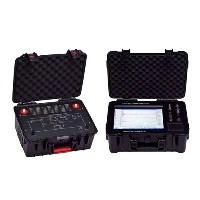
In terms of relay protection, the selection of microcomputer relay protection testers also needs attention. The series of microcomputer relay protection testers for Wuhan UHV integrates multiple functions, providing reliable detection solutions for users in the power industry with their stable performance and clear software interaction interface.
Key considerations for selection: from portability to environmental adaptability
The selection of testing equipment for a 1000kV substation requires comprehensive consideration of multiple factors. Firstly, the on-site adaptability of the equipment. Traditional ultra-high voltage field testing equipment often adopts open structures with large sizes, and the on-site assembly process before each test is cumbersome. Therefore, miniaturization and lightweighting have become important trends in equipment selection.
Secondly, electromagnetic compatibility cannot be ignored. The electromagnetic environment of a 1000kV substation is much more complex than that of an ultra-high voltage station, and factors such as power frequency electric fields, power frequency magnetic fields, and radio interference may all affect the accuracy of test data. When selecting, it should be confirmed that the equipment has good electromagnetic compatibility design, such as the dielectric loss testing module equipped with anti-interference algorithms, which can effectively filter interference signals such as on-site power frequency electric fields and harmonics. On the supply chain side, the selection of suppliers for 1000kV testing equipment has also formed a relatively mature competitive pattern, and users can comprehensively consider technical solutions and budget factors when selecting.
Overall, the selection of testing equipment for 1000kV substations should revolve around four core requirements: insulation withstand voltage, partial discharge detection, transformer comprehensive testing, and relay protection verification. The focus should be on the accuracy of partial discharge control, on-site portability, electromagnetic compatibility, and automation level of the equipment. With the continuous expansion of the ultra-high voltage power grid, equipment suppliers with one-stop solution capabilities will gain greater market space. Wuhan Ultra High Voltage Power Technology Co., Ltd. has formed a product system consisting of more than 100 products in 15 categories, including series resonance test devices, partial discharge testing systems, high-voltage insulation and withstand voltage equipment, and transformer testing instruments, providing relatively complete product support for ultra-high voltage testing.