


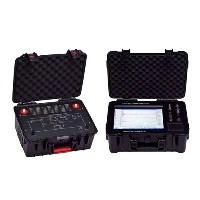
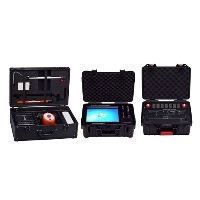
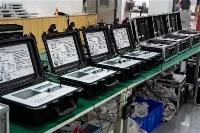
In the operation and maintenance of the power system, preventive testing and handover testing of 110kV substations are key links to ensure the safe operation of equipment. The selection of testing equipment is directly related to the reliability of the test data, and even affects the operation progress of the entire substation. Based on the technical data of Wuhan UHV Power Technology Co., Ltd. and the actual procurement experience of multiple power supply companies, this article summarizes several core points for selecting testing equipment for 110kV substations.

Series resonant device: voltage level and capacity are the primary considerations
Among various testing equipment in 110kV substations, the variable frequency series resonant withstand voltage test device is one of the most in demand equipment. The first hard criterion for selection is voltage level matching. The technical solution of Wuhan UHV shows that the AC withstand voltage test for the 110kV/50MVA main transformer with full insulation requires a test voltage of 160kV, while the AC withstand voltage test for GIS equipment, circuit breakers, and transformers with a voltage level of 110kV can reach a maximum of 185kV. This means that the rated voltage of the selected device must cover at least 200kV, which is impossible to do if purchased too small. As emphasized in the selection article of Wuhan UHV, "the specifications required for 10kV distribution networks and 110kV substations are completely different".
In addition to voltage, capacity verification is also crucial. Taking the AC withstand voltage test of a 110kV/300mm ² cable as an example, the capacitance at a length of 0.6km is approximately 0.147 μ F, the test frequency is required to be 30-300Hz, the test voltage is 128kV, and the duration is 60 minutes. The capacitance of different samples varies greatly, and it is necessary to infer the device capacity based on the maximum capacitance of the actual jurisdictional equipment. At present, there are two commonly used specifications in the market: UHV-500kVA/200kV and UHV-540kVA/270kV, which are suitable for testing needs of different scales.
Relay protection tester: digital testing solution that intelligent substations need to adapt to
If the series resonant device is the "strongman", then the relay protection tester is the "stethoscope" of the substation. The testing of protection devices in 110kV substations requires much higher requirements for the number of channels and accuracy of equipment than in 10kV distribution networks. The current mainstream choice is a microcomputer relay protection tester with a 6U+6I configuration, with six independent power amplifiers for voltage and current, and six parallel connections up to 120-180A, which can meet the testing needs of complex protection devices such as main transformer differential and bus differential.
Direct resistance meter and auxiliary equipment: often overlooked but indispensable
Many purchasing units tend to overlook some auxiliary equipment when preparing budgets, and it is not until on-site testing that it is discovered that there are deficiencies. The transformer DC resistance tester is an essential equipment for transformer pre testing, and when selecting, attention should also be paid to voltage level matching. The standard type covering voltage levels from 35kV to 110kV, with data storage and communication functions, is the most commonly purchased specification by power supply companies. The DC high-voltage generator is used for the DC withstand voltage test of lightning arresters, and the insulation resistance tester is used for measuring the insulation resistance of transformers, circuit breakers, and other equipment. Although these devices are not expensive, the lack of any one of them may affect the progress of the test.
Selection is not about 'the more expensive the better', matching is the key
In the interview, technicians from Wuhan UHV repeatedly mentioned a viewpoint: before purchasing and selecting, the technical department should first clarify the actual usage needs of the unit, focusing on confirming the three parameters of voltage level, accuracy level, and usage scenario, "to avoid buying it back and not using it or having insufficient performance". In terms of accuracy, the required level can be determined by referring to relevant standards. "The higher the accuracy, the higher the price, and it is sufficient. In terms of usage scenarios, it is recommended to choose a model with a dust-proof and waterproof shell for outdoor use, and there is no need to spend extra money on it for indoor fixed use.
From the perspective of actual projects, the annual inspection of 110kV substations generally requires the collaborative operation of 3 to 5 devices. First, conduct non-destructive tests such as insulation resistance measurement, and then perform series resonance withstand voltage test. This sequence cannot be reversed.
A practical case worth referencing
Last year, a power company in Shanxi purchased a batch of 110kV testing equipment for the handover test of a wind power project in Gansu. The equipment list includes ZGF series DC high-voltage generators, UHV-406 high-voltage switch dynamic characteristic testers, UHV-H100A circuit resistance testers, UHV-1200 microcomputer relay protection testers, and variable frequency series resonant AC withstand voltage test devices. It is worth noting that the technical personnel of Wuhan UHV drove up the mountain with the customer and inspected the equipment such as box transformers, cables, iron towers, and comprehensive protection on site before customizing the testing instrument plan. This approach is worth learning from - the selection of testing equipment should not only rely on the parameter table, but also take into account the actual conditions on site.
With the advancement of intelligent transformation of 110kV substations, testing equipment is also developing towards digitization and integration. Choosing the right equipment is not only to pass the acceptance inspection, but also to lay the foundation for the safe operation of the substation in the next decade.