


With the continuous increase in the cableization rate of urban distribution networks, a large number of cables that were put into operation early are entering their "middle age", and latent problems such as insulation aging and joint defects are becoming increasingly prominent. Unlike the handover test of new construction projects, existing cable diagnosis faces practical constraints such as complex operating environments, diverse fault types, and limited shutdown windows, which require higher requirements for testing equipment. How to choose suitable cable testing equipment based on the actual working conditions of the line is becoming a common concern for power operation and maintenance units.
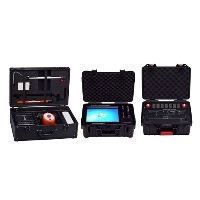
From the on-site records accumulated by Wuhan UHV Power Technology Co., Ltd. in multiple substation maintenance projects in the past two years, it can be seen that in preventive tests and cable handover tests for 110kV and below, cable fault testing instruments usually need to work in conjunction with 3 to 5 devices such as series resonant cable withstand voltage devices and insulation resistance meters to complete a complete set of electrical tests. This means that equipment selection should not only focus on a single instrument, but also consider the system from the perspective of testing project combination.

The first principle of selection is to match the range according to the voltage level. The 10kV distribution network and 110kV substation have completely different requirements for the range and output capability of testing equipment. During an after-sales training session for Wuhan UHV in Guanling, Guizhou, engineers demonstrated standardized operating procedures, emphasizing the importance of parameter matching in every link from wiring, automatic frequency scanning and locking of resonance points to real-time monitoring of local output. The on-site operation records also indicate that before wiring, it is necessary to check the equipment nameplate parameters, confirm the voltage level of the tested object covered by the range, and check whether the calibration label is within the validity period.
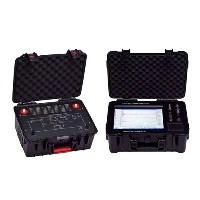
The complexity of fault types determines that equipment needs to have the ability to integrate multiple methods. The traditional low-voltage pulse method often falls short in dealing with high impedance faults. The UHV-501 fully intelligent multiple pulse cable fault tester, the main product of Wuhan UHV, adopts a combination of multiple arc reflection method, low-voltage pulse method, pulse current method and other technologies. Its core multiple pulse method can convert complex high resistance waveforms into low-voltage pulse short-circuit fault waveforms, significantly improving rough measurement accuracy. This technological route has been validated in practical operations in a certain park in Zhengzhou.
In January 2026, a 10kV distribution network in a certain park in Zhengzhou experienced a cable failure, causing numerous enterprises within the park. Prolonged power outages would result in significant economic losses. The operation and maintenance personnel have repeatedly used traditional shaking meters to detect but still cannot lock the fault location. The Wuhan UHV after-sales team rushed to the site with a customized multi pulse cable fault tester, using a "segmented investigation+precise positioning" solution. First, the pulse reflection method was used to scan the entire 200 meter cable section, and then the fault point was reduced to about 170 meters away from the junction box through end-to-end detection. Finally, the data was verified with multiple pulse flashing methods at a distance of 173 meters to confirm the prediction. The customer's operation and maintenance personnel completed the fault handling and restored power supply in just 4 hours.
The adaptation of operational efficiency and personnel skills is becoming an implicit threshold in selection. On site feedback shows that the cable fault testing instrument can work continuously for about 4 to 6 hours when fully charged. In winter, lithium batteries may experience insufficient power supply in low-temperature environments. It is recommended to equip backup batteries on site. The portability of devices directly affects the efficiency of field operations, and handheld designs with high integration are more popular among frontline personnel. At the same time, high-voltage testing is a special operation, and operators must hold a high-voltage electrician certificate and an electrical testing job certificate. The safety distance must strictly follow the regulations.
From a longer-term perspective, cable diagnostic technology is evolving from "power outage detection" to "live operation and maintenance" and "intelligent diagnosis". Industry review studies indicate that the integration of smart grid technology and machine learning is enhancing the real-time monitoring and predictive maintenance capabilities of cables, despite challenges such as electromagnetic interference and sensor limitations. Wuhan UHV has responded in terms of product layout, and its cable testing equipment is equipped with the function of automatically analyzing fault waveform characteristics and providing possible fault locations. When scaling the waveform, it synchronously displays the global waveform, making calibration and distance measurement more intuitive.
The person in charge of after-sales service for Wuhan UHV stated that the company has always adhered to the service principle of "rapid response and precise solution", and has established a professional emergency support team for customer needs in different regions and working conditions, equipped with customized testing equipment, which can achieve on-site support nationwide. For operation and maintenance units planning the procurement of cable testing equipment, while paying attention to the technical parameters of the equipment, the manufacturer's on-site technical support capabilities and after-sales response speed should also be included in the selection evaluation system - after all, in the urgent scenario of cable fault repair, the effectiveness of the equipment depends not only on the instrument itself, but also on whether there is a professional team behind it that can quickly translate it into diagnostic conclusions.