


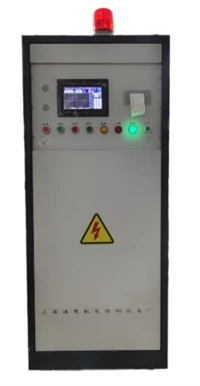
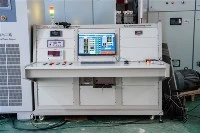
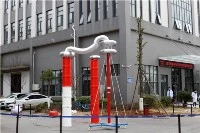
With the continuous improvement of reliability requirements for power grid equipment operation and the widespread application of condition based maintenance technology, partial discharge detection has become an important part of preventive testing for key equipment such as GIS (gas insulated switchgear), transformers, cables, etc. The internal insulation structure of GIS equipment is complex, and partial discharge detection can effectively determine its insulation status. However, facing the wide variety of partial discharge testers on the market, how to choose a suitable equipment for GIS detection based on actual needs has become a focus of attention for power operation and maintenance engineers and procurement decision-makers.

Difficulties and Technical Path of GIS Partial Discharge Detection
The GIS equipment adopts a fully metal enclosed structure, with SF6 gas filled inside as the insulation medium. When insulation defects occur inside the device, partial discharge signals will be generated. At present, GIS partial discharge detection mainly adopts three technical routes: pulse current method, ultrasonic method, and ultra-high frequency method. Among them, the pulse current method generally has high sensitivity to defects, but its anti-interference ability is poor, which has certain limitations in field applications; The ultrasonic method has relatively low sensitivity to partial discharge signals, but strong resistance to electromagnetic interference; The ultra-high frequency method combines the advantages of strong anti-interference ability and high sensitivity, making it particularly suitable for on-site detection.
Four key dimensions for selecting GIS partial discharge tester
Firstly, detection methods and frequency band coverage. GIS equipment testing should mainly use ultra-high frequency method, supplemented by ultrasonic method. The ultra-high frequency method detects by capturing the 300MHz-3GHz ultra-high frequency signal generated by partial discharge, with the advantages of high sensitivity and strong resistance to electromagnetic interference. When making a purchase, it is important to pay attention to parameters such as the UHF frequency range and dynamic range.
Secondly, sensitivity and anti-interference ability. Sensitivity directly determines whether early weak discharge signals can be captured. High sensitivity equipment can detect insulation defects earlier. At the same time, broadband electromagnetic interference generated by radar, communication signals, and switch operations is almost ubiquitous in on-site environments such as substations and converter stations. An excellent partial discharge tester needs to have strong electromagnetic interference suppression capabilities. The detection system of Wuhan UHV is equipped with multiple digital filtering mechanisms in the signal processing stage, including frequency domain windowing, pulse waveform recognition, wavelet transform denoising, etc. It can distinguish periodic interference, random white noise, and real partial discharge pulses from both time and frequency domains.
Thirdly, graph analysis and intelligent diagnostic functions. Modern partial discharge detection has evolved from single parameter measurement to intelligent diagnostic systems. When purchasing, attention should be paid to whether the equipment provides various discharge pattern analysis functions such as time-domain waveform, PRPD (phase resolved partial discharge pattern), PRPS (phase resolved pulse sequence pattern), etc. The built-in typical discharge mode library can automatically identify and preliminarily classify common types such as suspended discharge, surface discharge, and internal bubble discharge, greatly improving the judgment efficiency of on-site engineers.
Fourthly, portability and on-site applicability. GIS detection is usually carried out at the substation site, and the portability, ease of operation, and environmental adaptability of the equipment are crucial. Handheld devices should have sturdy casing protection, long-lasting battery life, and clear operating instructions. At the same time, using non-invasive detection methods and equipment that does not require power outages during the testing process is more convenient to use than traditional pulse type partial discharge detectors.
Industry Practice
In the actual selection of GIS partial discharge detectors, GIS equipment with different voltage levels require corresponding high voltage capacity and accuracy. Professional grade equipment can be given priority for high-precision detection of the main network, while users with limited budgets need to comprehensively evaluate equipment prices and later operation and maintenance costs. For scenarios mainly based on GIS and transformer detection, ultra-high frequency detection function is an essential option.
Wuhan UHV Power Technology Co., Ltd., as a company that has been deeply involved in the field of high-voltage electrical measurement for nearly 22 years, strictly follows international electrical standards for its partial discharge tester products, adopting advanced ultra-high frequency sensing technology and digital signal processing systems.
Choosing a GIS partial discharge tester is essentially choosing a detection scheme that can accurately evaluate the insulation status of the equipment. From detection methods, sensitivity, anti-interference ability, intelligent diagnosis to on-site applicability, every dimension directly affects the reliability of detection results. In the context of the transformation of the power system towards condition based maintenance and predictive maintenance, a detection device that can accurately capture weak discharge signals in complex electromagnetic environments has become a key technical support for ensuring the safe operation of GIS equipment.