



The appropriate selection of testing systems in transformer manufacturing, factory testing, and operation and maintenance directly affects the reliability of detection data and the cost-effectiveness of equipment investment. However, many users are accustomed to using voltage level as the primary or even the only selection criterion during the procurement process, ignoring the decisive impact of transformer rated capacity on the output capability of the testing system. In fact, the capacity parameter largely determines the current output range, power margin, and whether the experiment can be successfully completed of the testing system.

Why is capacity parameter more 'sensitive' than voltage level
The transformer testing system needs to complete multiple tests such as no-load loss, load loss, DC resistance, and transformation ratio group. Among them, the no-load and load loss tests have the most stringent requirements for the power output capacity - the output capacity of the testing system must be greater than the maximum no-load loss and load loss of the tested transformer, otherwise there will be situations where the boost cannot reach the rated value and the voltage and current are unstable, and the test will not be able to be completed normally. A 3150kVA distribution transformer has a test power requirement corresponding to its rated current and short-circuit impedance, which is several times different from a 200kVA transformer. If the selection is only based on voltage level, it is likely to lead to a situation of "little horse pulling big cart".
Test system configuration corresponding to different capacity segments
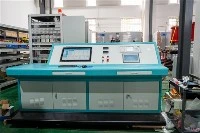
According to the capacity range of the tested transformer, the configuration of the testing system can be divided into several typical levels. Distribution transformers with a capacity of 2500kVA and below can usually adopt a highly integrated comprehensive testing platform solution, which concentrates the testing functions of DC resistance, transformation ratio group, no-load loss, load loss, AC withstand voltage, etc. in one device, and cooperates with the built-in testing template to achieve rapid detection. The UHV-315 transformer comprehensive test bench of Wuhan UHV Power Technology Co., Ltd. is designed specifically for this capacity range, meeting the testing requirements for DC resistance, transformation ratio group, no-load loss, load loss, and AC withstand voltage of power transformers below 2500kVA.
For power transformers with a capacity of 6300kVA and above and higher voltage levels, the testing system needs to make greater reservations in terms of output current capability and power margin. The relevant technical solutions for Wuhan UHV show that its testing system can expand the voltage range to 0-750V and cover currents from 0-200A, meeting the testing requirements for power transformers of 6300kVA/35kV and below. When the capacity further increases, the value of modular architecture is reflected - by reserving external transformer interfaces, users can expand the range without replacing the host to meet the testing requirements of larger capacity test samples.
Capacity adaptation mechanism at the operational level
Capacity differences not only affect hardware configuration, but also reflect in the adaptability of operational processes. The Wuhan UHV transformer comprehensive testing platform has built-in detection templates for hundreds of common transformer models. Operators only need to input the nameplate parameters such as the rated capacity, voltage level, and wiring group of the equipment, and the system can automatically match the corresponding testing standards and parameter thresholds, and start the fully automatic detection process with one click. This "parameter driven" operation logic enables the same testing equipment to flexibly switch between transformers of different capacity levels, reducing the risk of test failure caused by human error settings. After the testing is completed, the system automatically generates a standardized report containing all parameters and provides a qualification judgment by comparing it with industry standards, simplifying the data archiving and quality traceability process.
Other factors that should be considered simultaneously when selecting a model
Although capacity is the core parameter for selection, it is not the only consideration. The measurement accuracy, current output range, and sufficient power margin of the testing system also need to be confirmed during the selection stage. For transformer manufacturing enterprises with factory testing requirements, the testing system also needs to have induction withstand voltage and partial discharge measurement capabilities, which are key indicators to distinguish between mid-range and high-end testing schemes. In addition, users should evaluate whether the equipment needs to reserve expansion interfaces based on the capacity distribution range of their tested transformers, in order to avoid duplicate investments caused by business growth.
From the perspective of industry trends, the concept of precise selection based on capacity is being accepted by more users. The testing system has shifted from "purchasing by voltage" to "matching by capacity", which not only improves the reliability of detection data, but also helps to find a more reasonable balance between equipment investment and testing requirements.