



In the operation and maintenance of high-voltage power equipment, partial discharge detection is the core means to determine insulation status and prevent sudden failures. But with the diversification of detection needs, a real problem lies in front of the operation and maintenance team: how to choose between online monitoring and offline detection?

To answer this question, it is necessary to first understand the fundamental differences in technical logic between the two. Offline detection isolates equipment from the power grid, applies external controllable voltage for measurement, has extremely low background noise, high detection sensitivity and defect positioning accuracy, and has long been a standard practice in equipment factory testing, handover acceptance, and planned maintenance. The international standard IEC 60270 has clear regulations on the testing process. Online monitoring takes a different path - sensors are permanently or semi permanently installed on equipment, continuously collecting partial discharge signals while the equipment is running with power, without the need for power outages. It can capture intermittent discharges that only occur under real working conditions and achieve trend analysis and early warning through long-term data accumulation.
Both have their own advantages. Industry practice data shows that the "hybrid strategy" that combines online monitoring and offline detection can reduce unplanned insulation failures by about 40% and save maintenance expenses by about 25%. The problem is that equipping two independent systems simultaneously is neither economical nor practical, so an integrated system that can accommodate both modes becomes a more practical choice.
Integrated solution responds to actual needs
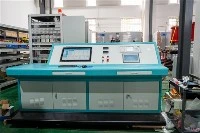
In the field of partial discharge detection equipment, Wuhan UHV Power Technology Co., Ltd. has provided a noteworthy approach. The UHV-2000A partial discharge detection system adopts a modular architecture and can complete offline partial discharge quantitative testing of high-voltage electrical equipment under standard conditions. It is suitable for type testing and handover testing of equipment such as transformers, cables, bushings, capacitors, lightning arresters, switches, etc; After selecting the online monitoring module, the same system can achieve continuous online monitoring of partial discharge in large power transformers and other equipment, realizing the integration of measurement, positioning, and online monitoring functions.
This design addresses a core pain point: offline detection is sensitive but limited by power outage windows, while online monitoring is continuous but the signal is easily overwhelmed by electromagnetic noise. The value of an integrated system lies in the fact that the operation and maintenance team can obtain high-precision insulation status baseline data in offline mode during power outage maintenance, and continuously track discharge trends in online mode after the equipment is put into operation. The data of the two modes can be compared and analyzed on the same platform, avoiding the difficulty of judgment caused by inconsistent data caliber.
Key Performance and Technical Characteristics
From the technical parameters, the detection sensitivity of UHV-2000A can reach 0.1pC, and the measurement range covers 0.1pC to 100000pC, which can capture weak discharge signals in the early stage of insulation degradation. The system adopts the pulse current method as the core detection principle, equipped with a 12 inch TFT true color touch screen, supports independent 2-channel synchronous acquisition, and the range switching covers 6 levels from -40dB to 60dB.
In terms of signal processing and anti-interference, the system adopts modern electronic and computer integrated technology to achieve a complete process of signal amplification (analog, electronic, digital), filtering, data acquisition, graphic display, and automatic generation of test reports.
Selection considerations
For the operation and maintenance team, when choosing a partial discharge testing system, they should focus on the following aspects: whether the detection sensitivity meets the insulation evaluation requirements of the target equipment; Does the system have scalability and support smooth upgrades from offline to online to avoid duplicate investments; Is the anti-interference capability sufficient to cope with complex electromagnetic environments such as substations; Can data management capabilities support long-term trend analysis and unified management of multi device data.
In the current trend of transitioning from "regular maintenance" to "condition based maintenance" in the industry, a system that can cover the dual needs of offline diagnosis and online monitoring not only reduces the complexity of equipment procurement, but also provides a technical foundation for health management throughout the entire lifecycle of equipment.