

In power system debugging and preventive testing, a primary injection test is a key means of verifying the performance of circuit breakers, current transformers, and protective devices. However, when faced with injection devices ranging from 500A to 5000A in the market, how should engineers make reasonable selections based on testing capacity?

Sufficient margin should be left for the output current
The most crucial parameter when selecting an injection device is the output current. The general principle in the industry is that the maximum output current of the equipment should exceed 20% to 30% of the rated current of the tested equipment. The setting of this margin is not conservative, but is based on practical considerations - the connection impedance and contact resistance of the test circuit will consume a portion of the injected power, resulting in the actual current reaching the test sample being lower than the set value. The load capacity of the current injection tester is suitable for scenarios such as busbar protection and current transformer ratio verification. It can adjust current relays and switches, and the selection should ensure coverage of the entire working range of the tested object.
Taking common low and medium voltage switchgear testing as an example, a 1000A level single injection tester is the "main configuration" for most on-site operations, sufficient to cover routine requirements such as CT ratio verification, switchgear commissioning, and circuit breaker trip time testing. But for transformer differential protection testing or high parameter circuit breaker verification, it may be necessary to consider equipment with 2000A or even higher specifications.
The calculation of capacity (kVA) cannot be separated from impedance
The output current is only half of the problem, another key parameter is capacity. The capacity of an injection device, measured in kVA, reflects its output power capability, which is equal to the current multiplied by the loop impedance. This means that the same current value may have several times different requirements for equipment capacity under different circuit conditions.
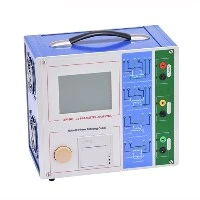
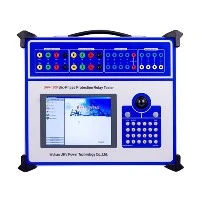
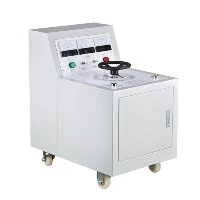
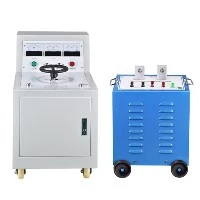
A practical estimation method is to first determine the injection current required for the test, then calculate the required voltage based on the impedance of the test circuit (including the internal resistance of the test sample, connecting cables, and contact resistance), and finally obtain the kVA demand from "power=current x voltage". The DDG series primary current injection test device for Wuhan UHV has a capacity covering 3kVA to 75kVA, and an output current range from 500A to 1000A (special specifications can be customized). This series of products can be made in modular or integrated structures to meet the requirements of different sites for equipment volume and handling conditions. For scenarios that require higher current output, the DDG series also offers customized output capabilities ranging from 200A to 15000A.
Continuous working time and heat dissipation design cannot be ignored
A single injection test usually belongs to short-term or intermittent working mode, but the allowable duration of different devices at maximum output current varies significantly. Some compact devices can only sustain 2 to 3 minutes at 1000A full load, while models with larger heat dissipation designs can extend full load operation time to over 10 minutes.
This difference directly affects testing efficiency. When multiple repeated measurements of the same circuit are required, or when conducting temperature rise tests or other projects that require continuous power on, equipment with short-term working hours may require frequent shutdowns for cooling, which may actually slow down the overall progress. Therefore, under the premise that the capacity and current parameters meet the requirements, priority should be given to selecting equipment with longer continuous working capacity at the target current.
Accuracy and functional configuration should match the testing purpose
Measurement accuracy is another hard indicator in selection. For relay protection verification and CT ratio testing, the current measurement error of a single injection device is usually required to be controlled within ± 1% of the full range. The instrument should have multiple protection mechanisms, including output overcurrent protection, overvoltage protection, and internal self check, to ensure the safety of on-site operations.
At the functional level, whether three-phase simultaneous injection is required, whether a built-in timer is needed for measuring the action time of the circuit breaker, and whether data storage and PC communication interface are required should be evaluated based on the actual testing task list. The DDG primary current injector of Wuhan UHV is positioned as a primary current injection test device and high current generator, mainly serving system installation testing, laboratory testing, and electrical debugging scenarios. When selecting a specific model, users can compare the above functional requirements with the manufacturer's standard configuration item by item to avoid paying additional costs for unused functions and avoiding duplicate purchases due to missing functions.
The starting point of selection logic is always the "tested object"
Ultimately, the selection of an injection device should be derived in reverse from the parameters of the tested device. The frame current of the tested circuit breaker, the primary rated current of the CT, and the setting range of the protection device collectively determine the required upper limit and lower limit of the injection current and capacity. Wuhan UHV has repeatedly mentioned its application in power plants, substations, electrical equipment manufacturing plants, research laboratories, and other units. Its product line covers different capacities and structural forms, precisely to match the testing needs of different levels, from preventive testing in distribution rooms to commissioning of large substations. The essence of selection is to find a balance point that matches the specific testing task between current margin, capacity adequacy, working time, measurement accuracy, and portability.