



In the testing of relay protection in power systems, a seemingly simple choice often confuses the operation and maintenance team: which type of equipment should be purchased for primary current injection testing and secondary current injection testing?
The answer is not 'choose one or two'. Understanding the different positioning of the two in the testing hierarchy is the prerequisite for making reasonable equipment decisions.

Secondary injection: convenient "device examination"
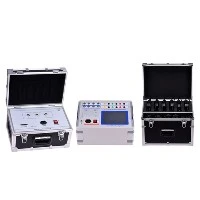
The secondary injection test applies simulated fault quantities on the protective screen terminal block to verify the logic and settings of the protection. It is easy to operate, repeatable, and suitable for a large number of routine projects. The UHV-1200 microcomputer relay protection tester from Wuhan UHV Power Technology Co., Ltd. is a representative product in this field, providing standard 6-phase voltage/current output, AC current output range of 0 to 30A/phase, up to 180A when 6-phase is connected in parallel, and frequency range covering 0 to 1000Hz. The UHV-802 three-phase relay protection tester of the same series is more compact in size, with a single machine weight of only 15kg, AC current output of 40A/phase, and three-phase parallel output of 120A, suitable for on-site single device verification and laboratory logic verification.
However, the secondary injection test has an undeniable limitation: it assumes that the secondary circuit and transformer are correct, and cannot directly detect primary side defects. As pointed out in the Wuhan UHV technology article, although the secondary injection test can detect sensor wiring and polarity issues, it only tests the logic and wiring of the equipment, and all other current carrying components have not been tested.
One injection: irreplaceable 'full link verification'
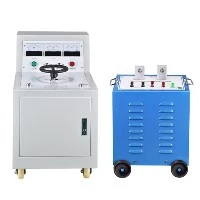
A primary injection test directly applies a real high current on the primary side to verify the current transformer ratio, polarity, integrity of the secondary circuit, and the entire transmission, which can expose hidden dangers such as multi-point grounding, saturation, and reverse wiring. The DDG-5000A primary current injection tester for Wuhan UHV is designed specifically for such scenarios, using dual ammeters with multiple ranges for monitoring and adjustable autotransformers for precise output control. It is suitable for commissioning and debugging of power plants and substations, as well as type testing of electrical equipment manufacturers.
The value of a single injection test lies in its ability to prove the correct installation and operation of the entire protection chain, covering the entire circuit and inspecting all wiring such as the primary and secondary windings of current transformers, relays, trip and alarm circuits, circuit breakers, etc. But the cost is equally significant: the procurement cost of such equipment is 3 to 10 times that of secondary injection equipment, the output current ranges from a few hundred amps to tens of thousands of amps, the load capacity requirements for on-site power supply are higher, and the transportation and deployment costs are also higher.
The key to selection: matching the testing hierarchy
Wuhan UHV Power Technology Co., Ltd. has adopted the concept of "scenario matching" in its product layout, forming a complete product system covering two types of testing requirements. The company has been deeply involved in the field of high-voltage power testing for 22 years, with a product line covering more than 100 types of products in 15 major categories such as relay protection testers, secondary circuit testing instruments, and high current generators.
For single device calibration and laboratory logic verification in daily operation and maintenance, secondary injection equipment is sufficient to handle them; For the acceptance of new station operation, full link verification after faults, and regular full performance testing of important equipment, one-time injection testing is an indispensable means. The two are complementary to each other, not substitutive.
As industry practice has revealed, understanding the hierarchical logic of primary injection and secondary injection is a prerequisite for doing a good job of relay protection inspection: using the wrong method, either missing the real hidden danger on the primary side, or repeatedly adding quantity in the logical layer but never touching the loop defect. For power operation and testing institutions, instead of struggling between choosing between two types of equipment, it is better to configure them reasonably according to their own testing scenario requirements, so that each test falls on the correct level.