

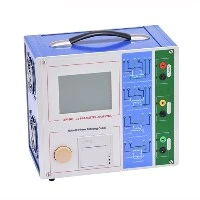
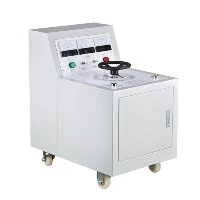
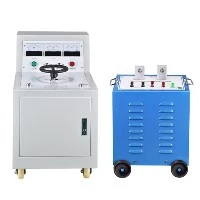
As the global power grid accelerates its evolution towards digitization and intelligence, relay protection testing during substation commissioning is facing unprecedented complexity challenges. Relay misoperation caused by manual testing errors accounts for 20% to 30% of global misoperation events, while technicians have reported a 15% to 20% extension in debugging cycles due to inconsistent test results and limited equipment capabilities. In this context, how to scientifically select relay protection testing equipment has evolved from a simple procurement decision to a systematic issue related to the safety and efficiency of power grid operation.

Selection starting point: from "what can be tested" to "what needs to be tested"
For a long time, many debugging teams have been accustomed to using channel quantity or brand model as the primary reference when selecting models. However, frontline engineering experience has shown that this approach can easily lead to two types of deviations: insufficient channels limit on-site testing capabilities, while excessive channels result in hardware idle and budget waste.
A more reasonable selection path should start from the actual needs of the protected object. Taking common protection functions as an example, overcurrent protection requires at least 3 current channels, transformer or line differential protection requires 6 independent current channels to be injected simultaneously, and distance protection requires a combination of 3 voltage channels and 3 current channels. For complex scenarios involving both busbar protection and circuit breaker failure protection, a 10 channel or even 12 channel configuration is necessary to have complete scheme verification capability. The selection of test sets should cover the entire lifecycle requirements from type testing to maintenance testing, rather than just focusing on a single task at present.
Undervalued variable: on-site adaptability
There is often a significant gap between the performance of equipment in the laboratory and in the substation site. The testing equipment is a 'cargo' between two tests - it goes through the entire process of vehicle transportation, on-site handling, and repeated loading and unloading. The shell structure, handle design, heat dissipation path, and even the operating perspective in a narrow relay protection room will directly affect the debugging efficiency.
In high-temperature areas, when the equipment enters the substation, the internal temperature is close to the boundary of the heat dissipation design, and continuous output will bring additional heat to the power electronic devices. This means that the heat dissipation design cannot simply rely on the increase of fan power, but needs to be optimized from the aspects of power efficiency, internal layout, and air duct direction. For debugging teams that need to frequently transition between different sites, the durability of equipment transportation and on-site portability are no less important than accuracy indicators.
Beyond accuracy: Full range output stability is the key
The accuracy index is often simplified as a percentage number, but in actual testing, what really affects the results is the output stability over the full range. The protection setting verification requires consistent measurement reliability over a wide range from small current to large current, and some testing equipment may experience a significant decrease in accuracy when approaching the lower limit of the range.
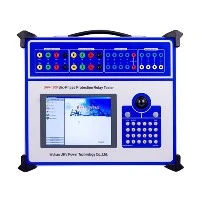
Taking the UHV-1200 microcomputer relay protection tester from Wuhan UHV Power Technology Co., Ltd. as an example, the equipment provides 6-phase voltage and 6-phase current outputs, which can be flexibly combined into multiple output modes, and the debugging error is controlled within ± 0.1%. This level of accuracy can meet the requirements of accurate verification of protection settings for 110kV and above systems.
The essence of selection is to find the precise matching point between testing requirements, on-site conditions, and budget, rather than simply pursuing the highest parameters or lowest price. Wuhan UHV suggests that the selection should adhere to the principle of "sufficient is optimal", determine the channel and functional configuration based on daily core testing requirements, and reserve necessary expansion interfaces.