

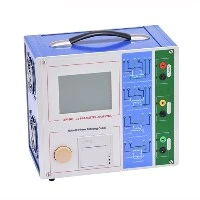
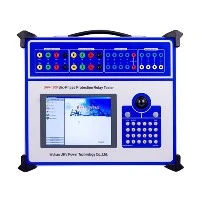
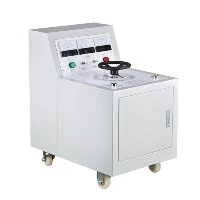
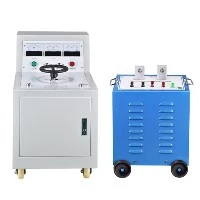
A High Voltage Tester is an instrument designed to generate high voltage and test the insulation performance and dielectric strength of electrical equipment, components, or materials. Its core function is to simulate high-voltage environments (far exceeding normal operating voltages) that devices may encounter during actual operation, verifying their safety and reliability.

Core Purpose:
1.Verify insulation integrity: Ensures insulation materials (e.g., in cables, transformers, switchgear, insulators, motor windings, household appliances, or electronic components) can withstand specified overvoltages without breakdown or flashover.
2.Detect hidden defects: Identifies manufacturing flaws, aging materials, contamination, moisture ingress, or insulation damage from handling. These defects may not manifest under normal voltage but cause breakdowns or excessive leakage currents under overvoltage.
3.Ensure safety compliance: Essential for safety tests in production, type testing, acceptance testing, and preventive maintenance. Ensures compliance with international (e.g., IEC), national (e.g., GB), or industry (e.g., IEEE) standards.
4.Prevent accidents: Detects insulation weaknesses to prevent catastrophic failures (e.g., short circuits, fires, explosions) caused by overvoltages (e.g., lightning strikes, switching surges).
Key Applications:
Power industry (power plants, substations, transmission lines)
Electrical equipment manufacturing (transformers, switchgear, cables, motors, capacitors)
Electronics industry (components, PCBs, consumer electronics)
Household appliance manufacturing & testing
Automotive industry (EV high-voltage components: batteries, motors, charging systems)
Aerospace, research labs, and quality inspection agencies.
Common Test Types:
AC Withstand Voltage Test: Applies AC high voltage (typically 50/60 Hz). Simulates grid overvoltages. Checks for breakdown or excessive leakage current.
DC Withstand Voltage Test: Applies DC high voltage. Ideal for long cables (avoids large capacitive currents) or detecting specific insulation flaws. Measures leakage current stability.
Insulation Resistance Test: Applies lower DC voltage (500V–10kV) to measure insulation resistance (megaohm range). Often integrated into withstand testers.
Impulse Voltage Test: Applies transient high voltage (lightning/switching surges). Tests resilience against transient overvoltages. Requires dedicated impulse generators.
Partial Discharge Test: Detects micro-discharges in insulation under AC/DC stress. Requires precision instruments and sensors.