



In the preventive testing of power grid equipment, lightning impulse voltage test data is the key basis for determining the insulation status of the equipment. However, the on-site testing environment is complex, and incidents of unqualified test data occur from time to time. Faced with an unqualified test report, should we directly determine that the equipment is "problematic", or should we first investigate the interference factors in the testing process? The answer to this question is directly related to the accuracy of safety assessment and maintenance decisions for power grid equipment.
Wuhan UHV Power Technology Co., Ltd. has developed a standardized process for handling abnormal test data of impulse voltage generators based on years of on-site experience serving power grid operation and maintenance units - first troubleshooting, then retesting, and finally reporting.

Step 1: Check for wiring errors and environmental interference
If the experimental data is not qualified, the first thing to do is not to draw a conclusion, but to eliminate the interference factors in the experimental process itself.
The most common sources of interference on site include loose wiring, poor contact of measuring cables, and the strong electromagnetic environment at the substation site. According to the on-site service records of Wuhan UHV in multiple power supply companies and power construction units across the country, when the measurement value is too large or fluctuates, the first thing to confirm is whether the measurement cable contact is good, and at the same time, eliminate on-site electromagnetic interference. Placing the impulse voltage generator host far away from the high-voltage busbar can effectively reduce the impact of electromagnetic interference on measurement accuracy.
In addition, the inability to export data is also a common issue on site, and USB communication cables and drivers should be checked. Some old models require the installation of dedicated serial port drivers to communicate properly. If the charging time is unstable and the data recording is incomplete, it may be related to the quality of the external power supply. It is recommended to use a stable external power supply.
Step 2: Re measure after eliminating interference
After confirming that the wiring is correct and eliminating interference factors, the original test plan should be re measured. When re measuring, special attention should be paid to the test sequence - first complete the non-destructive test items, confirm that they are qualified, and then conduct destructive tests such as pressure resistance.
The qualification criteria for measured values are: compared with factory test data and historical data, if the deviation does not exceed the specified percentage, it is considered qualified. If the retest result is qualified, it indicates that the first failure was caused by interference in the testing process, and the test report can be treated as qualified. If the retest result is still unsatisfactory, proceed to the third step.
Step 3: Report to the equipment management department for further inspection arrangements
If the retest still fails after excluding interference from the testing process, it should be immediately reported to the equipment management department for further inspection. At this point, experimental data should be used as an important basis for equipment status assessment, combined with equipment operation history, maintenance records, and other experimental project data for comprehensive analysis and judgment.
Each unit should establish a comprehensive data archive, with paper records and electronic data stored synchronously. Electronic data should be organized into folders based on device numbers for easy historical comparison and retrieval. The standardized recording and management of experimental data is the basis for subsequent equipment status evaluation and maintenance decisions.
Wuhan UHV: Make on-site testing "accurate measurement and accurate judgment"
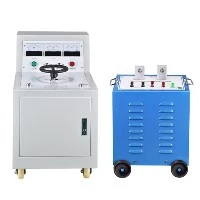
The unqualified test data is often not due to problems with the equipment itself, but rather controllable factors such as on-site interference and wiring errors. The Wuhan UHV series lightning impulse voltage generator adopts intelligent closed-loop control technology, with a charging voltage feedback accuracy of up to 0.5%. Combined with a 1GS/s high-speed sampling system, it can achieve microsecond level fault location. The voltage fluctuation rate of the equipment is less than 0.1%, which minimizes the risk of data nonconformity caused by equipment errors at the hardware level.
When customers encounter technical problems on site, the Wuhan UHV after-sales team can provide remote technical guidance. Technicians communicate with customers through various means such as phone calls, pictures, and short videos to quickly identify the problem and guide on-site personnel in troubleshooting. This service model of "on-site problems, rear support" helps numerous power grid operation and maintenance units quickly locate the cause of abnormal test data, ensuring that test tasks are completed on time.
For power grid operation and maintenance units, unqualified test data is not scary, what is scary is not knowing how to handle it correctly. The three-step process of "first investigation, then retesting, and then reporting" developed by Wuhan UHV provides a set of operable standard procedures for on-site testing personnel - enabling scientific disposal of every unqualified data and accurate evaluation of the insulation status of each equipment.