

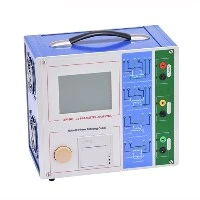
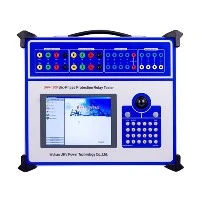
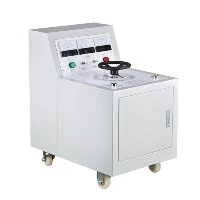
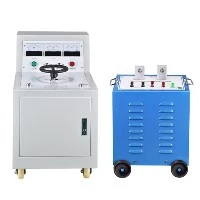
The Transformer Test Bench under Wuhan UHV can help many power workers conduct various power tests more conveniently.

A test bench (or test bed) is a specially designed platform or system primarily used for testing, validating, analyzing, debugging, calibrating, or researching equipment, components, materials, systems, or theories. Its core purpose is to conduct experiments and operations in a controlled, safe, and repeatable environment.
Its applications span a wide range of fields:
1.Product Development & R&D:
Prototype testing: Verifies functionality and performance of new designs before mass production.
Performance evaluation: Measures key metrics (e.g., power, efficiency, speed, accuracy, response time, durability).
Reliability testing: Simulates long-term use or extreme conditions (e.g., temperature, vibration, shock, humidity) to assess product lifespan.
Functional validation: Confirms if a system operates according to design specifications.
2.Quality Control & Manufacturing:
Production testing: Ensures finished products or critical components meet quality standards.
Fault diagnosis & repair: Isolates faulty components and verifies repairs.
Calibration: Ensures measurement instruments and sensors provide accurate readings.
3.Scientific Research & Experimentation:
Fundamental research: Provides a platform for exploring phenomena, validating theories, or studying material properties (e.g., physics, chemistry, biology).
Applied research: Addresses specific engineering challenges (e.g., renewable energy, propulsion systems, biomedical devices).
Data acquisition & analysis: Uses integrated sensors and DAQ (Data Acquisition) systems to record precise experimental data.
4.Education & Training:
Teaching laboratories: Offers hands-on experience for students to reinforce theoretical knowledge and develop practical skills.
Operator training: Trains personnel on operating, maintaining, and troubleshooting specific systems.
5.System Integration & Validation:
Tests functionality and compatibility of complex systems (e.g., aerospace, industrial automation, automotive electronics) in simulated or real-world environments.
6.Safety Testing:
Conducts overload, short-circuit, or destructive tests to evaluate safety margins and prevent hazards.