

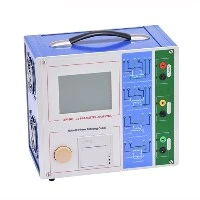
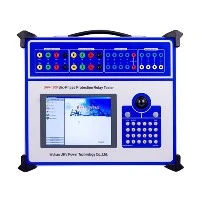
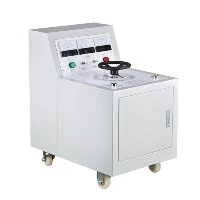
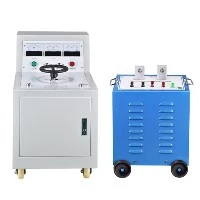
The cable fault testerunder Wuhan UHV can help many power workers conduct various power tests more conveniently.

1.Classical Bridge Method
Applicable Faults: Low-resistance faults (insulation resistance < 10kΩ)
Principle: Uses Wheatstone bridge balance theory to calculate fault distance by comparing resistance ratios between faulty and healthy phases.
Advantages: Simple equipment, low cost.
Limitations: Requires an intact reference phase and only works for low-resistance faults.
2. Traveling Wave Method (TDR)
Main Techniques:
Low-Voltage Pulse Method (LPS)
Applicable Faults: Open circuits, short circuits, and other low-resistance faults.
Principle: Injects low-voltage pulses into the cable and calculates distance using reflected wave time delay Δt:
Fault Distance=1/2vΔt
(v= electromagnetic wave propagation speed in the cable).
Impulse Current Method (ICE)
Applicable Faults: High-resistance faults (e.g., flashover, carbonized paths).
Principle: Uses a high-voltage generator to break down the fault point, generating transient arcs; locates faults by analyzing reflected traveling waves.
Key Equipment: High-voltage surge generator + traveling wave recorder.
3. Acoustic-Magnetic Synchronization Method
Applicable Scenarios: Discharge noise from high-voltage breakdown faults (especially for buried cables).
Principle:
Magnetic sensors detect discharge current pulses (magnetic signals).
Ground microphones capture discharge acoustic waves.
Operation: Pinpoints faults by analyzing time differences between acoustic and magnetic signals (sound travels slower than light; time difference correlates to distance).
Advantage: Locates faults in buried cables with ±0.5m accuracy.
4. Supplementary Methods
Step Voltage Method:
For ground faults with damaged sheaths; detects surface potential gradients.
Infrared Thermography:
Locates local hotspots caused by poor contacts.
Cable Route Tracer:
Maps cable paths before fault pinpointing.