

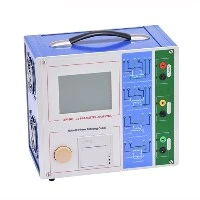
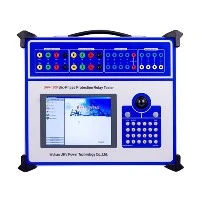
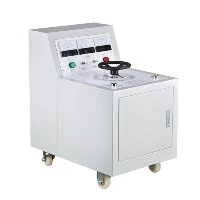
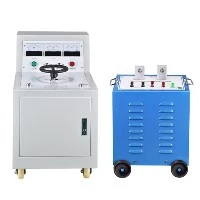
The cable fault tester under Wuhan UHV can help many power workers conduct various power tests more conveniently.

Three Common Types of Cable Faults:
1.Insulation Failure (Ground Fault)
Cause: Deterioration of insulation due to aging, moisture ingress, mechanical damage, or manufacturing defects.
Manifestation: A low-resistance path forms between the conductor and ground (or shielding), causing leakage current or tripping. Common in humid, high-temperature, or physically damaged environments.
2.Short-Circuit Fault (Phase-to-Phase Fault)
Cause: Loss of insulation between phases, often due to overvoltage, insulation degradation, or physical crushing leading to direct conductor contact.
Manifestation: Direct connection between different phase conductors causes a surge in current, triggering protective devices (e.g., fuse blowing, circuit breaker tripping). May be accompanied by high temperatures or arcing damage.
3.Open-Circuit Fault (Break Fault)
Cause: Conductor breakage, typically from mechanical tension, loose joints, corrosion, or burnout from prolonged overload.
Manifestation: Interruption of the cable path, resulting in loss of power to equipment. The fault point exhibits very high resistance, blocking voltage transmission, though the insulation may remain intact.