


1. The main working principle of the DC motor test bench is as follows: 1. The DC power supply current flows along the positive pole of the power supply to the left brush, and the brush and commutator rub against each other. The current flows into the coil through the left commutator (also known as the commutator, this motor has two left and right commutator segments), and flows out from the right side of the coil, passing through the right commutator segment and commutator segment (also known as the commutator).

2. As the coil is located in the magnetic field of the main magnetic poles (N and S), it will be subjected to electromagnetic forces. Due to the different directions of current (left current flowing inward, right current flowing outward), the two coils will be subjected to electromagnetic forces of the same magnitude and opposite directions. These two electromagnetic forces form electromagnetic forces under electromagnetic action, and they will be pulled by electromagnetic forces to form electromagnetic forces. The coil of the motor is embedded into the rotor slot, and the motor begins to rotate.
3. The left and right commutator segments rotate along with the shaft, while the electric brush is fixed. After one rotation, the coil on the right moves to the left and the coil on the left moves to the right. However, due to the presence of commutator segments, the current direction in the coil on the left is the same as that in the coil on the left, flowing in the direction of the current inside. Therefore, the direction of the electromagnetic force received is on the left, and the direction of the electromagnetic force received is on the right. Therefore, from a spatial perspective, the direction of the electromagnetic force acting on one side of the coil at the same position remains constant, ensuring the rotation of the motor.
4. However, due to the different magnetic fields when the coil rotates to different positions, the electromagnetic force acting on the coil is constantly changing, resulting in unstable rotation, sometimes fast and sometimes slow. Therefore, by installing multiple coils, it is possible to ensure that the coils are uniformly and stably subjected to force. The two external magnetic poles are actually electromagnets generated by excitation coils. Small motors have permanent magnets inside, and slightly larger ones will use electromagnets.
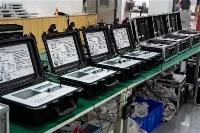
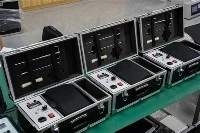
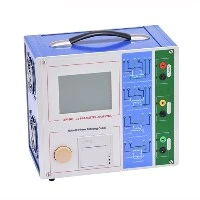
5. The DC motor test bench adopts advanced virtual instrument technology, combining the powerful computing power of computers with the hardware measurement and control capabilities of instrument equipment. Through software, it realizes the control of testing and the calculation, analysis, processing, display, printing, and storage of data, making the system's functions surpass the simple combination of general instruments, especially in terms of result saving, waveform storage, synchronous measurement, test report generation, system expansion, and multifunctionality.
6. Fully automated, fully microcomputer based, efficient, and safe functional design to prevent misoperation. Chinese and English interface operation, automatic collection of measurement data, automatic calculation of results, automatic generation of factory test reports and printing output. The measurement control system adopts PLC programming control, which is particularly suitable for products that require batch testing.