

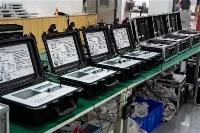

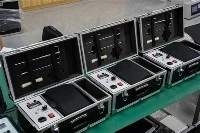
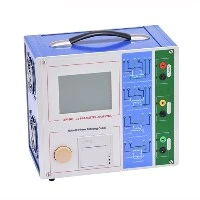
There are many types of asynchronous motor test benches in the market, and motor test benches are one of the most important products. What should we pay attention to when choosing? Now it's mainly because we need to buy suitable products, so let me summarize for you. Come and take a look.

What should be noted when selecting an asynchronous motor test bench?
In the testing of AC/DC motors and electric tools, the dynamometer is often used as a testing equipment. The dynamometer mainly tests the torque, speed, and output power of the motor. However, not every dynamometer can meet all motor testing requirements, mainly considering three factors:
1, The torque testing range, the torque of the dynamometer usually cannot exceed the maximum torque value.
2, The range of speed testing is that the speed of the dynamometer usually cannot exceed the maximum speed it can withstand. If it is used for a long time at excessive speed, it will greatly shorten the service life of the dynamometer, especially with mechanical wear.
3, The power usually marked on the test bench refers to the power that the dynamometer can absorb, because typical dynamometers (hysteresis, magnetic powder, eddy current dynamometers achieve energy consumption by absorbing heat) are the output power of the tested AC/DC motor or electric tool. Strictly speaking, this indicator cannot be exceeded, otherwise the dynamometer is easily burned out due to the inability to dissipate heat;
1. The selection of an electric dynamometer not only needs to meet the three main technical indicators of speed, torque, and power, but also needs to see if it meets the specific testing requirements. Generally, motors need to be tested for parameters such as no-load speed, no-load loss, and locked rotor torque, which also need to be carefully considered!
2. When selecting a dynamometer, all test data for the motor should be between 30% and 90% of the dynamometer's performance parameters. Because the testing accuracy of the dynamometer in this range is guaranteed.
3. The commonly used dynamometers are mainly classified into the following categories: hysteresis dynamometer, magnetic powder dynamometer, eddy current dynamometer, and electric dynamometer (DC, AC electric dynamometer).
The test bench is sorted by the achievable speed as follows: eddy current dynamometer, electric dynamometer, hysteresis dynamometer, magnetic powder dynamometer;
(1) Eddy current dynamometer cannot achieve locked rotor of motors or electric tools, but its upper limit of speed is very high, usually 20000~30000 RPM; The torque can also be very large.
(2) The speed of hysteresis dynamometer is generally below 20000 revolutions per minute, but it can achieve locked rotor, but the power is not too high; The torque is generally below 20Nm.
(3) The speed of the magnetic powder dynamometer is relatively low, usually 1500~5000RPM, but the torque can be increased and the motor can also achieve locked rotor.
4. The power test bench does not require water cooling, only air cooling is sufficient; Eddy current dynamometer, hysteresis dynamometer, and magnetic powder dynamometer require both water cooling and air cooling, while some low-power hysteresis dynamometer can meet testing requirements without water cooling; During the use of the dynamometer, the cooling function must be turned on.
The asynchronous motor test bench has high precision requirements, and all test data needs to be controlled within the corresponding data, which is also a guarantee for our production efficiency.