

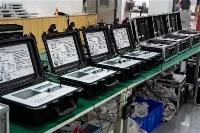

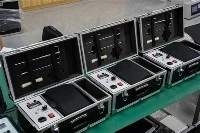
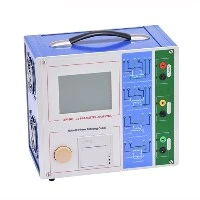
The motor testing equipment system consists of a testing platform, a tested motor, a motor controller, a motor load, a test accompanying motor controller, a thrust sensor, an electrical measurement system, a water cooling system, and an upper computer.
1. Testing platform: The testing platform is the main equipment for testing modules, load modules, safety protection devices, and other equipment.
2. Loading equipment: Test the load of the linear motor and the controller of the auxiliary test motor to bear the load of the test. Alternatively, an AC servo motor that drives the nut can be used to convert torque into driving force.
3. Measuring components: thrust, position, temperature, pressure, flow rate, electricity, etc.
4. External devices: water cooling system, motor controller, PC, etc
This experimental system is controlled by a microcomputer, which controls the operation of the test machine and auxiliary sample machine, measures relevant parameters, and automatically detects them according to the program and parameters, and outputs corresponding test reports.

The motor testing equipment system is the core component of the linear motor experimental platform, and the parameters in the test report are achieved through the measurement and acquisition of the testing components. Meanwhile, due to the large dynamic range of the measured power during the entire experimental period, it is necessary to use efficient continuously variable automatic shifting technology to ensure large-scale and high-precision detection. The use of variable frequency speed regulation makes the electromagnetic environment on site more complex, and effective measures need to be taken to improve it. Only by considering these important issues and selecting an appropriate measurement system can the accurate detection of linear motors be ensured, providing reliable data support for ensuring and improving product quality.
Inspection method before starting: 1. For new or long-term inactive motors, check the coil and the grounding resistance of the coil before use. Motors below 500 V generally use 500 V insulation resistors, motors between 500 and 1000 V use 1000 V insulation resistors, and motors above 1000 V use 2500 V insulation resistors. The working temperature of insulation resistance cannot be lower than 1 M ohm and must be tested under the cooling conditions of the motor. 2. Check for cracks on the surface of the motor, and ensure that all screws, components, and motor installation are in good condition. 3. Check the operation of the motor drive device. 4. According to the information on the nameplate, such as voltage, power, frequency, connection, speed, etc., compare with the power supply and load to see if they are consistent. 5. Check the exhaust of the motor and the lubrication of the bearings. 6. Pull the motor shaft to confirm if the rotor can rotate freely and if there is any noise. 7. Check the installation of electric brushes on the motor and the flexibility of the brush lifting mechanism, as well as the position of the brush lifting handle. 8. Check the grounding equipment of the motor to ensure that it is working properly.