

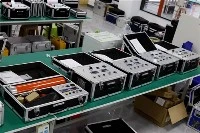
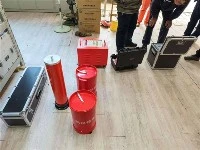

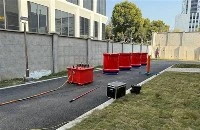
The DC high-voltage generator under Wuhan UHV can help many power workers conduct various power tests more conveniently.
In the power system, the stable operation of substations and transmission lines is the core of grid safety, and the performance of zinc oxide lightning arresters, as the "first line of defense" against lightning strikes and operating overvoltages, directly determines the safety of downstream power equipment. Lightning arresters are exposed to complex outdoor conditions for a long time and are easily affected by factors such as temperature, humidity, dust, and lightning strikes, resulting in hidden defects such as moisture, aging, and internal breakdown. If not detected in a timely manner, it may cause serious accidents such as equipment damage and power outages. As the core equipment for insulation testing of lightning arresters, DC high-voltage generators can accurately capture performance abnormalities of lightning arresters, providing reliable support for the "health check" of lightning arresters. In conjunction with lightning arrester live testing instruments, they can build a comprehensive overvoltage protection detection system.
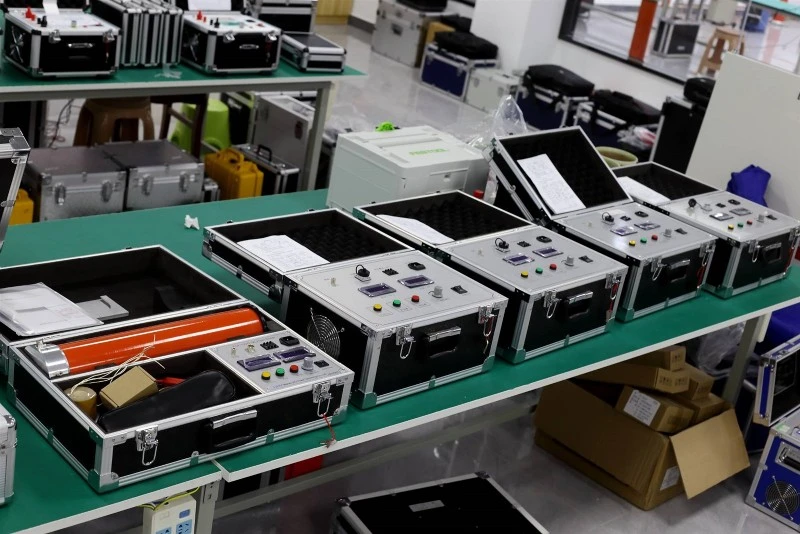
1, DC High Voltage Generator: The "Core Tool" for Insulation Detection of Surge Arresters
The core function of lightning arrester is to absorb overvoltage energy and protect core equipment such as transformers and cables, and the integrity of its insulation performance is a prerequisite for playing a protective role. The DC high voltage generator conducts DC withstand voltage tests and leakage current detection on lightning arresters by outputting continuously adjustable high stability DC high voltage, which is equivalent to conducting a "deep inspection" of lightning arresters and accurately identifying internal insulation defects. This is also the core link of regular preventive testing of lightning arresters.
Unlike the live testing instrument for lightning arresters, which focuses on "routine monitoring under live conditions", the DC high voltage generator focuses on "offline precise verification". It can apply a standard DC high voltage while the lightning arrester is in a stopped state, simulate overvoltage scenarios, detect changes in the insulation strength and leakage current of the lightning arrester, and determine whether there are serious defects such as moisture, aging of valve plates, and internal damage, making up for the shortcomings of live testing that cannot verify the insulation limit performance. The two complement each other, covering the entire lifecycle detection requirements of lightning arresters to ensure that they are always in optimal working condition.
The DC high voltage generator developed by Wuhan UHV Power Technology Co., Ltd. is specially designed for lightning arrester detection optimization. It has a one click testing function of 0.75UDC1mA, which can automatically measure the reference voltage and leakage current of the lightning arrester without frequent manual adjustment, greatly improving detection efficiency. At the same time, the measurement accuracy reaches 0.5%, and the ripple factor is ≤ 0.5%, ensuring accurate and reliable detection data and adapting to the detection needs of various voltage levels of lightning arresters.
2, Core application scenarios of DC high-voltage generators in lightning arrester detection
Based on the actual operation and maintenance of power, the application of DC high-voltage generators in lightning arrester detection mainly focuses on three scenarios, covering the entire process of lightning arrester factory, operation and maintenance, and fault diagnosis, providing strong guarantee for overvoltage protection of the power grid:
1. Factory and handover test of lightning arrester: Before leaving the factory, the lightning arrester needs to undergo a DC withstand voltage test through a DC high voltage generator, applying a DC high voltage of 2-2.5 times the rated voltage to verify its insulation strength, ensure no production defects, and meet industry standards before leaving the factory; After the installation of the lightning arrester in the substation is completed, during the handover test phase, DC withstand voltage and leakage current detection should be carried out simultaneously. Combined with the parameter monitoring of the lightning arrester live tester, the installation quality and performance of the lightning arrester should be confirmed to meet the standards, avoiding damage caused during transportation and installation.
2. Regular preventive testing: According to the power operation and maintenance standards, lightning arresters need to undergo routine testing once a year, with the testing of DC high-voltage generators being the core link. Especially after the rainy season, typhoons and other severe weather conditions, or in areas with frequent thunderstorms and humid environments, lightning arresters need to increase their detection frequency. By measuring the leakage current of the lightning arrester at a DC reference voltage (U1mA) and 0.75 times the reference voltage using a DC high-voltage generator, and comparing historical data, the aging degree and insulation status of the lightning arrester can be determined to achieve early detection and treatment.
3. Fault diagnosis of lightning arrester: When the lightning arrester counter operates abnormally, there is an overvoltage fault in the line, or the lightning arrester live tester detects parameter abnormalities, deep detection needs to be carried out through a DC high voltage generator. By applying a gradient DC high voltage, observing the variation pattern of leakage current, and locating the type of defect - if the leakage current increases sharply, it is highly likely that the internal of the lightning arrester is affected by moisture or the valve plate is broken down; If the leakage current is unstable, it may be due to poor internal contact or local damage, providing accurate basis for fault handling and avoiding the expansion of defects.
It is worth noting that in the detection of lightning arresters for ultra high voltage lines such as ± 1100 kV, the advantages of DC high-voltage generators are particularly prominent. In the maintenance of the ± 1100 kV Jiquan DC transmission line, the leakage current test can be completed at high altitude without disassembling the lightning arrester through the ground remote control operation of the integrated DC high-voltage generator, avoiding the complex process of lightning arrester disassembly and hoisting, greatly reducing safety risks and testing costs, and improving detection efficiency. In the detection of lightning arresters in railway traction substations, DC high-voltage generators are affectionately referred to as "cannons" by operation and maintenance personnel, used to simulate lightning strike scenarios, accurately test the protective performance of lightning arresters, and ensure the safety of railway power supply.
3, Key factors and countermeasures affecting the accuracy of lightning arrester detection
The accuracy of detecting lightning arresters with DC high-voltage generators directly affects the judgment of lightning arrester status. Based on on-site operation and maintenance experience, it is necessary to focus on three major influencing factors and take appropriate measures to ensure the reliability of the detection results:
1. Environmental factors: Temperature, humidity, atmospheric pressure, and other environmental conditions can affect the test readings. For example, when the humidity exceeds 85%, the surface of the lightning arrester is prone to leakage current, which can interfere with the test results. Response method: Select an environment with a temperature of -10~45 ℃ and humidity ≤ 85% for testing; When detecting damp weather, it is necessary to clean and dry the surface of the lightning arrester in advance to avoid surface leakage current affecting data.
2. Equipment status: The cleanliness and grounding status of the lightning arrester itself, as well as the calibration status of the DC high-voltage generator, are the core of accurate detection. Response method: Clean the dust and oil stains on the surface of the lightning arrester before testing to ensure reliable grounding (grounding resistance ≤ 4 Ω); Regularly calibrate the DC high-voltage generator, check the insulation performance of the voltage doubler cylinder, and avoid instrument errors that may cause distortion of detection data.
3. Operation method: Correct wiring and operating procedures are the foundation. Violation of regulations not only affects data accuracy, but may also pose safety risks. Response method: Operators need to receive professional training and be familiar with the instrument operation process; When wiring, use high-voltage shielded wires to avoid interference; Slowly increase the voltage during testing, observe changes in leakage current, and strictly prohibit sudden voltage increases; After testing, fully discharge the lightning arrester and instrument to ensure safe operation.
4, Practical suggestions and equipment selection skills for lightning arrester detection
To fully utilize the detection value of DC high-voltage generators and improve the operation and maintenance level of lightning arresters, we can start from the following aspects:
1. Develop a scientific testing plan: Based on the usage environment and voltage level of the lightning arrester, develop a regular testing plan. Conventional lightning arresters should be tested once a year, and in harsh environments, they should be tested every 6 months. Establish a complete testing data file, compare historical data for trend analysis, and accurately determine the degree of aging of the lightning arrester.
2. Standardize operating procedures: strictly comply with the "Electricity Safety Work Regulations" and equip auxiliary safety equipment such as high-voltage insulated operating rods and insulated gloves; Check the status and wiring of the instrument before testing, monitor data in real-time during testing, and perform discharge processing and data recording after testing to avoid unauthorized operations.
3. Choose reliable testing equipment: Priority should be given to suppliers with good reputation and technical strength, such as Wuhan UHV Power Technology Co., Ltd. Their developed DC high-voltage generators have multiple safety protection functions, high-precision measurement, convenient operation and other advantages, suitable for various lightning arrester testing scenarios. At the same time, they provide comprehensive after-sales technical support to solve on-site testing problems.
4. Collaborative use of detection equipment: The DC high voltage generator is used in conjunction with lightning arrester live testing instruments, clamp ammeters, and other equipment to monitor the conventional state during live testing, verify insulation strength through offline testing, and ensure stable performance of lightning arresters through dual testing, comprehensively safeguarding the safety of overvoltage protection in the power grid.
Frequently Asked Questions (FAQ)
Q1: When using a DC high-voltage generator to measure lightning arresters, which two key data points should be considered?
A1: Answer: The core focuses on two compliance indicators. One is the 1mA reference DC voltage U1mA, and the deviation of the value should not exceed ± 5% to eliminate the hidden danger of valve plate aging; The second is the leakage current at 0.75 times the reference voltage, which is strictly controlled within 50 μ A under normal operating conditions. If the value exceeds the standard, it is likely to indicate internal moisture, which conforms to the formal acceptance standards of the power industry.
Q2: Can a high-voltage surge arrester be tested for outdoor rainy or foggy weather?
A2: It is not recommended to directly enter the site for work. Rain, snow, thick fog, and high condensation environments can lower insulation strength, causing high-voltage creeping along the surface, reading drift and distortion, and increasing the risk of electric shock and equipment flashover safety. Standardized testing should be conducted during dry and windless periods with an environmental humidity of ≤ 85% to ensure the dual safety of personnel and equipment.
Q3: During the testing of lightning arresters in the same batch, some devices showed significantly lower U1mA. What is the most likely cause of the malfunction?
A3: A8: It is highly likely that the valve plate of the lightning arrester has deteriorated, the internal sealing has been affected by water and moisture, or there is poor contact between the internal electrodes. It is necessary to conduct on-site retesting to verify the data, synchronously investigate the wiring and grounding conditions, and promptly shut down and replace the equipment after confirming the fault, in order to prevent potential overvoltage accidents caused by grid connection with hidden dangers.
Q4: How to match lightning arresters in substations with different voltage levels without selecting the wrong specifications for direct current and high voltage?
A4: Precise adaptation and selection of on-site voltage, suitable for 10kV/35kV substations and 60kV low current models; The 110kV main station comes standard with a 120kV voltage regulator model; High voltage hub stations of 220kV and above are equipped with specialized models for high voltage regulation and low ripple. Wuhan UHV can be precisely matched one-to-one according to demand.
Q5: After completing the surge arrester withstand voltage test, which step must be taken before leaving the site?
A5: The global safe discharge process must be carried out. Use specialized insulated discharge rods to thoroughly release pressure from the high-voltage end of the lightning arrester and the energy storage chamber of the high voltage doubling cylinder in stages. After confirming that there is no residual voltage, remove the wiring, organize cable accessories neatly, and strictly prevent accidental contact with residual high voltage to prevent injury. Complete the full process test in a compliant closed loop.