



With the development of power systems towards intelligence, high voltage levels, and large capacity, gas insulated metal enclosed switchgear (GIS) is becoming increasingly widely used in substations, power plants, and large-scale industrial power supply systems. GIS has the characteristics of compact structure, good insulation performance, high operational reliability, and small footprint. However, its internal structure is complex, and the quality of equipment installation and insulation status directly affect the safe operation of the power system.
During the factory acceptance, on-site installation, handover testing, and daily preventive testing of GIS equipment, professional testing equipment is required to check the electrical performance. Therefore, how to select suitable GIS testing equipment based on the voltage level, test items, and site conditions of GIS has become a concern for power equipment manufacturers, power engineering companies, and testing institutions.

Clarify the testing requirements for GIS equipment
Before selecting GIS testing equipment, it is necessary to first understand the actual testing object and experimental requirements. GIS equipment with different voltage levels and structures have different requirements for the output voltage, capacity, measurement accuracy, and functional configuration of testing instruments.
Common testing items for GIS include AC withstand voltage test, partial discharge detection, circuit resistance test, mechanical characteristic test, insulation resistance test, and SF6 gas related testing.
Among them, the AC withstand voltage test is mainly used to verify whether the GIS main circuit and insulation system can withstand the specified test voltage; Partial discharge detection is used to discover potential discharge defects inside insulation media or on the surface of insulation structures; The circuit resistance test mainly checks the connection and contact quality of the GIS conductive circuit; Mechanical characteristic testing is used to evaluate the opening and closing time, synchronicity, and operational performance of circuit breakers.
Different experimental projects require corresponding professional instruments, and testing plans cannot be selected solely based on equipment names or rated voltages.
Select AC withstand voltage equipment based on GIS voltage level
The AC withstand voltage test is an important item in the handover test and factory test of GIS equipment. Due to the use of SF6 gas as the insulation medium within GIS, there are high requirements for voltage waveform, output capacity, and test stability in its testing.
For GIS AC voltage withstand test, series resonance test device is a common equipment choice. This device utilizes a reactor to resonate with the capacitance of the test sample, effectively reducing the required capacity of the test power supply while meeting the test voltage requirements. It is suitable for AC withstand voltage testing of GIS, GIS busbars, power cables, and other high-capacity capacitive test samples.
When choosing a series resonant device, it is important to focus on the following aspects:
Firstly, the rated output voltage should be determined based on the rated voltage level and relevant test standards of the GIS equipment to ensure that the device can meet the specified test voltage requirements.
Next are output capacity and reactor configuration. The test capacitance of GIS equipment is affected by factors such as equipment structure, number of air chambers, and connection methods, and needs to be calculated and configured based on actual sample parameters.
In addition, attention should also be paid to the automatic tuning capability, voltage regulation method, overvoltage protection, overcurrent protection, and overheating protection functions of the device. For on-site testing, the convenience of operation and the flexibility of equipment transportation are also factors that need to be considered when selecting.
Emphasize the ability of GIS partial discharge detection
Internal insulation defects in GIS may not immediately cause breakdown, but they may gradually develop over long-term operation and ultimately affect equipment safety. Therefore, partial discharge detection is also an important means of GIS state assessment and insulation diagnosis.
Common GIS partial discharge detection equipment includes partial discharge detectors, ultra-high frequency partial discharge detection systems, and ultrasonic detection equipment.
Ultra high frequency (UHF) detection technology is widely used in GIS partial discharge detection, which can obtain electromagnetic signals generated by partial discharge through sensors installed on the GIS casing, helping detection personnel identify internal discharge activities.
When selecting partial discharge detection equipment, attention should be paid to sensor configuration, detection sensitivity, signal acquisition capability, anti-interference performance, and data analysis function. For users who need to carry out on-site testing, the portability of the instrument and the compatibility between different sensors should also be considered.
Choose a suitable GIS circuit resistance tester
The contact quality of GIS main circuit directly affects the power loss and temperature rise during equipment operation. If there is poor contact at the conductive connection point, it may cause local heating, and in severe cases, even affect the normal operation of the switchgear.
The circuit resistance tester is mainly used to measure the contact resistance of GIS circuit breakers, isolating switches, and other conductive connection parts.
When choosing such devices, special attention should be paid to testing current, measurement range, measurement accuracy, and anti-interference ability. For low resistance test objects such as GIS, a larger test current is usually required to improve the stability and reliability of the measurement results.
At the same time, the equipment should have comprehensive overcurrent protection and operation prompt functions to facilitate on-site personnel to complete testing and save relevant data.
Pay attention to the mechanical characteristic testing of GIS circuit breakers
The mechanical performance of GIS circuit breakers is related to whether the switchgear can complete the opening and closing operations within the specified time. As the equipment operates for a long time, there may be performance changes in the mechanical transmission mechanism, operating coils, and auxiliary contacts.
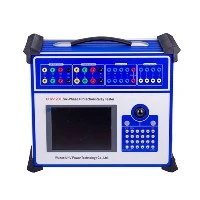
The circuit breaker mechanical characteristic tester can measure parameters such as opening and closing time, three-phase synchronicity, bounce time, stroke, speed, and coil current, helping technicians determine whether the circuit breaker mechanical system is in normal working condition.
When selecting a GIS circuit breaker mechanical characteristic tester, it is necessary to confirm whether the instrument supports the corresponding circuit breaker structure and sensor connection method, while checking the number of testing channels, data recording function, and on-site operation convenience.
For different models of GIS circuit breakers, it is also necessary to confirm the testing interface and sensor installation conditions in advance to avoid equipment incompatibility issues after purchase.
Consider on-site testing environment and equipment configuration
GIS testing typically involves different locations such as substation sites, equipment manufacturing workshops, and high-voltage testing halls. Different environments have different requirements for the volume, weight, power supply, and operation of testing equipment.
If mainly used for on-site handover testing, it is recommended to prioritize modular and portable design to facilitate equipment transportation, installation, and disassembly. If it is mainly used for production enterprises or high-voltage laboratories, a testing system with larger capacity and more comprehensive functions can be configured according to the test project.
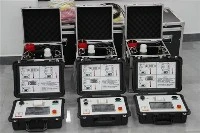
For users who need to conduct multiple experiments, a GIS AC withstand voltage test system, partial discharge detector, circuit resistance tester, and circuit breaker mechanical characteristic tester can be configured according to the actual work content to form a relatively complete GIS detection plan.
It should be noted that more GIS testing equipment is not necessarily better. A reasonable combination of equipment should be based on actual test items, equipment parameters, and testing standards to avoid functional duplication or mismatch between equipment capabilities and test requirements.
Choose equipment suppliers with professional technical support
GIS testing involves high-voltage testing, insulation testing, and mechanical performance analysis, which also have certain requirements for the technical capabilities and after-sales service of equipment manufacturers.
When purchasing, in addition to comparing equipment parameters and prices, it is also necessary to understand whether the supplier has research and production experience in related high-voltage testing equipment, and whether they can provide suitable equipment configurations based on GIS voltage levels, sample capacitance, and on-site conditions.
At the same time, attention should be paid to service content such as equipment factory inspection, technical data, operation training, installation and commissioning, and after-sales maintenance. For overseas procurement users, it is also necessary to understand whether the supplier can provide English manuals, remote technical support, and spare parts services.
Wuhan UHV Power Technology Co., Ltd. has long been dedicated to the research and production of power testing and inspection equipment. Our products include series resonance testing devices, partial discharge detection equipment, circuit resistance testers, and high-voltage testing equipment. We can provide corresponding testing equipment and technical support for power equipment manufacturing enterprises, power engineering units, and inspection institutions.
The selection of GIS testing equipment not only affects the efficiency of the experiment, but also directly affects the accuracy of the detection results and the safety of equipment operation. Before purchasing, users should determine the technical parameters and functional configuration of the required equipment based on the GIS voltage level, test items, capacitance of the tested object, and on-site usage conditions.
For users who need to conduct complete GIS handover tests or preventive tests, a reasonable combination of AC withstand voltage, partial discharge, circuit resistance, and circuit breaker mechanical characteristic testing equipment can comprehensively inspect the insulation performance, conductivity, and mechanical operation status of GIS equipment, providing reliable guarantees for the safe and stable operation of substations.