

Cable capacitance is one of the key parameters to consider when selecting high-voltage testing equipment during preventive testing, handover testing, and maintenance of power equipment for power cables. There are significant differences in the capacitance of cables with different voltage levels, lengths, and insulation structures. Especially for XLPE cross-linked polyethylene cables, as the cable length increases, the overall capacitance also increases, which puts higher requirements on the output capacity and operational stability of the testing equipment.
If the capacitance of the testing equipment does not match that of the tested cable, problems such as insufficient output voltage, inability to boost the equipment normally, and resonance frequency exceeding the range may occur. Therefore, when purchasing cable testing equipment, it is not enough to only focus on the rated voltage of the equipment, but also to make a comprehensive selection based on the cable capacitance.

1, Why does cable capacitance affect the selection of testing equipment?
The cable itself has distributed capacitance characteristics. As the length of the cable increases, its total capacitance usually also increases. During the AC withstand voltage test, the testing equipment needs to provide the corresponding capacitive current to the cable. If the cable capacitance is large, the equipment needs to have stronger output capability.
For traditional AC voltage withstand equipment, as the capacitance of the tested cable increases, the required test current and output capacity will also significantly increase. This not only increases the size and weight of the equipment, but may also cause inconvenience for on-site testing.
The series resonance test device is a common choice in the AC withstand voltage test of power cables. The device resonates with the capacitance of the test sample through a reactor. In the resonant state, the power supply mainly provides the energy required for system losses, which can effectively reduce the capacity requirements of the test power supply.
Therefore, understanding the capacitance of cables is an important prerequisite for determining the configuration of series resonant devices.
2, Select series resonant device based on cable capacitance
In the AC withstand voltage test of cables, the selection of series resonant devices needs to focus on the inductance, rated voltage, rated current, and equipment capacity of the reactor.
For cables with small capacitance, corresponding specifications of reactors can be selected based on the test voltage and actual capacitance. If the cable is long and the overall capacitance is large, it is necessary to consider parallel connection of multiple reactors or use equipment configuration suitable for large capacitance loads.
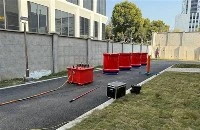
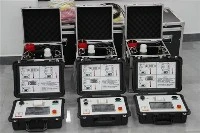
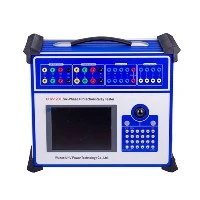
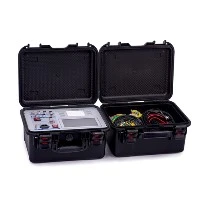
The frequency conversion series resonance test device provided by Wuhan UHV Power Technology Co., Ltd. can be configured according to the voltage level and capacitance of different test samples, and is suitable for power cables GIS, AC withstand voltage test for equipment such as transformers and generators.
In the actual selection process, it is recommended to focus on checking the following aspects:
Firstly, the rated output voltage of the equipment. The test voltage must meet the corresponding test standards and requirements of the tested cable, and its applicability cannot be judged solely based on the equipment's ability to output higher voltage.
Next is the rated current of the reactor. The larger the capacitance of the cable, the higher the required capacitive current under the same test frequency and voltage conditions. If the rated current of the reactor is insufficient, it cannot meet the test requirements.
Additionally, it is necessary to pay attention to the frequency adjustment range of the device. The required resonant frequency may vary when cables of different capacitance are combined with reactors. The equipment should have a suitable frequency conversion range to ensure that the system can smoothly find the resonance point.
3, How should testing equipment be configured for cables with different capacities?
For short distance, low capacity cables, it is usually not necessary to configure excessive testing capacity. Select a series resonant device that matches the output voltage, rated current, and reactor parameters. Excessive equipment configuration not only increases procurement costs, but may also reduce the flexibility of on-site use.
For medium capacity cables, the combination of reactors needs to be determined based on the cable length, rated voltage, and test voltage. At this point, the equipment should have a certain frequency modulation capability and load adaptability to meet the testing requirements of cables of different specifications.
For long-distance and high-capacity cables, equipment selection needs to be more cautious. Due to the large overall capacitance of the cable, the required capacitive current during the testing process will also increase. Such projects typically require the use of multiple reactor combinations and the selection of series or parallel configurations based on the actual load.
If the test objects include cables of different lengths and voltage levels, it is recommended to prioritize modular design of series resonant devices. By adjusting the combination of reactors, the applicability of equipment in different test projects can be improved, and the situation of repeated equipment procurement can be reduced.
4, What other parameters should be considered when selecting cable testing equipment?
Although cable capacitance is an important selection criterion, it cannot be the only criterion for judgment. In actual procurement, the following factors need to be considered.
1. Cable voltage level
Cables with different voltage levels have different test voltages and requirements. The rated voltage of the equipment should meet the requirements of specific test items and leave a reasonable configuration margin.
2. Cable length
The length of the cable directly affects the overall capacitance. For long-distance cable testing, parameters such as cable length and unit length capacitance should be obtained in advance to avoid insufficient equipment capacity.
3. Test frequency range
Series resonant devices typically use a variable frequency power supply to regulate the output frequency. When selecting, it is necessary to confirm whether the frequency range of the equipment can adapt to the actual cable load to ensure stable resonance.
4. Equipment transportation and on-site operation
Cable withstand voltage tests often need to be conducted in substations, cable trenches, and outdoor construction sites. Whether the equipment adopts a split structure, whether the reactor is easy to assemble and transport, and whether the control system is easy to operate all affect the efficiency of on-site work.
5. Protection function
High voltage testing requires high equipment safety. Attention should be paid to whether the equipment has functions such as overvoltage, overcurrent, flashover protection, detuning protection, and emergency stop, in order to reduce the risk of abnormalities occurring in the equipment and test samples during the testing process.
5, Why choose variable frequency series resonant equipment for cable withstand voltage test?
Compared with traditional power frequency withstand voltage equipment, frequency conversion series resonant devices have significant application advantages in large capacity cable testing.
In the resonant state, energy exchange occurs between the internal inductance and capacitance of the system, and the variable frequency power supply mainly compensates for system losses, so the required power capacity is relatively small. For long-distance, high-capacity cables, this testing method can effectively reduce the requirements for the testing power supply.
Meanwhile, frequency conversion series resonant devices usually adopt automatic tuning function, which can find the resonant point according to the actual load and reduce manual adjustment work. Some devices are also equipped with computer control systems, which can achieve automatic voltage boosting, stabilizing, voltage lowering, and recording of test data.
For power companies, power engineering units, and electrical equipment testing institutions that need to regularly conduct power cable handover tests and preventive tests, choosing suitable series resonant equipment can help improve on-site testing efficiency.
6, What information should be provided to the manufacturer before purchasing equipment?
To avoid unreasonable equipment configuration, it is best for users to prepare complete test parameters in advance when consulting cable testing equipment from manufacturers.
Mainly including cable rated voltage, test voltage, cable length, cable model, unit length capacitance, test frequency requirements, and on-site power supply conditions.
Among them, the actual capacitance of the cable is particularly important. If the accurate capacitance cannot be provided temporarily, the cable model, length, and relevant technical information can also be provided, and the equipment manufacturer can assist in calculating and determining the appropriate reactor combination scheme.
For users who test multiple specifications of cables simultaneously, the scope of daily testing objects should also be specified. Manufacturers can design corresponding equipment configurations according to different load conditions, so that a set of equipment can meet various cable testing needs as much as possible.
Selecting testing equipment based on cable capacitance is an important step in ensuring the smooth conduct of AC withstand voltage tests. For cables with small capacitance, excessive equipment configuration should be avoided; For long-distance and high-capacity cables, it is necessary to focus on the rated current of the equipment, the combination of reactors, and the frequency conversion range.
The variable frequency series resonance test device has become a commonly used equipment in AC withstand voltage testing of power cables due to its low power capacity requirements, flexible reactor combinations, and automatic tuning function.
Wuhan UHV Power Technology Co., Ltd. can provide users with corresponding frequency conversion series resonance test equipment configuration plans based on actual parameters such as cable voltage level, length, and capacitance. Thoroughly communicating the testing conditions before procurement can help select more suitable equipment and avoid any impact on subsequent use due to parameter mismatches.