

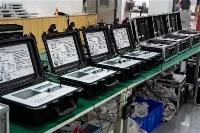

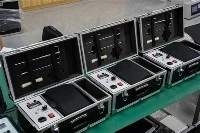
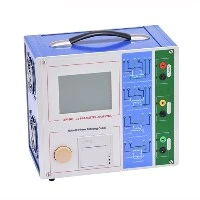
Ensuring the safety and reliability of electrical equipment is of utmost importance in the operation of the power system. And the power frequency withstand voltage test device is an important tool for us to guard this link. What exactly is it? Why is it so crucial?
The power frequency withstand voltage test device, as the name suggests, is a device that uses power frequency (usually 50Hz or 60Hz) AC voltage to conduct withstand voltage tests on electrical equipment. Simply put, it is to apply a voltage far beyond its normal operating voltage to the device to see if it can withstand it, in order to evaluate the insulation strength of the device. This is like conducting a "high-voltage medical examination" on the device to ensure that it will not "fall off the chain" at critical moments.

Why do we need to conduct a power frequency withstand voltage test?
The insulation materials of many electrical equipment, such as insulators and cable insulation layers, may age, become damp, or have some minor defects in the production and manufacturing process during long-term use. These potential issues may not be apparent under normal operating voltage, but when overvoltage occurs (such as lightning strikes or operational overvoltage), it can lead to insulation breakdown, resulting in equipment damage, power outages, and even casualties. The power frequency withstand voltage test can effectively discover these potential insulation weak points, which can be promptly dealt with before the equipment is put into operation or during regular maintenance, greatly reducing the probability of accidents.
Factors affecting the effectiveness of voltage withstand test
Accuracy of test voltage: If the voltage is applied too low, problems may not be detected; If it is too high, it may cause unnecessary damage to the equipment. Therefore, precise voltage control is the core.
Experimental environment: Environmental factors such as temperature, humidity, and atmospheric pressure can all affect the dielectric properties of insulation and require corresponding adjustments.
Test duration: Different equipment and insulation materials have different voltage endurance requirements, which need to be executed according to regulations.
Cleanliness of equipment: Pollution, dust, etc. can reduce the insulation performance of insulators, leading to inaccurate test results.
Intelligent assistance, more efficient experimentation
Nowadays, with the advancement of technology, power frequency withstand voltage testing devices are becoming increasingly intelligent. For example, the advanced equipment launched by Wuhan UHV Power Technology Co., Ltd. integrates digital control and measurement technology, which can not only accurately control the test voltage, but also automatically record and analyze the test data, greatly improving the efficiency and accuracy of the test. These intelligent testing equipment are a solid support for the reliability construction of the power industry.
How to better conduct power frequency withstand voltage test?
Strictly follow the testing procedures: Electrical equipment of different types and voltage levels have specific testing methods and voltage standards, and must be executed in accordance with national and industry standards.
Pay attention to the equipment status: Before the experiment, carefully inspect the appearance of the tested equipment to eliminate obvious damage and contamination.
Reasonably choose the test voltage and time: Based on the equipment nameplate parameters and relevant regulations, select the appropriate test voltage level and duration.
Keep good records and analysis of data: Detailed records of voltage, current, leakage and other data during the test process, and conduct professional analysis to promptly identify problems.
Choose a reliable testing equipment supplier: Choose a supplier with a good reputation and professional technology like Wuhan UHV Power Technology Co., Ltd., which can ensure the stable performance and accurate measurement of the testing equipment you use.
The power frequency withstand voltage test device is an indispensable "inspector" for the safe operation of the power system. Through scientific and standardized experiments, we can confidently ensure the stable operation of power equipment in their respective positions.
Frequently Asked Questions (FAQ)
What is the difference between power frequency withstand voltage test and DC withstand voltage test? The power frequency withstand voltage test is mainly used to detect the dielectric loss and breakdown strength of insulation under long-term operation, while the DC withstand voltage test focuses more on detecting the absorption ratio of insulation, insulation defects, and the presence of partial discharge. Both have their own emphasis and are often used in combination.
Why is the test voltage higher than the normal operating voltage? This is to simulate and discover potential weak points and defects in insulation materials in a short period of time. These defects may not appear under normal operating voltage, but may lead to insulation failure under overvoltage conditions.
During the power frequency withstand voltage test, insulation breakdown was found. What does this mean? Insulation breakdown usually means that the insulation of the tested equipment has serious defects and cannot withstand the test voltage. The test needs to be stopped immediately, and the equipment needs to be inspected and repaired in detail, and may need to be replaced if necessary.
How to ensure the accuracy of experimental results and avoid misjudgment? Ensure the stability of the testing environment, clean the equipment being tested, select high-precision testing equipment, and have experienced technicians operate and interpret the data. Following standard procedures is key.
What are the maintenance precautions for the power frequency withstand voltage test device? It is necessary to regularly check whether the connection lines of the equipment are firm, whether the insulation parts are intact, and whether the control system is normal. Pay attention to moisture and dust prevention, and perform regular calibration according to the manufacturer's requirements to ensure measurement accuracy.